

Image © Adobe Images
Pound sterling reached its highest level against the euro since June 2025 and analysts say further euro weakness is likely.
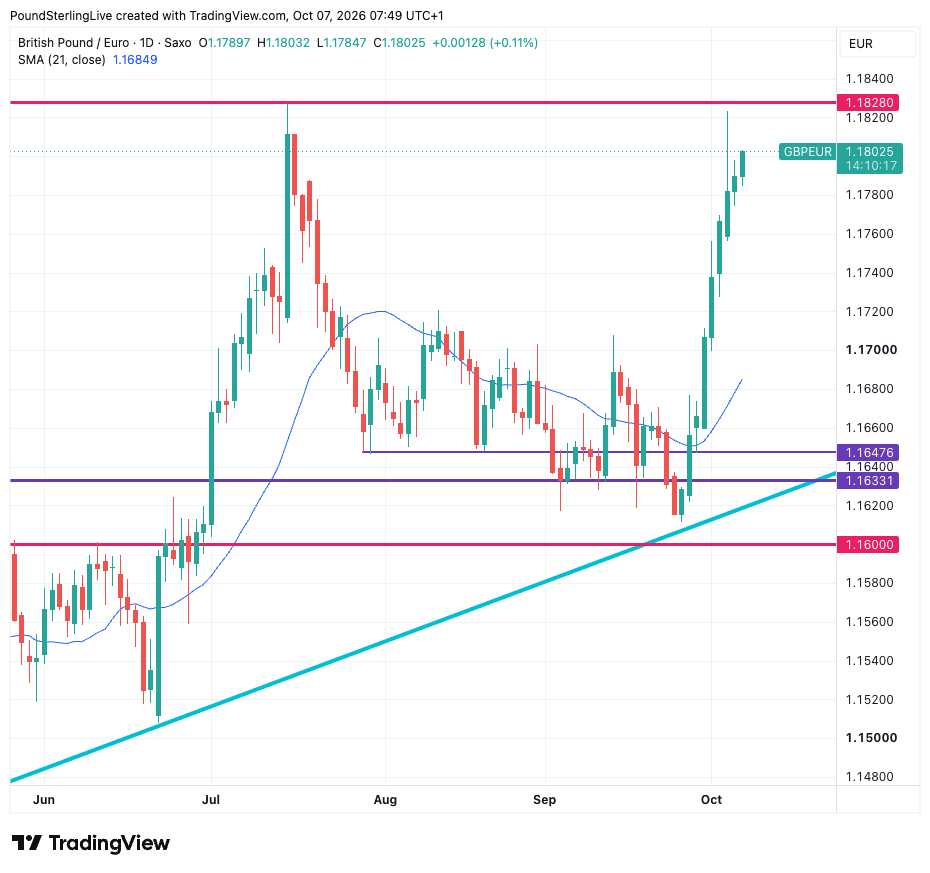
The pound-to-euro exchange rate pushed to 1.1832 in midweek trade, setting a new 2026 best for sterling-based euro buyers.
French ten-year bond yields are rising again, reaching 4.849%, having retreated over the course of Monday and Tuesday from last week's peak. That hints that anxieties over Eurozone debt dynamics and the need for the ECB to eventually intervene remain a live consideration for traders.
"Alongside a direct – albeit so far relatively contained – build-up of fiscal premium, the euro continues to suffer from an unwinding of ECB rate hike expectations due to French bond turbulence," says Francesco Pesole, FX Strategist at ING Bank.
For GBP/EUR, a close above 1.18 would be a first technical requirement for confirmation that a higher base is forming, which would prove a staging board for a push deeper into the 1.18s in the near-term.
"The Euro is falling because markets think the ECB will shift dovish because of what's going on in bond markets. That's why the 2y2y forward rate differential (black) is tumbling, which is what's pulling down the Euro (blue). Markets price fiscal dominance," says Robin Brooks, Senior Fellow at the Brookings Institution.
The euro leg of the pair is in charge as French debt costs - here measured via the yield on government bonds (OATs) - have surged, and the concern is the European Central Bank (ECB) will need to adopt a more cautious approach to raising interest rates in the coming months.
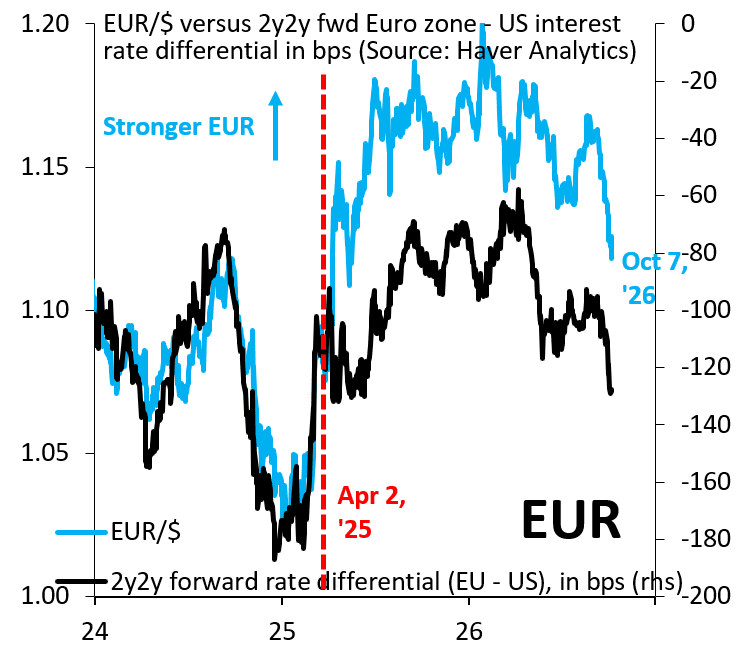
Image courtesy of @robin_j_brooks
It might also engage mechanisms designed to limit the rise in a Eurozone country's bond yields. This proactivism is judged to be 'dovish' for the euro in its ability to limit yield ascent.
The takeaway? The ECB can prevent an unruly market, but in doing so it suppresses the euro.
"We expect EUR to remain under near-term pressure as markets navigate key October dates and the Moody’s ratings review. While renewed fiscal concerns have weighed on EUR, the reaction remains relatively tame compared with the last episode of comparable OAT-Bunds widening. We therefore see scope for near-term EUR underperformance," says Jayati Bharadwaj, Head of FX Strategy at TD Securities.

Daniella Arcadipane, Senior Currency Specialist at Indigo
Moving a life-changing sum abroad? You won’t be doing it alone.
One specialist explains every step in plain English and stays with it until the money lands. FCA authorised, FRN 594433.
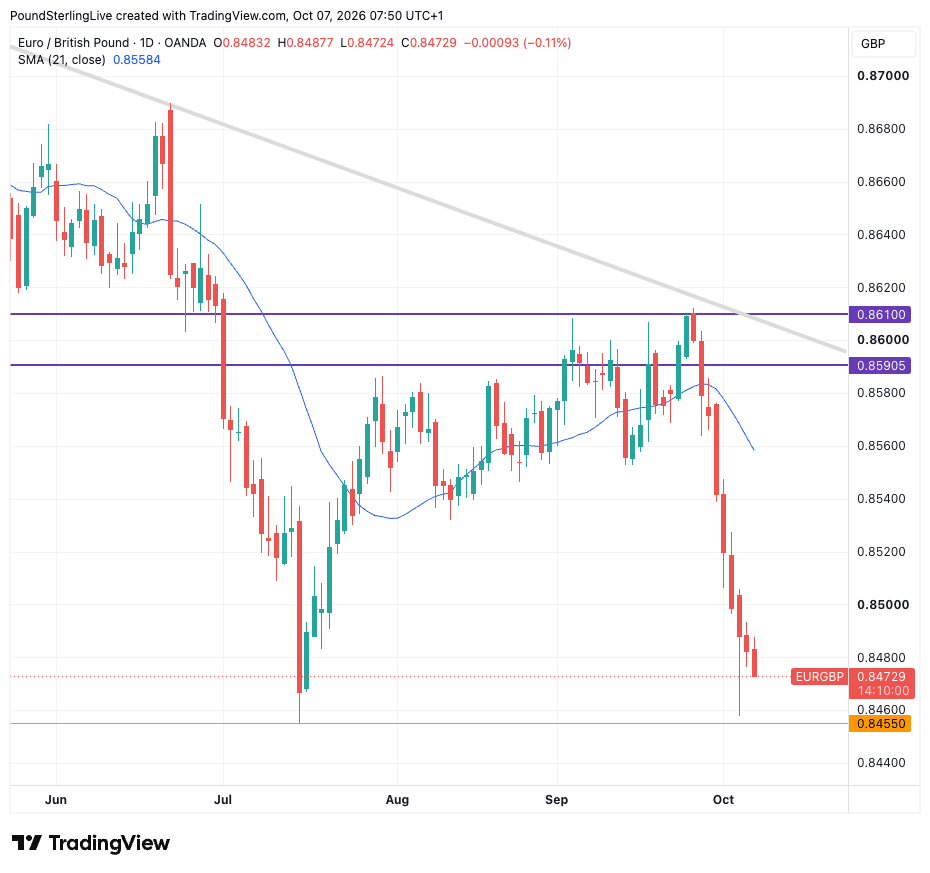
Talk to a specialistWhile still under pressure, the euro has managed to keep itself above some key lines in the market: Euro-dollar holds above and euro-pound holds above 0.8450, the July low.
"The EUR also managed to defend key trendline support levels vs GBP and CHF, while the OAT-Bund spread has retraced slightly from the +150bp peak," says Bharadwaj.
For euro buyers selling sterling, a period of uncertainty and anxiety pertaining to France and the ECB reaction function should be enough to keep the euro under pressure and push EUR/GBP below 0.8450 and GBP/EUR north of
"The pound was among the key beneficiaries from the widening in French spreads last week," says a weekly FX market note from Barclays. "For the moment, French developments are likely to remain the primary driver for EURGBP".
The ECB has yet to express any desire to enact the Transmission Protection Instrument, last used in 2022 when Spanish and Italian bond yields were deemed to be getting unruly.
The ECB explains that the TPI is an addition to its toolkit and "can be activated to counter unwarranted, disorderly market dynamics that pose a serious threat to the transmission of monetary policy across the euro area."
Does France's bond yield rise meet that threshold? Judging by the muted reaction from ECB Council members, the answer is no.
"Fiscal and political uncertainty in France is adding pressure on the euro," says Georgette Boele, FX Strategist at ABN AMRO.
However, Boele expects limited further euro weakness and maintains an end-2026 forecast at 1.15, which would be consistent with a GBP/EUR lower than current levels.
"Looking ahead, our rates strategists think that rate markets already price in considerable fiscal and political uncertainty in France and that the current rate spread already reflects this. If the situation is not as negative as currently expected, sentiment towards France could improve somewhat and the spread could narrow," she explains.