
Image © Adobe Images
Key Takeaways
- The Pound-to-Euro exchange rate faces medium-term downside risk because UK private-sector pay growth has run below 3% for three consecutive months, weakening the case for Bank of England rate hikes, analysts tell Pound Sterling Live.
- Economists at ING and Ebury expect the Bank of England to hold interest rates through 2026 and cut in 2027, against money markets that still price two more hikes by early 2027, a gap that could pull UK bond yields and the Pound lower when it closes.
- Morgan Stanley expects the Pound to lag over the medium term on a dovish Bank of England pivot, but says its high carry can support the currency near-term, meaning GBP/EUR outperformance can continue for now.
Sterling is at risk of further weakness owing to a softening wage pulse, say analysts.
British private sector workers command diminishing wage returns, confirms the latest ONS labour market data, released Tuesday.
According to analysts we follow, the numbers provide evidence that diminishes the odds of a rate rise at the Bank of England, and the numbers therefore provide evidence that justifies a 'bearish' stance on the pound over the coming months.
"UK single month unemployment jumped to highest since Oct 2020. While it may get revised, UER trend now turning for the worse. Following stagnant job listings & higher layoffs in high-freq data. Private pay growth sub-3% for 3M in a row says there’s no need for BoE hikes," says Viraj Patel, FX & Global Macro Strategist at Vanda Research in the wake of the data release, referencing the GBP.
The Jobs Market is Soft, But Stable
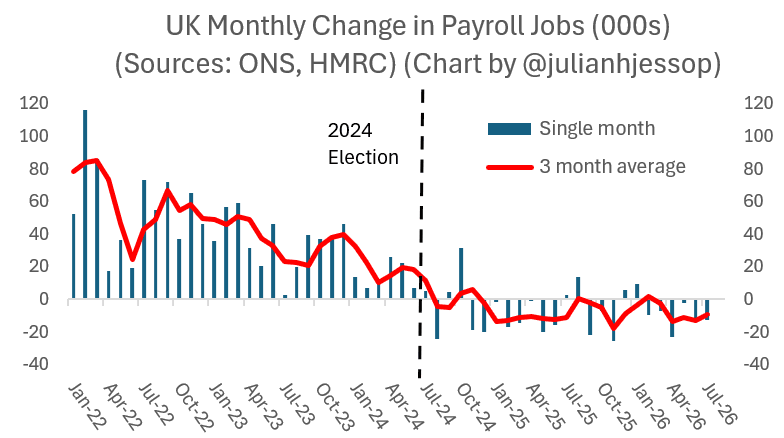
Breaking down the figures shows that the clear deterioration in the labour market over the last two years is starting to fade, but this leaves the jobs market pulse soft.
Today's ONS report revealed employment rose 84K on a three-month-on-three-month basis, the unemployment rate held at 4.9%, and annual wage growth ran at 4.3% including bonuses and 3.4% on the regular measure.
Vacancies continued to fall, at 712K and the PAYE measure of employment fell 12,850.
Wage Dynamics Make for a Softer Inflation Impulse
What really matters for monetary policy, which is set by the Bank of England, is the downward direction of travel in wages.
That's because wages tend to influence demand in the economy and demand powers (or diminishes) inflation.
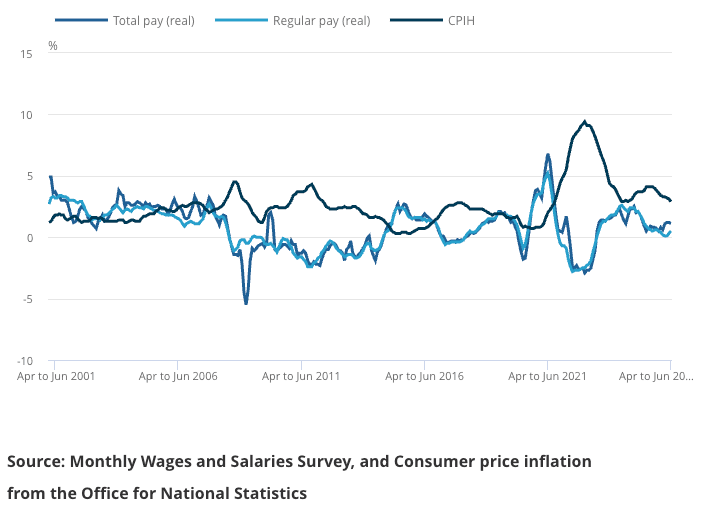
The takeaway is that wage dynamics are leaning in favour of further disinflation, despite the current energy price-driven uptick in inflation.
How Softer Wages Translate into a Weaker Pound
With wages implying disinflation is still on the cards, the reckoning amongst many economists we follow is that the Bank of England won't have to raise interest rates again.
"Ongoing weakness in private-sector hiring and wage growth suggests the bar is still relatively high for a rate hike in 2026, barring a severe and prolonged spike in energy prices. We expect the Bank of England to remain on hold this year and resume rate cuts from spring 2027," says James Smith, economist at ING Bank.
That thinking is not unique and represents a wider economist consensus that cuts against the market's positioning: money markets show investors are positioned for two more rate hikes by the first quarter of 2027.
It's this expectation that ultimately holds sway with real-world implications: it feeds into short-dated UK bond yields, keeping them relatively elevated compared to elsewhere (that's because the UK has tended to run inflation hotter than most comparable developed countries).
That yield differential tends to underpin the pound: for example, the UK's rising two-year yield advantage over Germany is often cited as a driver behind periods of the pound-to-euro.
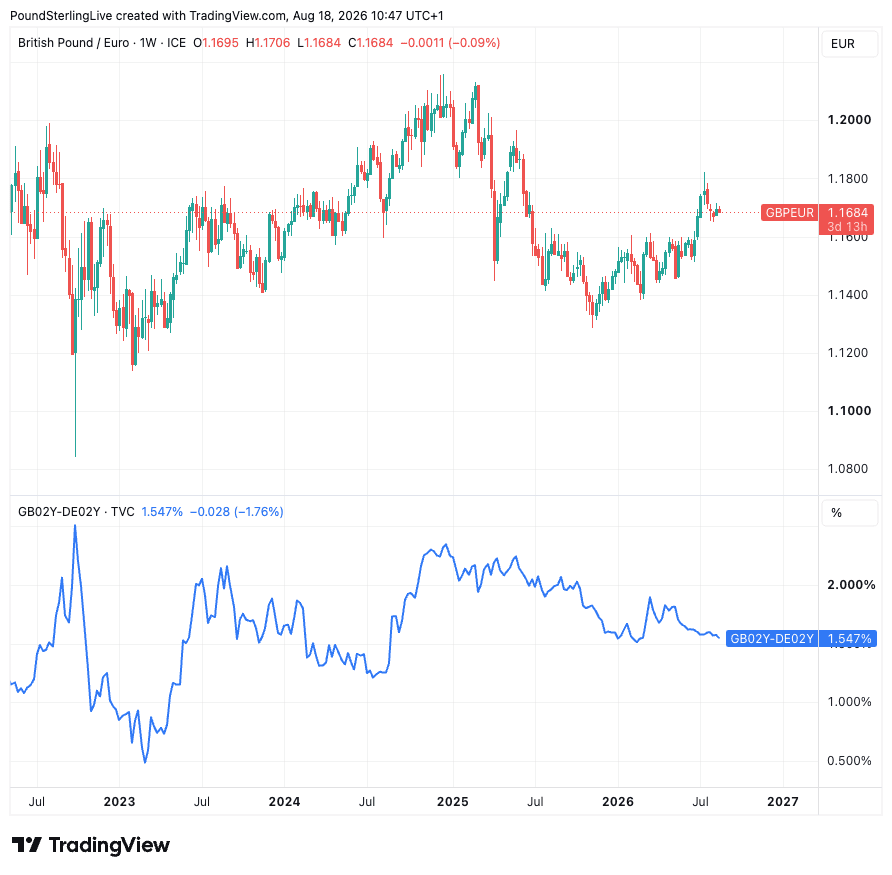
Above: GBP/EUR (top) and the UK minus German bond yield.
The downside risk for pound sterling? if the economists are right, and those rate hike expectations fade, short-term UK bond yields must fall.
When UK yields fall relatively faster, and assuming all else is equal, the pound would likely come under pressure.
"We expect GBP to be a medium-term laggard from a dovish BoE pivot, but that will take time to play out, and its reasonably high carry may help support it versus low-yielding peers in the interim," says a strategy note from Morgan Stanley.
That note offers some important tactical views from a currency market perspective: near-term, there's not enough to decisively turn the market's Bank of England view in a GBP-negative direction.
As a result, GBP/EUR outperformance can continue short-term, which is fitting with a view that the pound's summer fun isn't over.
However, the bet is that eventually the weaker labour market will weigh enough to prompt the Bank of England to do and say enough to discourage rate hike bets.
When that happens, GBP can come under more meaningful pressure.
"We expect the MPC to hold rates steady for the rest of the year, before they are cut at some point in 2027. This could act to keep a lid on sterling, particularly against the euro, with the ECB appearing almost certain to hike as soon as next month," says Matthew Ryan, Head of Market Strategy at Ebury.