
Image © Adobe Images
Pound-Australian Dollar must reclaim 1.9200 to signal the July correction is over.
The tactical outlook for the Pound-to-Australian Dollar exchange rate is cautiously constructive, although conviction is lower than it was during July's advance.
The pair has successfully held above its rising 100-day moving average, preserving the sequence of higher lows established since May, and that keeps the medium-term recovery intact.
The short-term focus now shifts to 1.9200: a break above this level would suggest the recent correction has largely run its course and would expose another test of 1.9362-1.9402.
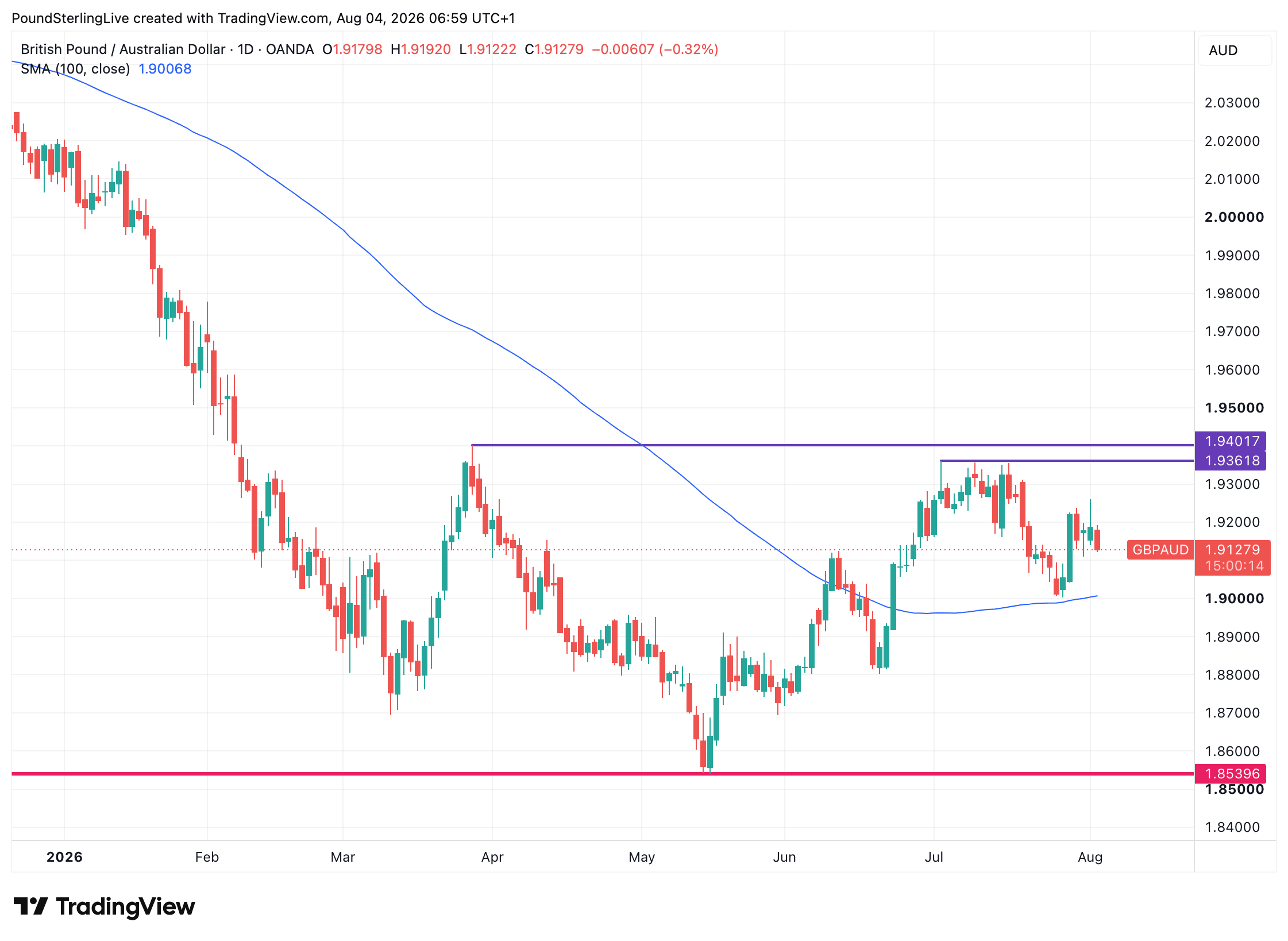
A decisive move through that resistance band would complete a significant continuation pattern and strengthen the case for an extension higher.
However, failure to overcome 1.9200 would imply the market is still digesting July's gains, and in that scenario GBP/AUD may continue to oscillate between the 100-day moving average and overhead resistance while momentum rebuilds.
The technical picture continues to favour Sterling over the medium term, but from a week-ahead perspective the emphasis is on whether the latest rebound can reclaim 1.9200: success there would shift the balance back towards a retest of the July highs, while another rejection would point to further consolidation rather than an outright trend reversal.
We would lean on the current pullback/consolidation extending a little further, particularly given UK bond yield advantage is waning again.
Two Currencies With Problems
What makes conviction harder to come by is that both sides of this pair are nursing wounds.
The Australian Dollar's rate support wobbled when Governor Bullock declined to deliver the hawkish signal markets had positioned for, with her question of whether existing tightening is already "sufficient" prompting traders to trim near-term hike bets.Yet the Aussie retains genuine fundamental ballast, having been bolstered days earlier by an "exceptional" jobs report that keeps the labour-market case for further tightening alive.
The Pound, meanwhile, has slight headwinds to navigate, with UK bond yields falling faster than peers as oil retreats and the rate spreads that powered July's Sterling advance compressing to the lows of the year.
The result is a pair whose swings currently owe more to which currency is having the worse week than to any clean directional story, which is precisely the environment in which ranges form.
The Australian Dollar's high-beta to global investor sentiment adds the final variable: it strengthens when risk appetite improves, so the tug-of-war between US-Iran diplomacy hopes, oil price swings and the AI trade unwind in equities will push GBP/AUD around from the Aussie side regardless of anything the UK produces.

The Bank Consensus, Without the Terminal
The median, mean, highest and lowest from the October survey update, plus named point forecasts out to 2027.
Free information pack, issued by World Wide Currencies.
A Quiet Calendar With a Loud Sequel
The domestic Australian calendar is light this week, which leaves the global risk tone and RBA repricing as the operative drivers.
The real event looms just beyond the week's end: the Reserve Bank of Australia's 11 August decision, accompanied by the Statement on Monetary Policy containing fully updated forecasts, is the moment the Bullock-versus-data debate gets settled.
That timing matters for the technical question at hand, because a market unwilling to commit ahead of an RBA judgement is a market unlikely to force a decisive break of 1.9362-1.9402 this week even if 1.9200 gives way.
Our base case is therefore a constructive grind: 1.9200 can be reclaimed if the Pound's yield story stabilises, but the July highs likely wait for the RBA to show its hand.
For those with Australian Dollar payment requirements, the practical read is that the pair remains closer to the top of its 2026 range than the bottom, and the institutional consensus continues to see it lower into 2027.