
Image: Photo by Anthony Quintano. Licensing: CC 2.0. Sourced: Flickr.
Pound-to-dollar can extend gains and carve out a more meaningful uptrend.
Treasury bond buybacks are the story of the week; the decision delivered dollar weakness, and the consensus is that further losses can be expected.
What is up for debate is just how negative the developments of late are: are we talking crisis-style negative, or something more benign? The former is certainly being pushed in some corners of the financial market commentariat.
Analysts at ING confirm in a note released ahead of the weekend that they're expecting further dollar weakness from here, but with an additional twist:
"We see the move more as a signalling tool that the US Treasury has a problem with high bond yields and wants to address it. For the time being, we favour this triggering a benign, risk-friendly dollar decline."
The 'risk-friendly' element of the note is what catches our attention, as it implies a beneficial backdrop for stocks and currencies that tend to do well when investor sentiment is positive.
For the pound, that's particularly helpful, and leans supportive of the pound-to-dollar rate as a result.
The exchange rate is up 0.80% this week, having traded a low at 1.3520 and a high at 1.3659, a level it clings close to ahead of the weekend.
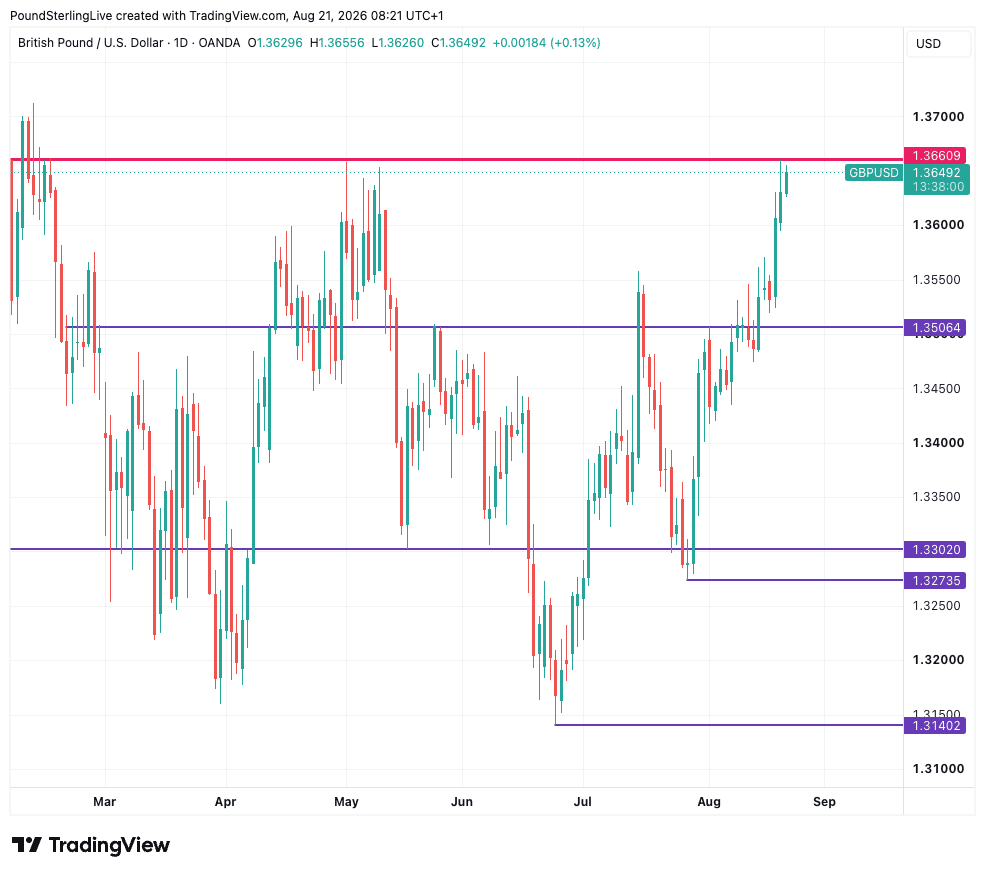
That move is largely a soft dollar story that follows the U.S. Treasury's announcement that it will increase its purchases of long-dated bonds in order to try and prop up the market following a losing run that saw the sector fall to multi-decade lows.
That fall in price pushed the yield they offer higher, imposing rising costs on government borrowing.
The decision triggered scrutiny and some corners of the market took a particularly negative view of the exercise, warning that it signals potential market difficulties.
However, ING take a more benign view:
"Many commentators seem to be treating this week's US Treasury intervention in bond markets as a heinous financial crime. We prefer to take the view offered by a former US Treasury official interviewed in the Financial Times today that this was a signalling exercise."
"These buy-back operations were originally designed to address market liquidity issues and the off-cycle nature of the adjustment has raised eyebrows. But the main takeaway has to be that higher longer-dated Treasury yields are firmly on the Treasury's radar and need to be addressed," says ING analyst Chris Turner.
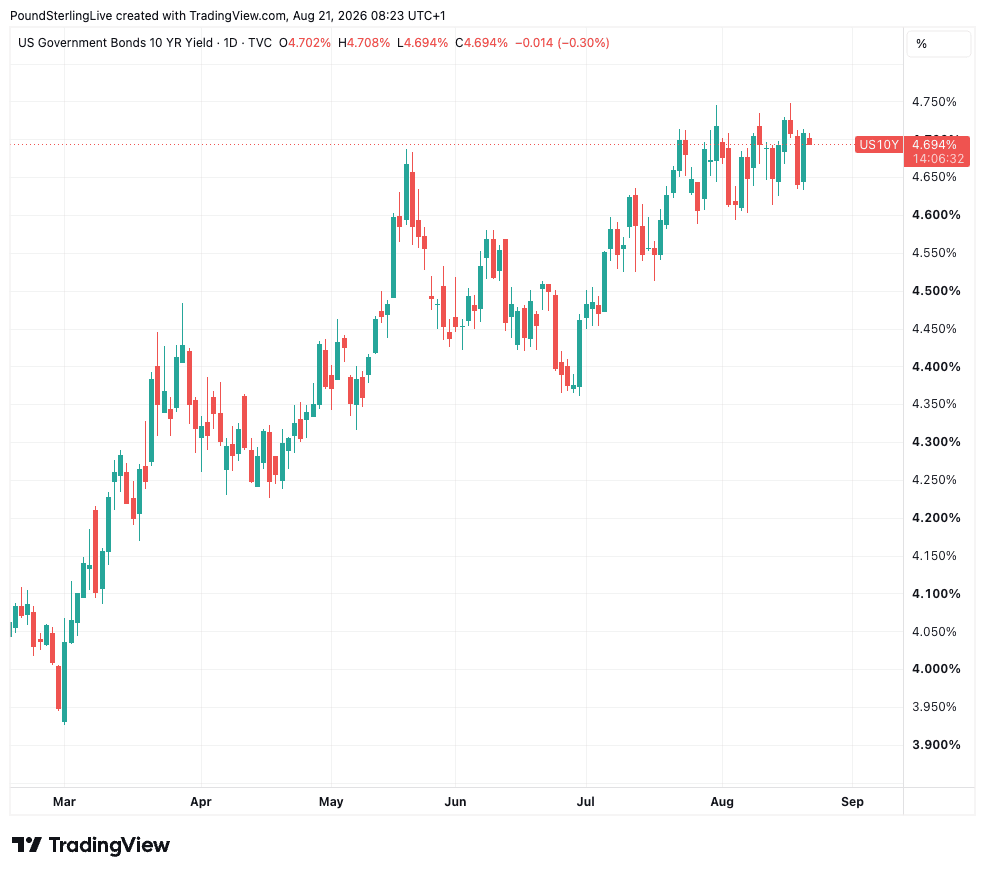
Above: The intervention halts the rise of long-dated bond yields.
He notes that some commentators and analysts are taking the view that the action by U.S. authorities is comparable to President Donald Trump's 'Liberation Day' tariffs and concluding this again undermines US policy credibility.
However, ING sees this week's developments less as a policy credibility story and more as a soft dollar, pro-risk story if the US Treasury is taking a greater interest in protecting the long end.
That's supportive of commodity currencies (AUD, NOK, NZD) and emerging market currencies.
We read that as also translating into a higher GBP/USD as the pound's high beta to risk could also be relied on to deliver gains.