
Image © Adobe Images
Above-consensus inflation locks in further RBNZ rate hikes and New Zealand Dollar support, say analysts.
The New Zealand Dollar is the best performing major currency of the day, extending a run that also puts it top of the G10 leaderboard for the past month, after inflation data strengthened the case for further interest rate rises.
The Pound-to-New Zealand Dollar rate is down by nearly a third of a per cent on the day at 2.2940.
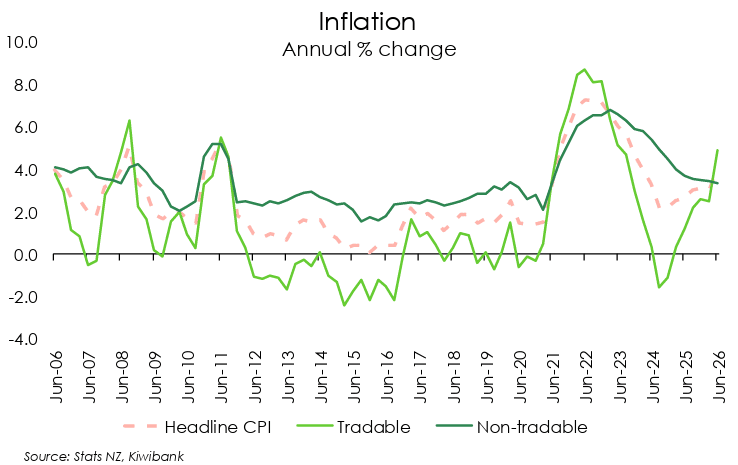
Headline CPI rose 1.5% in the second quarter said StatsNZ, ahead of the 1.4% the market expected, taking the annual rate to 4.1% from 3.1% previously, itself a touch above the 4.0% consensus.
Higher fuel and household energy prices did much of the damage, driving a strong 2.7% quarterly increase in tradeables inflation.
For the currency, what matters is that the data protects the elevated RBNZ rate hike expectations that underpin recent outperformance.
"NZD/USD rose by around 0.7% after the stronger than expected NZ Q2 26 CPI," says Commonwealth Bank in a market note. "The market is currently pricing four more interest rate hikes by mid 2027."
How Far Can Rates Go?
The forward path, rather than today's print, is where the currency's fortunes will be decided.
Economists at Auckland-based ASB continue to expect the Reserve Bank of New Zealand to raise interest rates to a peak of 3.25% this cycle, while judging there are two-sided risks to both the speed and magnitude of further tightening.
That forecast sits below what markets are betting on, meaning the New Zealand Dollar's support would erode if the more cautious economist view proves right and traders are forced to trim their expectations.
For now, though, data like today's argue the opposite: the repricing risk sits with the doubters, which is why analysts see scope for further New Zealand Dollar appreciation while the hiking cycle builds.
Peak Inflation, But Not Peak Rates
Kiwibank reckons the worst of the inflation surge may now be in.
"We are hopeful that the June quarter will mark the peak in annual inflation following the oil price shock. However, recent oil prices are heading up again," say economists at the bank.
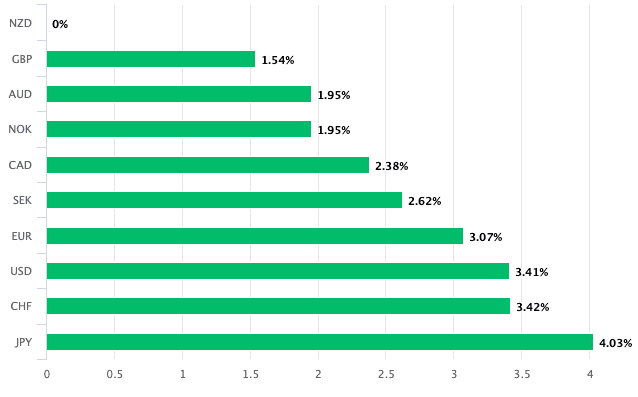
Above: NZD performance over the past month.
The Reserve Bank will therefore still be worried about the potential spillover of imported fuel prices into domestic price setting, according to Kiwibank.
Encouragingly, the details suggest that spillover is so far being contained: excluding food, fuel and energy, inflation actually eased to 2.5% from 2.6%.
"The June data gives us some hope that businesses have not been passing on cost pressures to consumers immediately," says Kiwibank.
Contained core inflation will not stop the hikes, in the bank's view, but it shapes them: Kiwibank expects the RBNZ to continue lifting the official cash rate towards neutral, with two more hikes likely this year taking the rate to 3% by the end of 2026.
What It Means for NZD Going Forward
The answer to the question posed by today's data is that the New Zealand Dollar's central support, an RBNZ hiking towards neutral with markets betting it goes further, remains fully intact.
Headline inflation at 4.1% keeps the central bank engaged, while easing core inflation means the tightening can proceed at a measured pace that supports rather than strangles the economy, sidestepping the bad-hikes trap that has undone hawkish rallies before.
The risks ahead are the gap between economist forecasts and the four hikes markets have priced, and an oil price that refuses to confirm the inflation peak.
Against the Pound, the direction of travel has institutional backing too, with Pound-New Zealand Dollar the only major Sterling pair consensus forecasters expect to decline through to early 2027.

The Bank Consensus, Without the Terminal
The median, mean, highest and lowest from the October survey update, plus named point forecasts out to 2027.
Free information pack, issued by World Wide Currencies.