Image © Adobe Images
The British pound rose against the dollar after U.S. core inflation unexpectedly fell in June.
The British pound rose against the dollar after U.S. core inflation unexpectedly fell in June.
The pound-to-dollar exchange rate surged from 1.3380 to 1.3430 in the minutes after it was reported core inflation fell 0.2% m/m in June, whereas the consensus was expecting a 0.20% gain.
"I see today’s CPI data is unambiguously bearish USD," says Brent Donnelly, strategist at Spectra Markets. "If I were adding USD shorts, I would look at GBP."
In fact, there were no economists who predicted a decline in this important inflation metric, which is considered to be particularly important for Federal Reserve policy decision-making.
Indeed, the surprise follows a 24-hour period in which traders ramped up bets that the Fed would raise interest rates in July; during this time, the dollar rose across the board.
"There is no drift up in underlying inflation in the US and no need for a Fed hike," says Robin Brooks, economist at the Brookings Institute.
It was also reported headline inflation came in at -0.4% vs. expectations for -0.1, and the annual rate stood at 3.5%, down from 4.2% in May and below a 3.8% consensus expectation.
The annual core inflation rate fell to 2.6% from 2.9%, where economists thought it would stay.
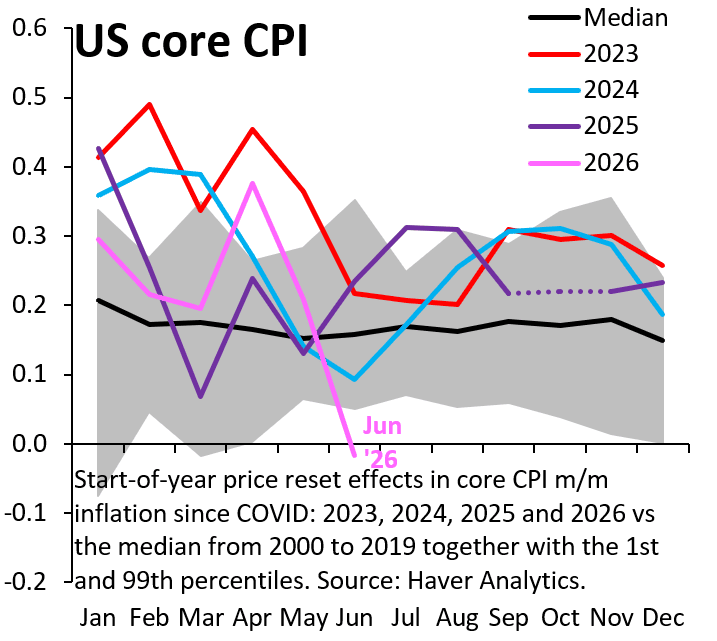
Image courtesy of @robin_j_brooks
Dollar Was Looking Increasingly Ominous
The inflation numbers and the currency market's reaction come against a backdrop of building expectations that the dollar was gearing up for a more concerted rally.
Some analysts we followed said the USD could be on the cusp of another meaningful period of strength as inflationary pressures build in response to ongoing escalation in the Middle East and rising prospects for Federal Reserve rate increases.
"Short-term momentum is swinging back in favour of the dollar as the FX market is finally starting to take the Gulf re-escalation more seriously," said Francesco Pesole, FX Strategist at ING Bank, in a note released ahead of the inflation release.
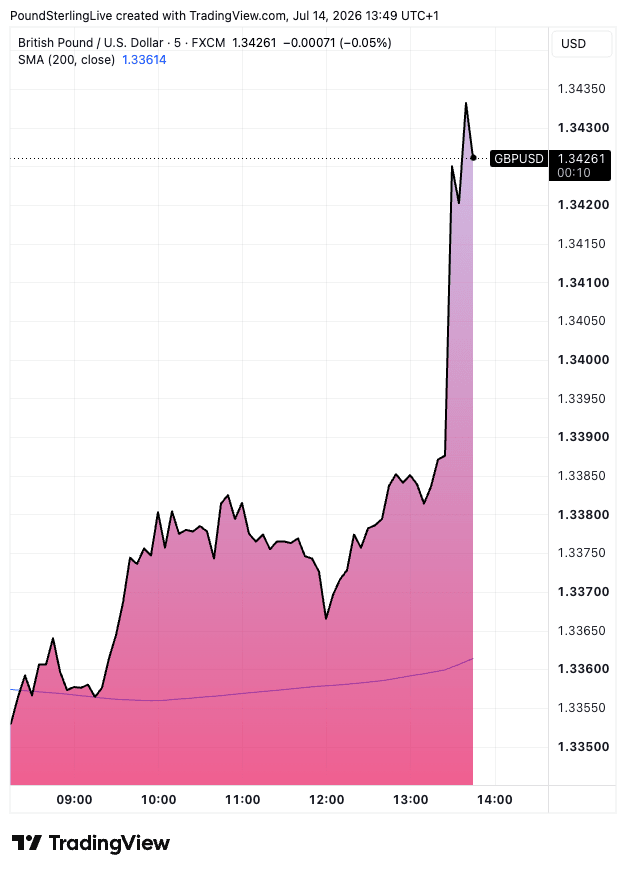
Above: GBP/USD showing post-inflation reaction.
Indeed, the dollar was seen firming across the board through Monday and into Tuesday as markets responded to news U.S. President Donald Trump is considering tolling maritime traffic through the Strait of Hormuz.
The signalling of Trump's latest move is important: the President is potentially more committed to re-establishing America's deterrence doctrine, and there's potentially no near-term relief.
Global bond yields rose in response to these geopolitical developments - led by a rise in U.S. Treasury bond yields - and market sentiment has soured: classic conditions for a strengthening dollar.
Why the Dollar Could Yet Strengthen Further
The dollar is proving particularly sensitive to expectations on whether the Federal Reserve will be required to raise interest rates again, potentially as early as this month.
The market-implied chance of a quarter-point hike in July climbed to about 50% by Tuesday, from less than 10% at the end of last week.
Helping spice up hike expectations was Fed Governor Christopher Waller, who warned Monday, "if we get another hot reading on core inflation this week, then the FOMC will need to consider tightening monetary policy in the near term."
That meant that ahead of the Tuesday inflation release, the market was fully priced for a Fed rate increase by year-end and a second one by mid-2027.
Some analysts think that's still too conservative and think we will see up to five rate hikes in the current cycle, and that's more to do with domestic economic strength than recent developments in the Middle East.
"We move to a positive stance on the dollar as US hiring seems to be at an inflexion point," says Daniel Von Ahlen at TS Lombard.
The independent research house expects the first increase in September, followed by four more next year, taking the total to five hikes.
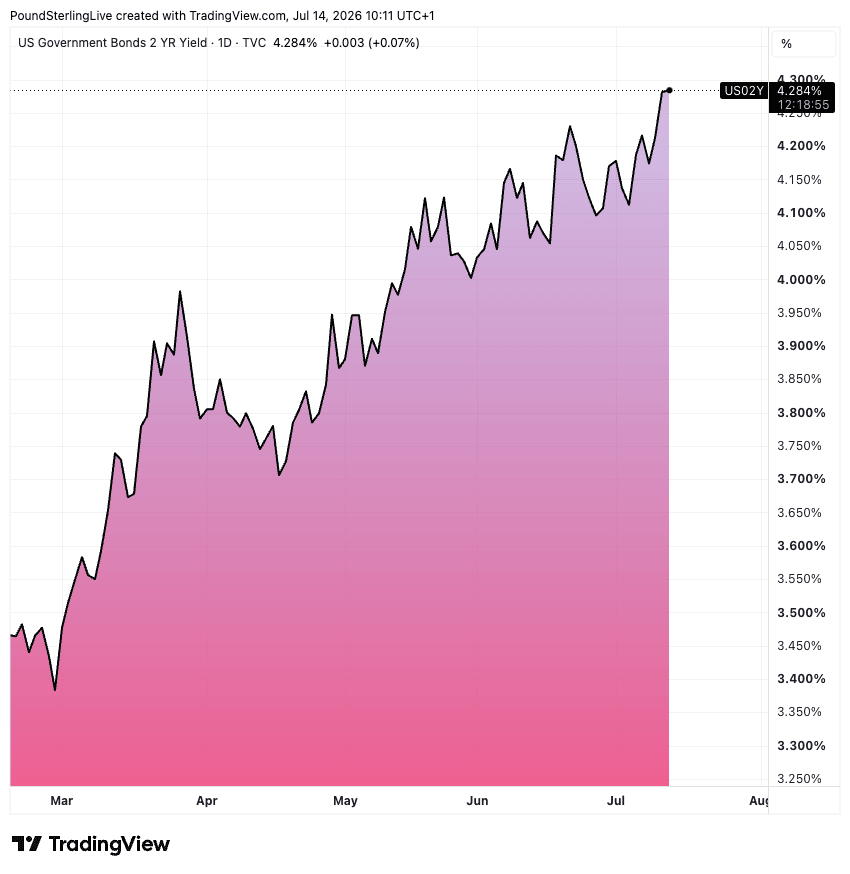
Above: US 2-year bond yields.
The Middle East Trigger
Of course, June's inflation release covers the period preceding the deterioration in the Middle East, and in that regard, it could already be considered stale.
Oil and gas prices are higher again, but unlike previous episodes, the market now has to contend with a more 'hawkish' Fed reaction function.
"This positive but contained USD reaction does seem a déjà vu of this spring. But conditions are different now. Reduced Fed guidance after a hawkish shift in June means allowing markets to speculate more aggressively on Fed tightening," says ING's Pesole.
Last month saw Kevin Warsh debut as Fed Chair, and he surprised markets with a forthright commitment to ensure the Fed dominates inflation.
That ultimately signals he will back moves to raise rates if need be, something that was not fully appreciated ahead of his first appearance.
In short, the market will more readily price in rate hikes than was the case pre-June.
For the dollar, that's bullish.
"We see scope for further USD gains in the next couple of months. Sticky US inflation and a resilient labor market will keep Fed pricing hawkish, while US economic outperformance is poised to keep rate differentials supportive of USD," says Elias Haddad, Global Head of Markets Strategy at Brown Brothers Harriman.
The Bank Consensus, Without the Terminal
The median, mean, highest and lowest from the October survey update, plus named point forecasts out to 2027.
Free information pack, issued by World Wide Currencies.