Image © Adobe Images
The Middle East story has flipped in favour of further USD strength.
Just as the U.S. dollar looked to be cooling, the geopolitical context switches to offer it renewed support.
The dollar firms after U.S. strikes on Iran were reported overnight and into Wednesday, which sent oil prices higher and prompted caution amongst market participants, creating conditions typically associated with dollar strength.
U.S. President Donald Trump looks to have finally lost patience with Iran, saying at the NATO conference, "I don't want to deal with them anymore, they're scum.. they're sick people, they're led by sick people... As far as I'm concerned, it's over."
The messaging from the President is notably more strident and signals he is prepared to pressure Iran into 1) fully abiding by the existing peace deal and 2) establishing a better deal.
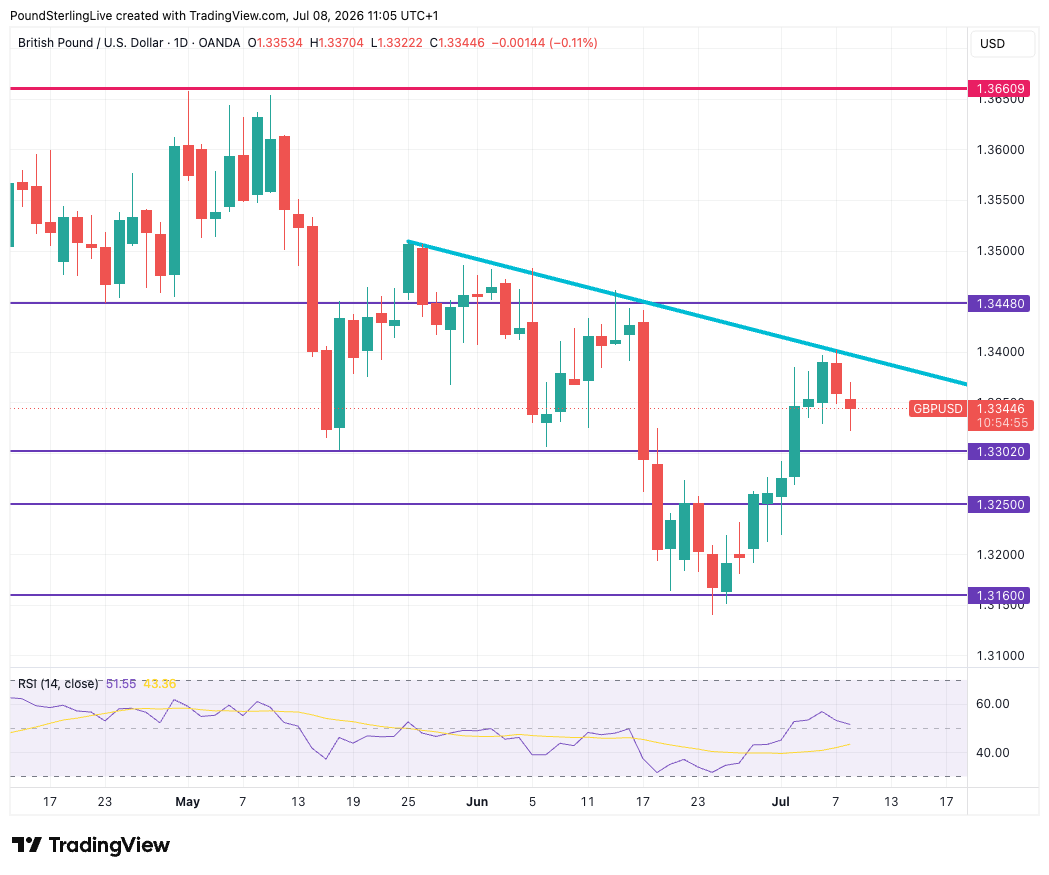
Looking at FX markets, there's no sense of panic, but there are signs a recent recovery impetus in key dollar pairs has stalled: the pound-to-dollar conversion slides to 1.3345 from Tuesday's high at 1.3418, the euro-to-dollar pair pulls back to 1.1406 from the 48-hour peak at 1.1448.
Something More Dangerous
The problem for optimists who might see recent strikes as a gambit is that they actually point to significant structural weaknesses in the peace deal.
Samer Hasn, Senior Market Analyst at XS.com, offers an excellent explanation of what's going on, and what markets could be in for:
"The nature of these attacks and skirmishes is less important than what lies behind them, and I believe the market needs to recognise this.
"This wave of escalation began with the targeting of commercial ships attempting to cross the southern path of the Strait of Hormuz, which passes through Omani waters, without coordination with the Iranian side."
Iran has signalled, therefore, that it demands complete control of the Strait.
"This, in turn, confirms something dangerous: the recent rounds of negotiations over the memorandum of understanding did not yield any breakthrough, even on the technical details of managing the strait," explains Hassan.
"Worse still, the failure to achieve a breakthrough regarding the strait means that the possibility of reaching an agreement on the most vital points, which relate to the Iranian nuclear programme, will be much harder and will take a very long time, if there is any possibility of reaching an agreement at all under the current US administration," he adds.
What Does the Escalation Mean for the Dollar Outlook?
For the dollar, the renewed conflict in the Strait of Hormuz should prove supportive, as it risks raising oil prices and restarting an upward march in global inflation expectations.
Consensus thought the dollar would be a laggard in 2026, but the war in the Middle East has contributed to the shattering of that expectation and the currency has outperformed.
Oil Price Warning
Dollar outperformance and higher oil prices tend to go hand in hand: the U.S. is the world's biggest oil exporter and traders tend to want dollars when anxiety is elevated.
New research from TD Securities is sobering: they reckon that even before the latest tensions, oil was set to march higher.
The bank says there is a mirage of a crude oil glut and the market is far from oversupplied.
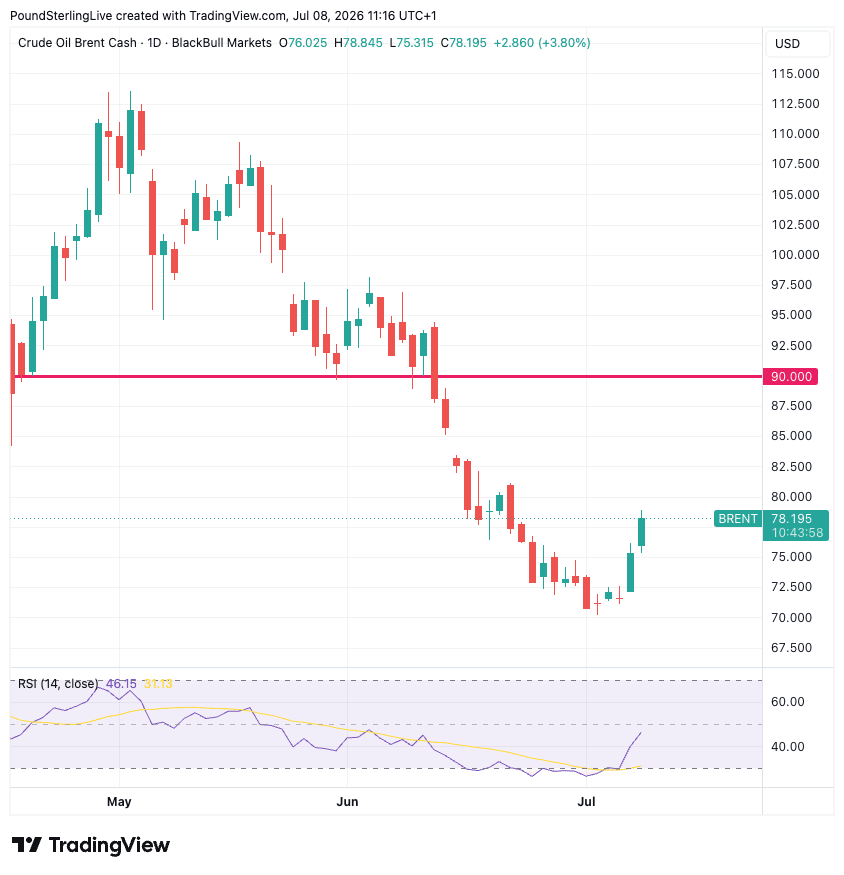
"Our high-frequency estimates of global and Chinese supply-demand balances, along with Middle Eastern production, continue to point to market tightness despite increased flows through the Strait of Hormuz," the note says.
Oil price forecasts, based on ongoing market deficits, inventory drawdowns, and longer-term rebuilding of market buffers, show prices could recover toward $90/bbl, with potential for a move toward $100/bbl.
That's a USD-supportive call.