

Image © Adobe Images
The cost of government borrowing is a development worth watching.
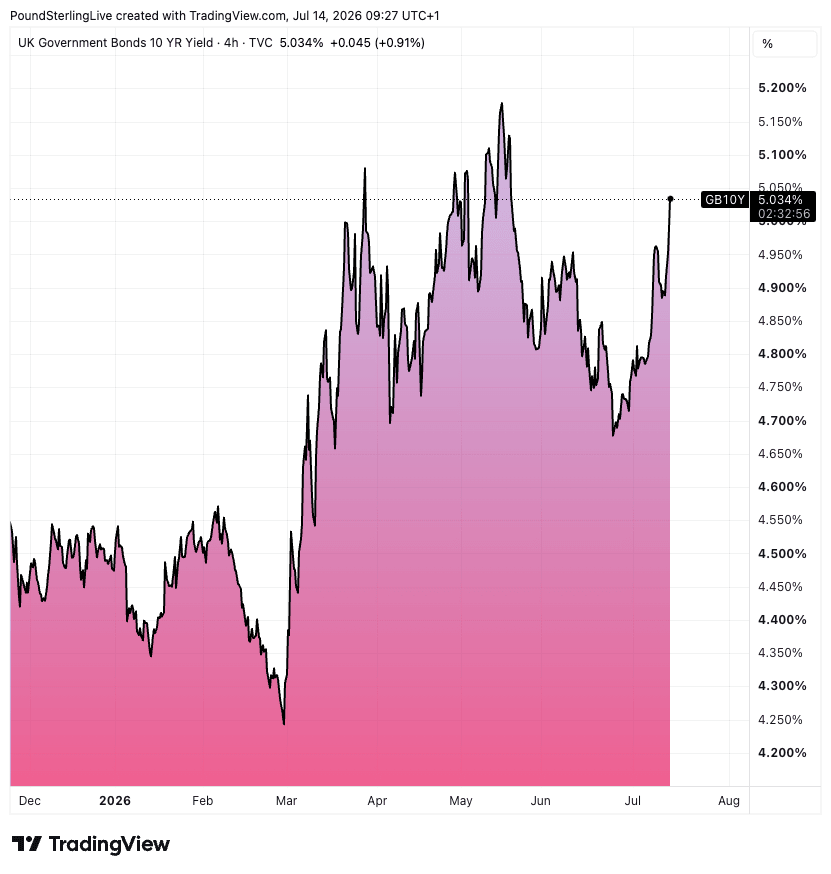
British government bond yields have leapt higher on Tuesday, yet the pound is amongst the worst-performing major currencies on the day.
The developments are interesting for those watching the UK's currency, particularly given the pound has tended to benefit from its relatively superior bond yield advantage for much of 2026.
Tuesday sees the two-year yield gap higher to 4.47% from 4.3% a day ago. Last week it was as low as 4.10%.
The ten-year rises to 5.036% from 4.98% and 4.7% at the end of July.
The spread against key peers has also risen: the UK versus German yield spread on two-year issuance is up to 1.65% from 1.60% 24 hours ago.
In a world where FX can be heavily determined by that spread, the pound-euro rate should be higher. However, it's not, and for the pound, that's a concern.
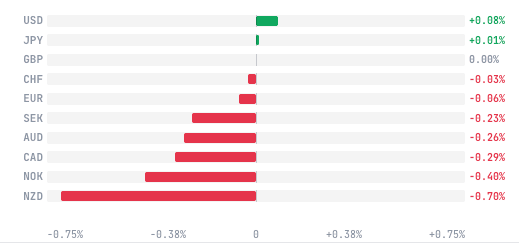
Indeed, a look at the performance dashboard shows GBP is lower against all G10s apart from the USD.
What's Causing the Rise in Bond Yields?
The rise in British bond yields is a reflection of rising inflation expectations as a result of the resumption of hostilities between the U.S. and Iran in the Middle East: closure of the Strait of Hormuz reignites oil and gas price gains, which will raise inflation down the line.
Yesterday's suggestion by U.S. President Donald Trump that the U.S. would collect tolls from maritime traffic through the Strait signalled that he might be digging in and that there won't be a quick reversal.
Why is the UK Particularly Vulnerable?
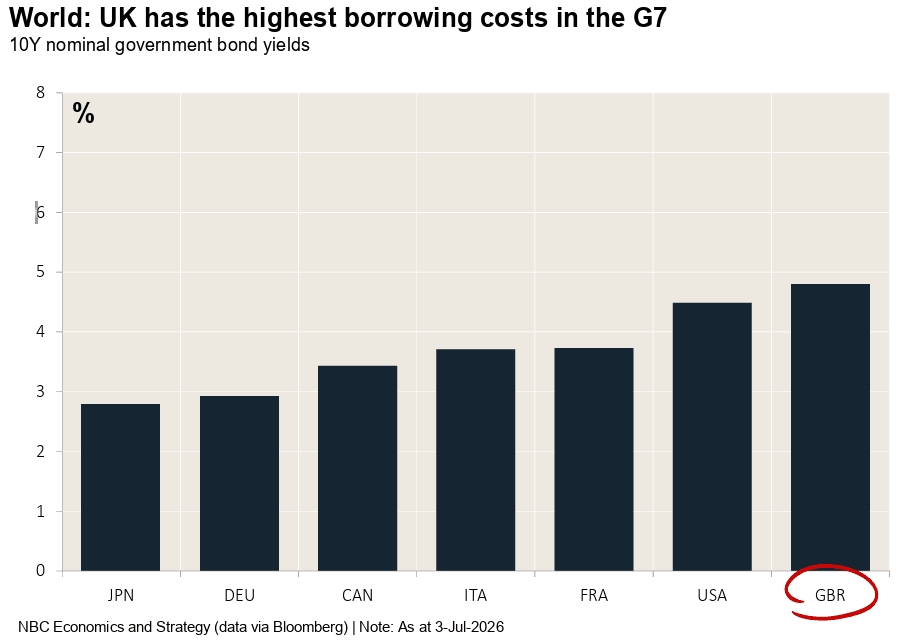
Britain has tended to experience inflationary rates well above those of peer countries, even before the war, meaning it is particularly vulnerable to external inflationary shocks.
The government has been running a generous spending programme which underpins the country's inflation problem, while structurally elevated energy prices are also contributing.
That means the UK has a high debt issuance requirement and lenders tend to demand a higher return to account for future inflation expectations.
For the Pound, the Yield Story Cuts Two Ways
The pound has tended to benefit from Britain's high relative bond yields, as international capital tends to flow to where returns are greater.
That flow supports sterling, but it's also a vulnerability: a high dependence on 'hot' foreign money can be detrimental during times of uncertainty and elevated market volatility.
If investor sentiment suffers as a result of ongoing global tensions, or for any other reason, foreign investor outflows could be significant, and that would impact the pound negatively.
Tuesday's price action is a reminder of the risks, coming at the end of a relatively solid mid-year run for the pound against most of its peers.
Free Report · Worldwide Currencies
Where Next for the Pound? Get the Quarterly Forecast Report
Consensus exchange rate projections from eleven global banking partners, including Barclays, JP Morgan and Citigroup: point forecasts, highs and lows for each quarter through to early 2027.
Delivered by email. Produced by Worldwide Currencies; for information purposes only and not investment or financial advice.