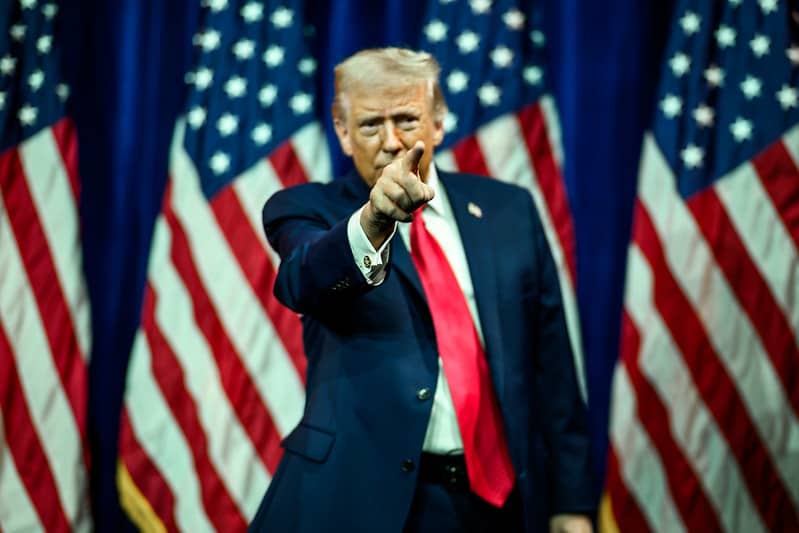
Official White House Photo by Daniel Torok
The dollar is softer, but the market is keeping a cool head.
The dollar weakened across the board Monday and all eyes on an increasingly belligerent Donald Trump.
The President said Saturday he would start with a 10% levy on EU and UK imports on February 01, before ratcheting the levy to 25% by June because of their strong opposition to allowing Trump to buy Greenland.
On Monday, he sent an ominous note to Norway's Prime Minister saying he no longer felt the need to think "purely of peace".
In response, global equity markets are lower, as is the dollar index, which is a measure of broader dollar performance.
Despite the alarming developments, markets are not panicking: The pound to dollar exchange rate dropped in initial Asian trade but has since recovered and is now higher on the day at 1.3397. Euro-Dollar is 0.30% higher at 1.1629.
"So far, the market reaction has been negative but modest, likely due to expectations that the tariffs may be ruled illegal by the Supreme Court within the coming weeks," says Danske Bank in a morning market briefing.
Equity futures are down, but not to a degree implying investors are readying for a new crisis. Why?
⚖️ A Supreme Court ruling over the legality of Trump's use of tariffs is imminent. Polymarket shows 'the money' sees a 70% chance Trump is defeated. If that happens, then what? From the market's perspective, there's a risk that any tariff-related premium is unwound and the dollar surges.
This Greenland trade incorporates two competing trades that we saw in 2025: the 'Sell America' and TACO trades.
'Sell America' rested on the assumption that Trump's tariffs were damaging to U.S. hegemony and domestic consumers. This loss of U.S. exceptionalism was expressed through a sharply lower dollar.
TACO emerged as the successor to Sell America: Trump Always Chickens Out. The observation is that Trump starts with a maximalist position and then pulls back as some kind of deal emerges.
This meant traders could fade initial reactions. But if everyone is prepared for TACO, that initial reaction to headlines simply fails to materialise.
So, here we are, with some alarming headlines and markets that are essentially holding ground and awaiting more information.
🔥 There are risks to this complacency though:
Trump appears determined to get Greenland, and recent events in Venezuela prove he is ready to act militarily in 'his' hemisphere. He's also clearly seeking a legacy, and expanding the American map delivers that.
We could be entering truly uncharted waters from a geopolitical perspective. So this could be a very news-driven week with numerous twists and turns.
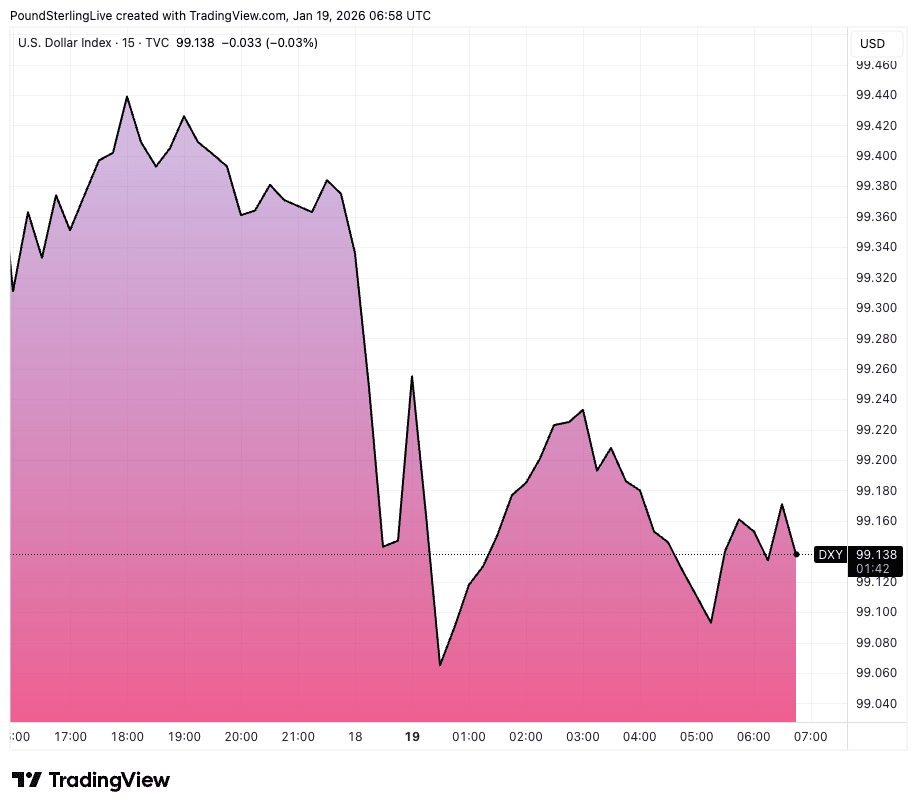
Above: The dollar index - a measure of broad USD performance.