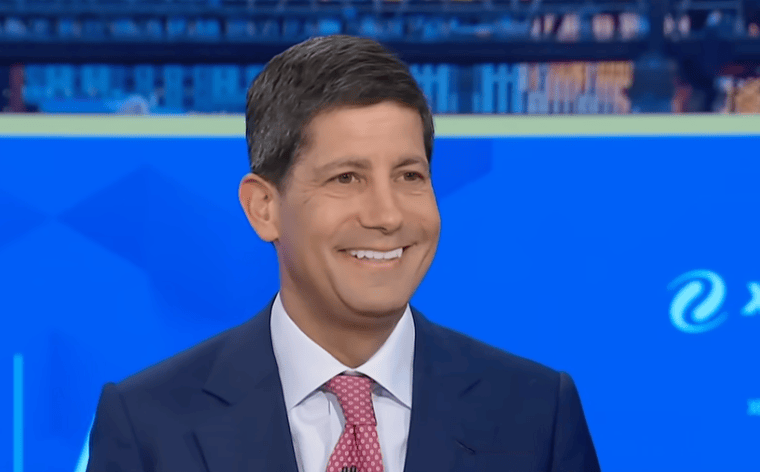
File image of Kevin Warsh. Still courtesy of CNBC.
The recent selloff in the U.S. dollar and sharp gains in precious metals may have influenced the decision to nominate Kevin Warsh as the next Chair of the Federal Reserve, according to analysis from Morgan Stanley.
“In our view, we think the recent parabolic moves in precious metals and weakness in the US dollar played a role,” Morgan Stanley says, pointing to growing unease around the speed and scale of recent market moves.
The bank argues that while the administration appears broadly comfortable with a weaker dollar as part of a wider economic rebalancing effort, there are limits to how far and how fast that adjustment should go.
“While our core view is that the administration is happy to see a weaker dollar as part of its economic rebalancing strategy, a disorderly fall is not desirable,” the bank says.
Concerns around market stability appear to have sharpened after recent price action began to accelerate.
“Recent price action was starting to border on disorderly which is potentially why Treasury Secretary Bessent stepped in last week with some strong dollar jawboning immediately after President Trump suggested a weak dollar is not a problem and even good for America,” Morgan Stanley says.
The comments highlight the delicate balance policymakers are trying to strike between allowing currency weakness to support competitiveness and preventing a loss of confidence in the dollar.
“Of course, a weaker dollar does make US companies more competitive on a global scale, and it’s complementary to the President’s tariff strategy to reduce the trade and current account deficits,” the bank says.
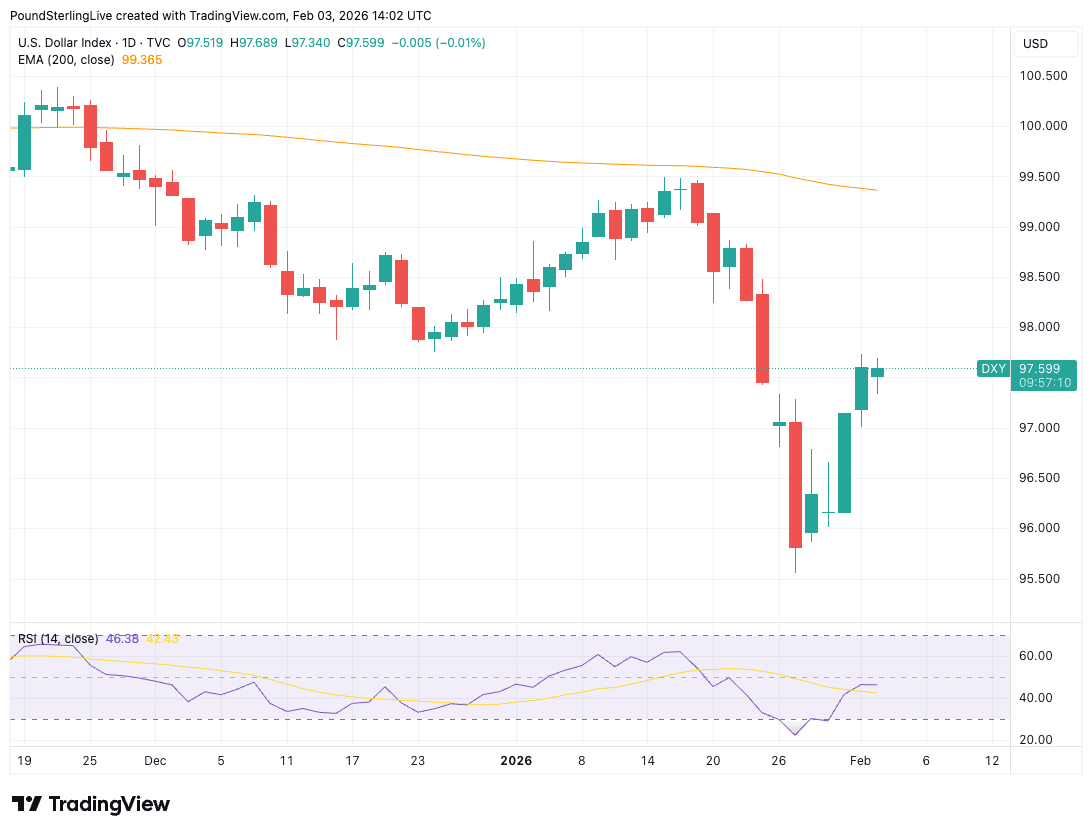
Above: The dollar index, a broad measure of USD performance and value.
Morgan Stanley also frames currency policy as central to the administration’s broader trade agenda.
“When discussing ‘non-tariff’ barriers to free trade, currency is the primary one,” the bank says.
The conclusion is that while dollar weakness is not being resisted outright, the authorities are likely sensitive to how that weakness unfolds.
“Bottom line, we think a weak US dollar is part of the plan for this administration, but they likely don’t want the path of weakness to be too fast or disorderly,” Morgan Stanley says.
Highly accurate consensus projections for the next four quarters, compiled from leading investment banks.
Access the full forecast →