Our New Zealand dollar forecasts - based on technical and fundamental observations - confirm that more near-term losses are possible.

The pound to New Zealand dollar exchange rate is looking to record the 7th day of gains out of the past 8, an observation that confirms momentum is presently pitted against the NZ currency.
The GBP to NZD chart (put together at the start of the week but still valid) shows the 3-white soldier candlestick formation at the bottom of a 3-wave corrective pattern.
This pattern suggests a high probability of short-term trend-reversal, and therefore more upside to come.
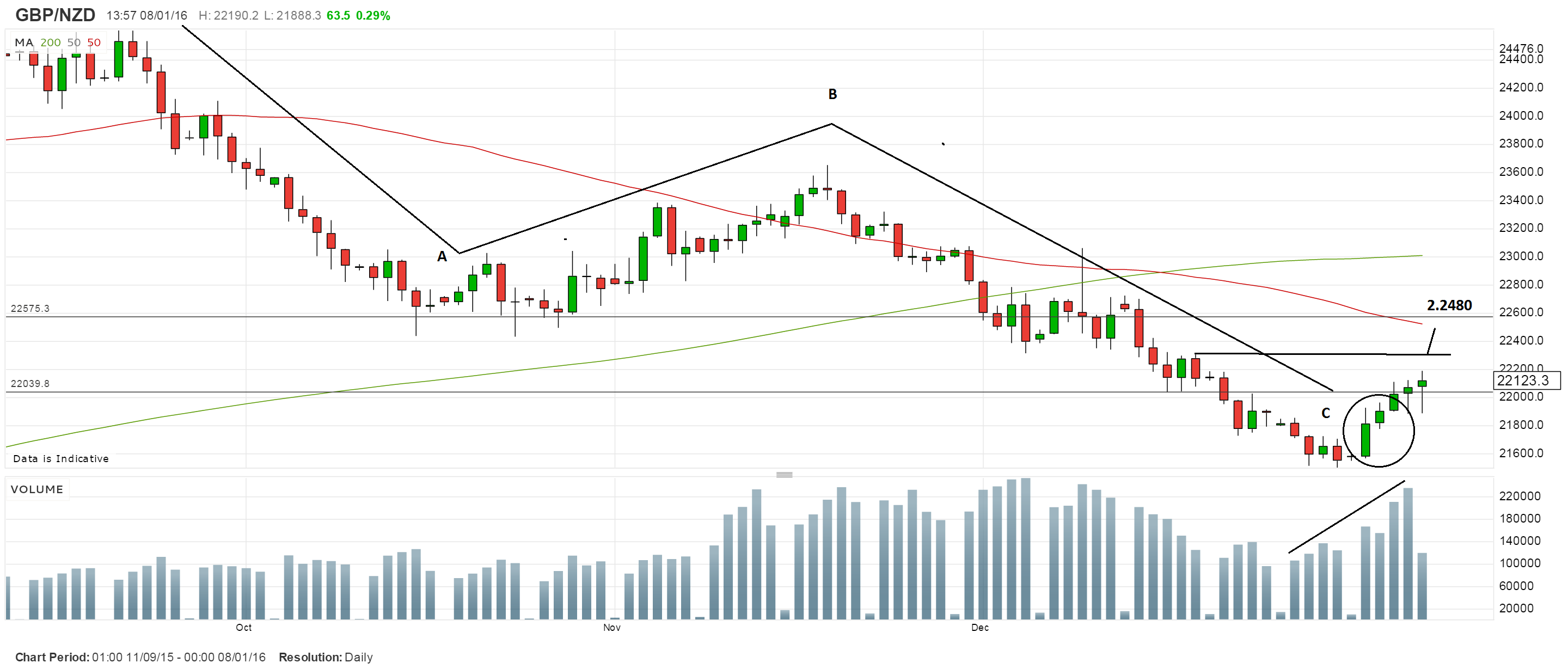
The monthly pivot which was capping gains, has now been definitively broken.
For confirmation of more upside I would ideally wish to see a break above the 2.2305 highs with a target at the 50-day MA at 2.2480.
Latest Pound / New Zealand Dollar Exchange Rates
  | Live: 2.3468▼ -0.47%12 Month Best:2.4815 |
*Your Bank's Retail Rate
| 2.267 - 2.2763 |
**Independent Specialist | 2.3139 - 2.3233 Find out why this is a better rate |
* Bank rates according to latest IMTI data.
** RationalFX dealing desk quotation.
Technical Outlook for the New Zealand to US Dollar Pair
The pair has finished completing an a-b-c correction within an uptrend and has broken down in a strong down-trend which boasts five down-days in a row.
The strong move down has broken below a key trend-line today which increases the chances it will continue even lower.
If it manages to break below the 0.6540 level, there is a good chance it might carry down all the way to the S2 Monthly Pivot at 0.6450.
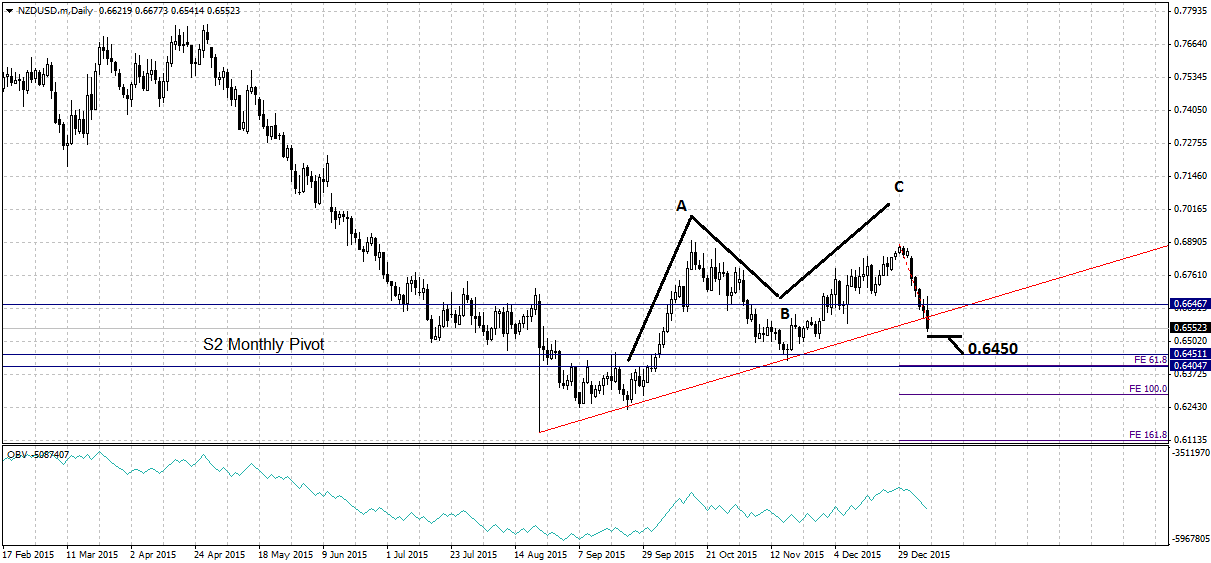
This is just above the minimum expected target calculated at a 61.8% Fibonacci extension from the break of the trend-line, at 0.6404.
A further bearish indication that the mini-down-trend will continue is the sharp fall noted on On Balance Volume.
Oil Prices Matter for the Kiwi Dollar
When discussing the present environment of low oil prices and currencies it is typically the Canadian dollar and Norwegian Krone that come to mind.
But an environment of low oil prices could also be negative for the NZ dollar it is argued by one of New Zealand's leading foreign exchange specialists.
Falling oil prices have one major effect; they put a lid on inflation. Oil is one of the major input costs (transportation, etc.) and has kept inflationary pressures low. While low inflation is welcomed by consumers it presents a headache to economic policy makers when it gets too low.
"For NZ this may mean interest rates remain lower for longer as the RBNZ try and keep their mandate of inflation staying in the 1.0-3.0% range," say Tuatara Asset Management in a currency brief to clients.
Further falls in oil could see markets starting to price in more rate cuts. "If this does happen and the RBNZ do remain on hold/cut interest rates the housing market is just going to continue its drive upward," warn Tuatara.
Tuatara argue that how the RBNZ look to handle this is going to be key to watch out for; "they have their first meeting at the end of this month so we may get a good insight into their thinking early this year."