

Image © Adobe Images
The Norwegian krone is powered by high oil prices and a 4.50% policy rate, but a fall in oil and fading gas support could shift the narrative.
The Norwegian krone is extending its rally against the pound as high energy prices and a hawkish Norges Bank draw investors into the currency.
The Pound to Norwegian Krone rate trades at 12.52, down from a July peak of 13.20, with every rally since capped by a falling trendline.
The 1 October bounce stalled near 12.78 at the 100-day moving average, a gauge of the medium-term trend, and the pair now sits below a falling 21-day average at 12.63.
We expect pound-krone to hold below the trendline, now near 12.70, with the September low near 12.44 the next support and the June lows near 12.37 beyond it.
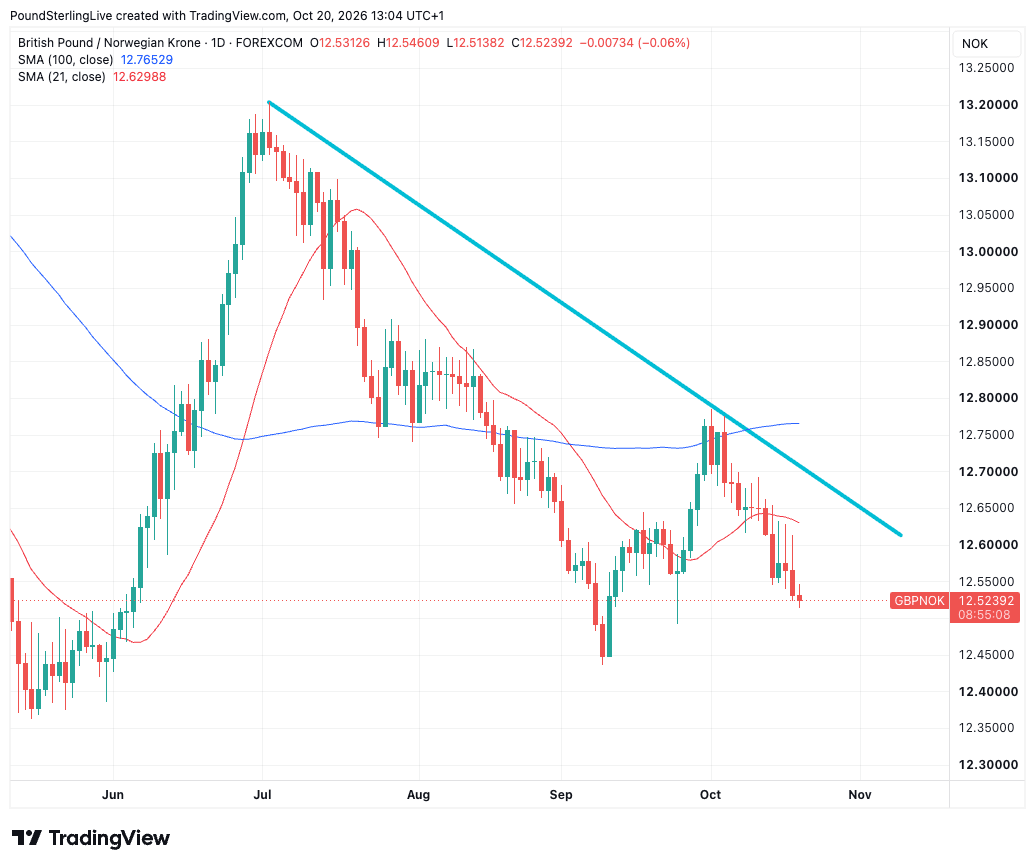
Above: Pound-krone has set lower highs beneath a falling trendline since July.
Norway is one of Europe's largest oil and gas exporters, so higher energy prices lift its export earnings and the demand for krone that comes with them.
Brent crude trades near $110 a barrel, with attacks on Saudi energy targets and on shipping near the Strait of Hormuz keeping supply risks elevated.
"The Norwegian krone is on a roll, supported by strong risk appetite, high energy prices and a struggling euro," says Kjersti Haugland in DNB Carnegie's morning report on Tuesday.
Crédit Agricole CIB names elevated energy prices as the krone's key support, with flare-ups between Saudi Arabia and the Houthis outweighing talk of an energy truce between Ukraine and Russia.
The same forces split Scandinavia's currencies, and Swedbank this week raised its forecast for the krone against Sweden's krona, citing Norway's carry and the persistently high oil price.
Norges Bank Holds the Yield Advantage
Norges Bank raised its policy rate to 4.50% on 24 September and said it is prepared to raise it further if needed to return inflation to its 2% target.
Crédit Agricole CIB says September's below-consensus Norwegian inflation left the case for another hike intact.
Norway's rate sits above the Bank of England's 3.75%, giving the krone a yield advantage over sterling that attracts carry investors.
The Bank of England could narrow that gap on 5 November, with unemployment falling to 4.7% on Tuesday and firming the case for a hike.
Lower Oil Is the Krone's Main Risk
For krone bulls, the main risk is a fall in oil prices.
"Fundamentals remain supportive, with risks mostly linked to a rapid de-escalation in the Gulf and sharp oil price decline. Neither appears imminent at this stage," says ING in a recent update.
President Trump has waived some Russia-related energy sanctions, a move Danske Bank says offered Brent modest relief.
SEB says gas-price support for the krone should stall this month as European storage restocking peaks.
Norges Bank and the Bank of England both decide on 5 November, and a pound-krone held below the 21-day average at 12.63 into those meetings keeps the downtrend on course for 12.44.

Daniella Arcadipane, Senior Currency Specialist at Indigo
Moving a life-changing sum abroad? You won’t be doing it alone.
One specialist explains every step in plain English and stays with it until the money lands. FCA authorised, FRN 594433.
Talk to a specialist