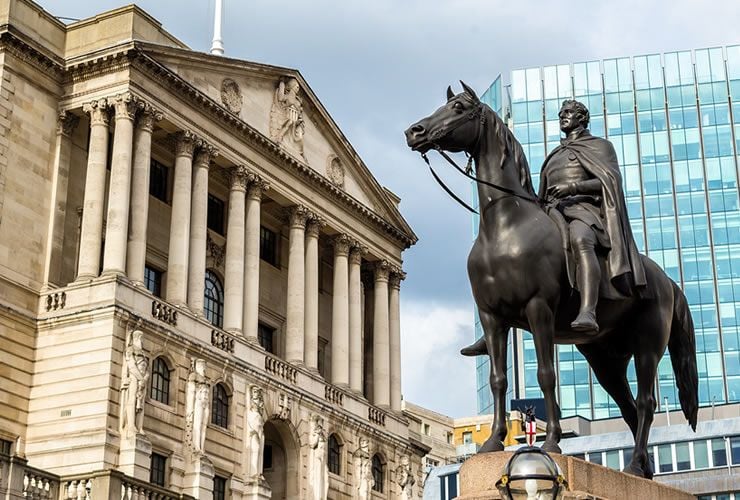
The Bank of England’s Super-Thursday event will be the highlight for the British pound today with the outcome likely to set the tone for trade for coming days and weeks.
- The Bank confirms the pound's value would fall notably lower in the event of an Out vote in June
- TD Securities forecasts on a positive GBP reaction to the event are on the money
- Cuts to growth forecasts not as deep as feared
- Robust warnings on the economic impact of an Out vote could cement the In vote in June - possibly another reason why sterling is rallying
- Broadbent: Sterling declines in wake of Brexit likely to be in excess of 3%
Today the Bank of England (BoE) publishes the quarterly Inflation Report, the MPC policy decision and MPC minutes which will be followed by a press conference.
Initial reactions to the release of the Inflation Report have been positive from a GBP perspective; the currency is up across the board as there were little major changes to the headline forecasts on growth and inflation.
Keeping forecasts unchanged is a GBP-positive outcome owing to the overly bearish positioning of markets and analysts heading into the event which were expecting deeper cuts.
No change to interest rates were announced in the MPC's policy decision while all nine members of the committee voted to keep rates unchanged.
"If the MPC plays it safe then markets might interpret the fact that they 'ignore' the recent weak data as hawkish," said James Rossiter at TD Securities in London ahead of the event.
This assessment was correct and in response:
- The pound to euro is higher by 0.35% at 1.2691
- The pound to dollar is higher by 0.10% at 1.4459
- The pound to Aussie dollar is higher by 0.7% at 1.9724
The pound to dollar exchange rate is forecast to stage a "modest" retracement of its May weakness and target resistance at 1.4543 according to Rossiter.
"With the Bank of England expecting ‘off-line’ economic activity to come back on-line after a potential STAY vote on June 23, this anticipated ‘stimulus boost’ to the economy is why we could see a 3-5% relief-rally in the Pound back towards the $1.48-$1.50 range against the US dollar," notes Nawaz Ali, UK Currency Strategist at Western Union Business Solutions (UK) Ltd.
The Bank thinks that EU referendum uncertainty has accounted for about half of the 9% drop in the pound since its November peak.
Latest Pound/Euro Exchange Rates
  | Live: 1.1665▲ + 0.04%12 Month Best:1.1828 |
*Your Bank's Retail Rate
| 1.1268 - 1.1315 |
**Independent Specialist | 1.1502 - 1.1548 Find out why this is a better rate |
* Bank rates according to latest IMTI data.
** RationalFX dealing desk quotation.
Changes to Forecasts
The BoE cut GDP forecasts for 2016 from 2.2% to 2%, sterling's reaction suggest this could have been deeper.
Carney, in his press conference, won't be pressed into giving any growth forecasts in the event of an Out vote being delivered in June saying there is no formal forecast.
Inflation is still forecast to breach the 2% target in the second half of 2018.
"As in the past few Reports, inflation is projected to be a bit above its target in the medium-term – once again sending a warning to financial markets that their interest rate expectations are too low," says Vicky Redwood, Chief UK Economist at Capital Economics.
EU Referendum is Key Headline Feature
It seems the biggest focus is being reserved for the EU referendum, understandably all the big-hitters in the political debate are frantically pushing their cases based on the BoE's references to the the event.
Prime Minister Cameron and Fin Min Osborne have both jumped onto the warnings for "materially" lower economic growth if UK leaves the EU.
Concerning the currency's outlook the Bank reports the referendum poses a downside risk to the exchange rate:
"At the same time, supply growth is likely to be lower over the forecast period, reflecting slower capital accumulation and the need to reallocate resources. Sterling is also likely to depreciate further, perhaps sharply."
Pound sterling was mentioned 92 times in the report, up from the 72 mentions in the February report.
In the press conference Carney says the pound will suffer on a UK exit from the EU as terms of trade deteriorate, productivity falls and risk premia rises.
A fall in sterling would then boost inflation notably.
Ahead of the Event We Wrote:
If the Bank raises their inflation forecasts (note our response to the hidden inflationary dangers in this month's Services PMI data) then expect the pound to catch a bid as this confirms the economy may need higher interest rates to ensure inflation is contained.
“Higher oil prices and a weaker sterling effective exchange rate could see the BoE revise up its inflation forecast slightly over the next year or so; set against this, the fall in sterling is largely due to uncertainty ahead of the EU referendum and could prove temporary,” says Daniel Vernazza, Lead UK Economist at UniCredit Bank in London.
Such a move would be taken as a positive by currency markets as higher inflation hints at interest rate rises on the horizon. Higher interest rates boost demand for sterling as global investors seek out the UK's higher yield.
However, beware the Bank could lean on weaker business activity which may be reflected in lower growth projections.
The BoE has said that it will ignore any weak data until the EU Referendum is out of the way.
“We think recent weak data is mostly related to heightened Referendum uncertainty, but will look carefully at the Inflation Report for the BoE’s interpretation,” says Rossiter.
If they see something more than just Referendum-related uncertainty, it reduces the odds of a late-2016 hike in the Bank rate notes Rossiter who indicated in April that he was still expecting the Bank to raise interest rates in 2016.
According to economists at Credit Agricole, the longer-term inflation outlook should remain stable with prices expected to return to target within two years.
C.A agree that weaker conditions may be largely related to Brexit fears, they may still be regarded as temporary.
A Potential GBP Boost on Sanguine Interest Rate Expectations?
The key message of the past few reports has been that markets are being too sanguine about the outlook for interest rates.
In effect the Bank believes markets are underpricing interest rates, and thus the pound, based on expectations for inflation.
Inflation has been forecast to be above its target at the two-year horizon for the past three Inflation Reports, with February’s Report showing the biggest projected overshoot at the three year horizon since 2005.
"Yet each time, markets have largely ignored these warnings. And we expect much the same pattern to happen this time," notes Vicky Redwood at Capital Economics.
Redwood believes this will happen again.
But were the Bank to emphasise this point in a more assertive fashion then there is the chance sterling could rise.
If markets don't close the gap between where the pound should be based on inflation expectations this month, they certainly will have to push GBP higher over subsequent months as an interest rate rise rushes into view.
Outlook for the Pound Sterling: Subdued as ‘Books are Squared’ Ahead of June 23rd
Although a slightly more dovish assessment could trigger some downside, Credit Agricole believe that elevated speculative short positioning should still limit such risks.
"From a broader angle, and as we expect the UK to remain part of the European Union, we believe that dips should still be bought," says Valentin Marinov, Head of FX Strategy at Credit Agricole.
If the pound does find some buying interest following the Bank of England event, expect it to be short-lived.
There is just no way the currency will catch a notable bid ahead of the June 23rd referendum.
“Sterling should remain largely poll-dependent in the remaining time ahead of Britain’s referendum on EU membership, but we see a risk that, given the still-high uncertainty surrounding the outcome of the vote, investors may prudently pair positions and square books as the 23 June deadline gets closer – while trimming any sterling gains in the meantime,” says Roberto Mialich,
FX Strategist with UniCredit Bank in Milan.
We have reported earlier that some analysts are aggressively negative on the pound’s prospects going forward.
Societe Generale believe that a combination of US Fed-inspired dollar strength and weakening UK growth will ultimately push the GBP towards 1.35 against the US dollar.
Such exchange rates have not been seen since the 1980’s and offer a warning against complacency.
We would imagine any weakness over coming months will be contained by 1.40 - an incredibly strong support zone that has protected the pound against downside for years now.
Should this level break then 1.35 would unquestionably come into view.
Such a sell-off does however appear unlikely over coming weeks but would be the result of progressive weak data releases.