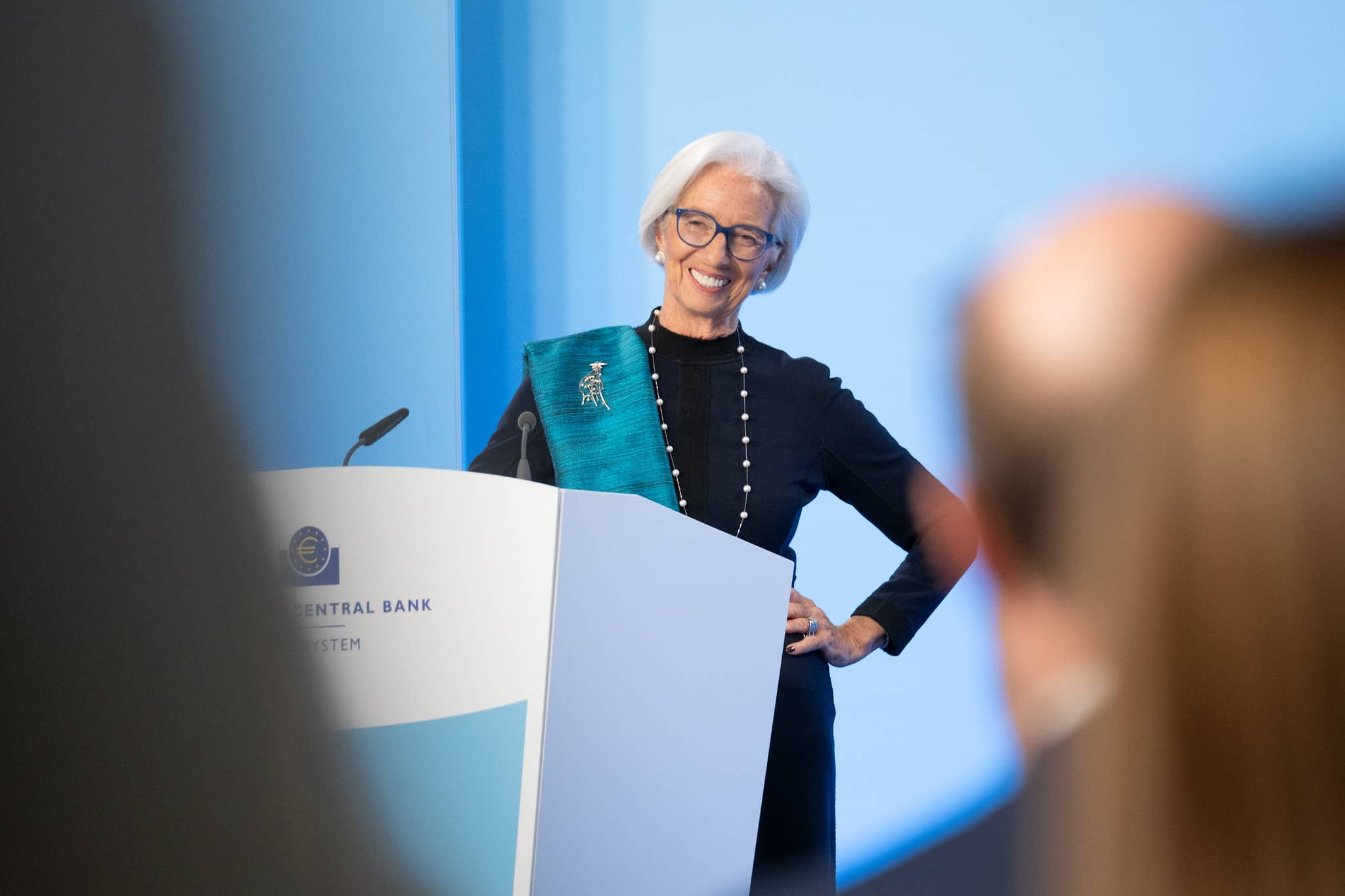
File image of Christine Lagarde. Source: ECB.
Thursday's European Central Bank decision will prove the main near-term focus for the euro.
Euro exchange rates could be in for a boost if Thursday's ECB meeting signals a September rate hike and intentions to act again owing to fears that the inflation outlook has recently deteriorated.
Any message that validates the need for future hikes would underpin Eurozone bond yields and help extend the European single currency's recent rise off the multi-month lows reached against both the dollar and pound struck earlier in the month.
According to economists, such a 'hawkish' shift in messaging from the ECB would rest on this month's deterioration in the Middle East conflict that has propelled oil and wholesale natural gas prices materially higher.
"Central bankers are likely to maintain a wait-and-see approach for the time being. However, should the escalation in the Middle East observed over the past two weeks continue and energy prices be driven further upwards, serious consequences for inflation prospects must be considered. In this case, the ECB would probably be forced to act later in the year," says a note from Germany's Helaba Bank.
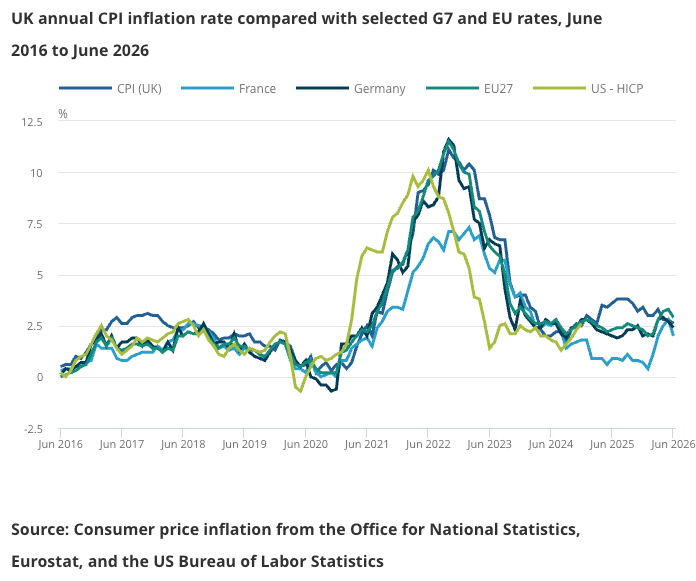
The inflation context is important: the Eurozone's inflation run-rate is heading in the wrong direction, and that's something central bankers will be discussing at their policy meeting, which got underway today in Frankfurt.
As the chart shows, the Eurozone's inflation run-rate is now higher than that of the UK's, which is quite a feat given Britain's long-running status as an inflationary outlier:
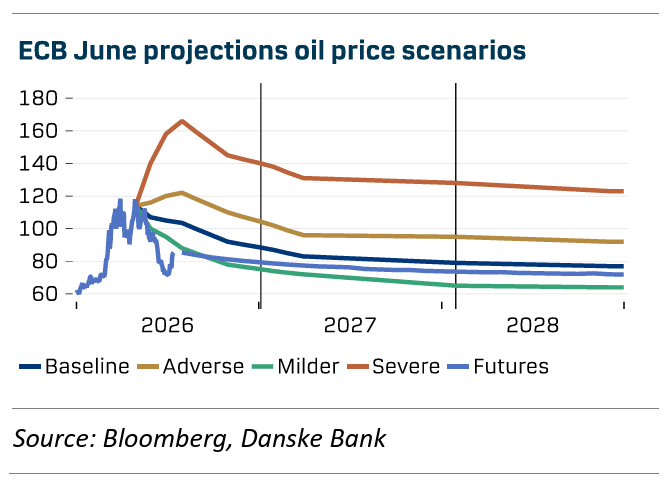
The most recent ECB economic forecasts showed an expectation for inflation to lift through in the second half of the year, but July's reclosure of the Strait of Hormuz and low European gas storage levels risk exacerbating the rise in prices.
As the forecasts show, oil is running above its previous baseline expectation:
The fear at the ECB is that energy shocks will culminate in a broadening out of inflationary pressures, something traditional monetary policy management can address via higher interest rates.
Crucially, consumer inflation expectations also remain elevated, and markets are pricing inflation to average 3.25% y/y for the rest of 2026 and 2.65% in 2027.
"ECB President Christine Lagarde will likely refrain from pushing back against the market’s rate-hike expectations. This would indicate a high likelihood of a rate increase in September, when a fresh set of ECB staff projections will provide the GC with a more comprehensive assessment of the medium-term inflation outlook, leaving the door open for further action if needed," says Marco Valli, Chief Economist at UniCredit Bank.
The Other Side of the Coin: A Dovish Outcome
Although the evidence is building for a 'hawkish' outcome, those watching the euro's price action should also prepare for a scenario where a weakening in the currency follows Thursday's announcement.
Positioning and price action ahead of the decision are a potential headwind as money market participants already assign a probability of around 90% to an interest rate hike in September, and one is fully priced in by October.
That means hikes are already richly priced, leaving limited room for a 'hawkish' repricing on the day. For the euro, that's a headwind, and the ECB will therefore be unlikely to turn the currency's fortunes.
"Growth has been weaker than expected in Q2, and the June inflation print was soft, with no signs yet of indirect effects from the energy shock. At the same time, there are no signs of second-round effects," explains Rune Thyge Johansen, Senior Macroeconomics Analyst at Danske Bank.
Danske do not expect more than one additional hike and sees the ECB cutting the deposit rate back to 2.00% next year.
For the euro, if that call proves correct, a repricing lower in interest rate expectations would prove to be a notable headwind, all else equal.

The Bank Consensus, Without the Terminal
The median, mean, highest and lowest from the October survey update, plus named point forecasts out to 2027.
Free information pack, issued by World Wide Currencies.