Image © Adobe Images
The British pound is set to stay under pressure short-term following a string of softer-than-expected inflation numbers.
Pound sterling treaded lower levels against the euro, dollar and other currencies after it was reported CPI inflation rose by 2.6% in the 12 months to June 2026, down from 2.8% the previous month and below the consensus expectation for 2.7%.
On a monthly basis, CPI rose by 0.1% in June 2026, compared with a rise of 0.3% in June 2025.
There were additional signs of softer price increases: core CPI, which strips volatile components from the price basket, rose by 2.6% in the 12 months to June 2026, unchanged from the 12 months to May; but that's a little hotter than the 2.5% reading the market was looking for.
Goods inflation slowed from 2.0% to 1.7%, while the CPI services annual rate, which the Bank of England is particularly aware of, eased from 3.7% to 3.6%.
"The pressure to tighten monetary policy could ease somewhat with today's figures," says a note from Helaba Bank. "Most market participants still expect the base interest rate to rise over the course of the year. An increase of 25 basis points to 4.00% by the end of the year is already priced in. We are skeptical and anticipate that key interest rates will remain unchanged."
These Data Anchor Pound Lower
The rule of thumb is that cooling interest rate expectations should weigh on the pound. On that basis, these data are consistent with a softer currency as there is nothing in the figures that warns of inflation unanchoring and running higher.
The pound-to-euro entered the day under some pressure, having fallen for four days in a row, and we don't see anything in the data to turn that around. The pair is now trading above where most investment banks forecast it will be in the coming months.
"Sterling is a little weaker on the data," says Chris Turner, head of FX research at ING Bank. He says GBP/EUR may well have peaked at 1.1827 last week.
The pound-to-dollar pair is also descending and trades at 1.3386, having been as high as 1.3550 last week.
But Inflation Will Ramp Up Again
Bottom line, inflation is still above the Bank of England's 2.0% target and it should move further away from that target in the coming months as energy price increases land.
"We expect to see some rebound in the coming months," says Rob Wood, Chief UK Economist at Pantheon Macroeconomics, who looks for inflation to peak at 3.3% in September.
This steady move away from the 2.0% target will give the Bank of England reason to maintain interest rates at current levels for an extended period, something that should underpin the pound's relative interest rate yield advantage over other currencies.
"Investors continue to gravitate towards currencies that will deliver yield," says ING's Turner.
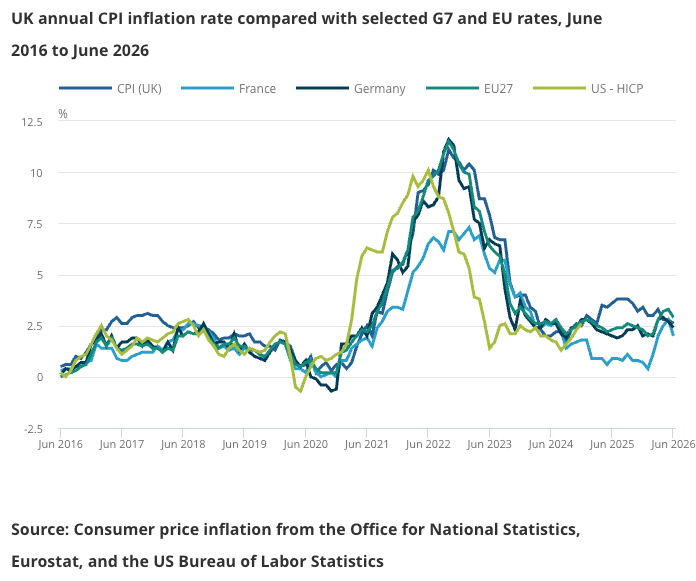
Above: UK inflation no longer an outlier.
Three Reasons Why Inflation Will Rise Again
A post-release analysis from Lloyds Bank says Wednesday's news, alongside other recent data, should be sufficient for the Bank of England to maintain its existing message on keeping interest rates steady as it wants to look through the energy shock caused by the Middle East war.
Nevertheless, economists at the British high-street lender say there are at least three reasons not to be complacent about upside risks to the rate outlook:
(1) Energy prices are rising again following a deterioration in the Middle East.
(2) There's a risk of the new Burnham government enacting policies that add more stimulus, even if mechanically they bear down on measured CPI in the short-term.
(3) The relative stickiness of services inflation versus expectations in Wednesday's report speaks to a potentially lingering domestic / labour market element to price pressures, rather than it all being external / energy related.
But The Bank Will Hold its Nose
Despite an upcoming rise in inflation, the sense we're getting from economists this morning is that the Bank of England will hold its nose and try and weather the upcoming bump in prices by holding rates steady, judging that a steady decline awaits beyond the peak.
"Though inflation is set to rise towards 3.5% later this year, we expect the Bank to keep rates on hold throughout 2026," says economist James Smith at ING.
That steady rates story would defy a market that thinks at least one rate hike is due by year-end.
Traditionally, that implies a decline in rates expectations that should weigh on the pound.
If that mechanism is still alive, the pound could ease itself lower, although the timing of that trend is still up for debate given the current near-term constructive setup in the main GBP exchange rates.
Free Report · Worldwide Currencies
Where Next for the Pound? Get the Quarterly Forecast Report
Consensus exchange rate projections from eleven global banking partners, including Barclays, JP Morgan and Citigroup: point forecasts, highs and lows for each quarter through to early 2027.
Delivered by email. Produced by Worldwide Currencies; for information purposes only and not investment or financial advice.