Image © European Central Bank
The Euro is forecast to recover against the Dollar through the second half of 2026, according to new projections from ING.
The Dutch lender sees Euro-Dollar ending the year near 1.18, with Dollar-Yen at 158.
"Altogether, but largely driven by the Fed view, we're mildly dollar negative into year-end and into 2027," says ING in a mid-year forecast update.
The bank concedes the call rests on the Federal Reserve staying on hold: a hike is not in its calculations, and one "would merit firmer dollar forecasts across the board."
Fed Back in the Driving Seat
A stronger Dollar was the obvious trade following the Middle East conflict, with U.S. energy independence and the terms-of-trade shock to Europe and Asia making the Greenback the go-to currency in March.
But ING notes the resilience of risk assets and the stop-go nature of the conflict saw geopolitics take a lesser role in FX pricing over subsequent months.
"Now the path of Fed policy is firmly back in the driving seat," says the bank.
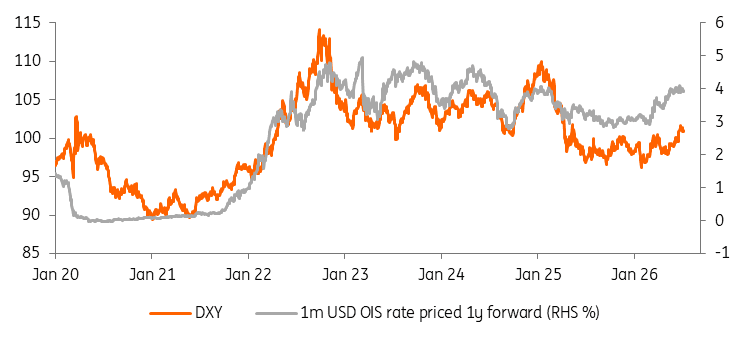
Better U.S. data and a hawkish FOMC last month have markets pricing more than 30 basis points of Fed hikes this year.
"However, our house call is that the Fed will ride out the summer without touching rates and if that is the case, the dollar will need to come lower," says ING.
Hedging Costs Set to Fall
The first of three interacting themes ING identifies for the second half concerns the cost of protecting against Dollar weakness.
If the Fed continues to look through temporarily higher inflation without hiking, short-dated U.S. interest rates will be falling come September.
That would encourage foreign investors to raise the proportion of their U.S. assets that are hedged against currency risk, a process that involves selling Dollars.
"The cost for eurozone investors to hedge US assets, using three-month forwards, has already dropped to 1.5% p.a. from 2.5% over the last year," says ING.
The bank reckons those costs could narrow further to 1.00% into next year based on its Fed profile.
Investors Are Under-Hedged Again
ING's second theme is that foreign investors are once again running low hedge ratios on their US holdings, echoing the setup that preceded last April's Dollar selloff.
"One might say that lightning doesn't strike twice, but once again it looks like investors are running low hedge ratios again," says the bank.
Indications from the Danish buy-side suggest European investors are hedging just 67% of their Dollar exposure, on the view that the currency is a good store of wealth given relatively high rates and its safe haven performance during this year's Middle East crisis.
ING says current hedging costs would normally imply a ratio closer to 73%.
"Any loss of confidence in the dollar could see a similar adjustment in hedge ratios to that seen last April," warns the bank.
Midterm Elections Provide a Trigger
If falling hedging costs meet under-hedged investors, what sets the adjustment in motion?
Last year it was the erratic policy around tariffs on Liberation Day; this year ING points to U.S. midterm elections in early November.
Republicans are widely expected to lose the House, withdrawing President Trump's options to stimulate the economy with tax and spend policies.
"This could see a swing back to foreign policy and trade at the White House, which, given current long dollar positioning, could prove a threat to the dollar," says ING.