Image © Adobe Images
Pound-to-euro at new one-year peak at 1.1721 as rising oil and gas prices lift inflation expectations and British bond yields.
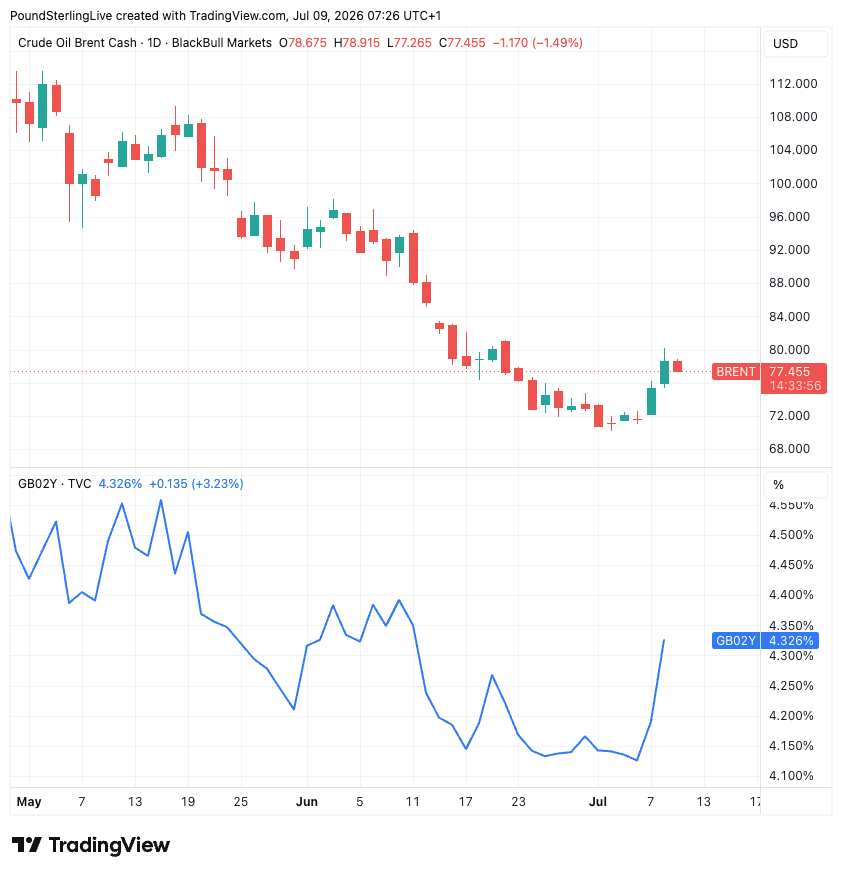
Rising oil and gas prices are impacting foreign exchange markets again as investors fear that the Strait of Hormuz might be closed for an extended period after hostilities between the U.S. and Iran brought an end to a tentative peace deal.
"Crude oil recovered for two consecutive sessions, rebounding from a low around USD 67 per barrel to nearly USD 76 per barrel before temporarily pulling back to around USD 74 per barrel. The main driver came from renewed signs of tension between the U.S. and Iran," says Linh Tran, Market Analyst at XS.com.
For pound sterling, energy price gains are fuelling expectations that the Bank of England must raise interest rates in the near future, which secures the currency's relative rate advantage against other peer currencies where rates aren't expected to rise as much.
Why Has the Pound Risen in Recent Hours
The pound has risen by 0.20% over the course of the past day and it looks as though we are seeing a repeat of the March-April playbook, where the pound rose against the euro due to hostilities in the Middle East.
The mechanism behind the pound's latest gains are as follows:
Conflict resumes, the Strait of Hormuz shuts to traffic and oil prices rise, that means global inflationary pressures rise too.
Higher inflation will meanwhile convince the Bank of England it will need to raise interest rates.
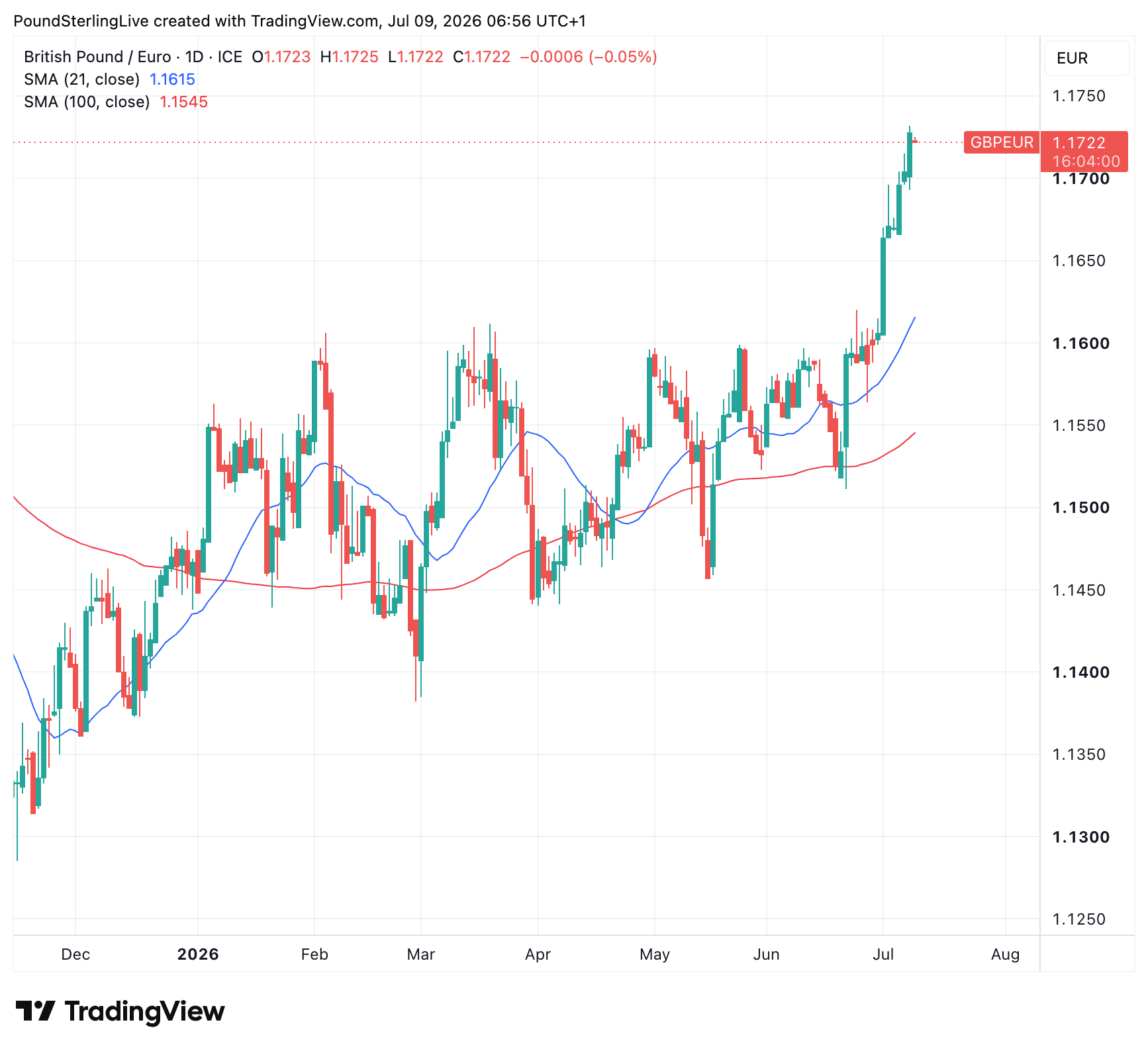
Interest rate expectations are, in turn, highly influential on shorter-term bond yields: for instance, the two-year UK bond yield has risen to 4.3% from 4.1%.
That's faster than the rise in Germany's equivalent, which went from 2.6% to 2.69%.
It's that relative move in rates that impacts the pound versus the euro and helps it build on its recent run of gains.
"The UK’s recent history of sticky inflation and the swing in short-term interest rates at the start of the Iran war to pricing in BoE rate hikes can partly explain GBP's resilience," says Jane Foley, Senior FX Strategist at Rabobank.
Another Reason Why Higher Oil Prices Help the Pound
Responding to the recent escalation in the Gulf is Geoff Yu, Senior EMEA Market Strategist at Bank of New York.
He suggests that rising oil prices boost the attractiveness of FTSE-listed oil majors to international investors.
The resulting inflow is supportive of sterling, he explains:
"Asset allocation to the U.K.’s equity market differs greatly from the Eurozone due to global exposures. Energy-driven supply shocks could even prove beneficial to GBP on the margins."
Medium-term Headwinds Linger
The pound is the second-best performing G10 currency of the month amidst a spell of outperformance that extends beyond just the oil and war story.
Economic growth came in strong during the first quarter of the year, and that's helped the pound establish itself as the fourth-best performer amongst the major currencies over 2026 as a whole.
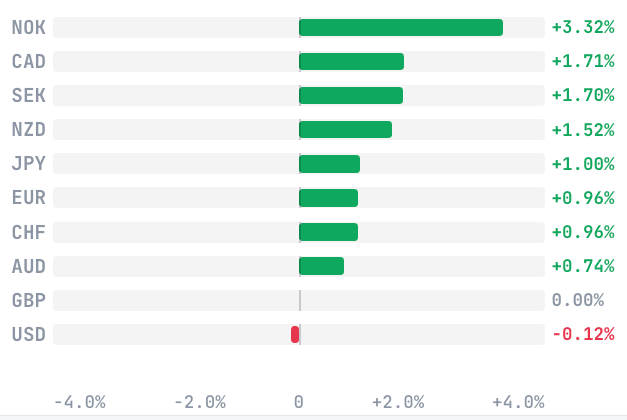
As always, past performance does not guarantee future performance.
Rabobank's Foley warns that the UK economy is still exhibiting excess capacity, government debt levels are at lofty levels and plenty of political uncertainty remains.
"Despite this month’s better tone, we don’t see GBP as being free of political risk," she says, adding:
"While Burnham could be granted a honeymoon period, the tightness of UK public finances indicates that pressures on his premiership will inevitably mount."
The OBR this week warned that UK public finances are heading towards an unsustainable long-term path.
It said the UK’s debt trajectory would move on to "an unsustainable and ever-rising path" in almost all scenarios.
Stabilising debt at 95% of GDP (current OBR baseline) from the end of the forecast horizon (2030-2031) onwards would require spending cuts or tax increases equivalent to more than >£100bn a year.
Goldman Sachs economists see risks of a slower fiscal consolidation under a Burnham government due to further spending pressures and limited available tax room.
Fiscal sustainability concerns will therefore return as a market-relevant theme. For the pound, that's a risk on the horizon.