Image © Adobe Images
The balance of probabilities has shifted further in favour of Pound sterling after GBP/EUR broke above 1.1600 and 1.1630.
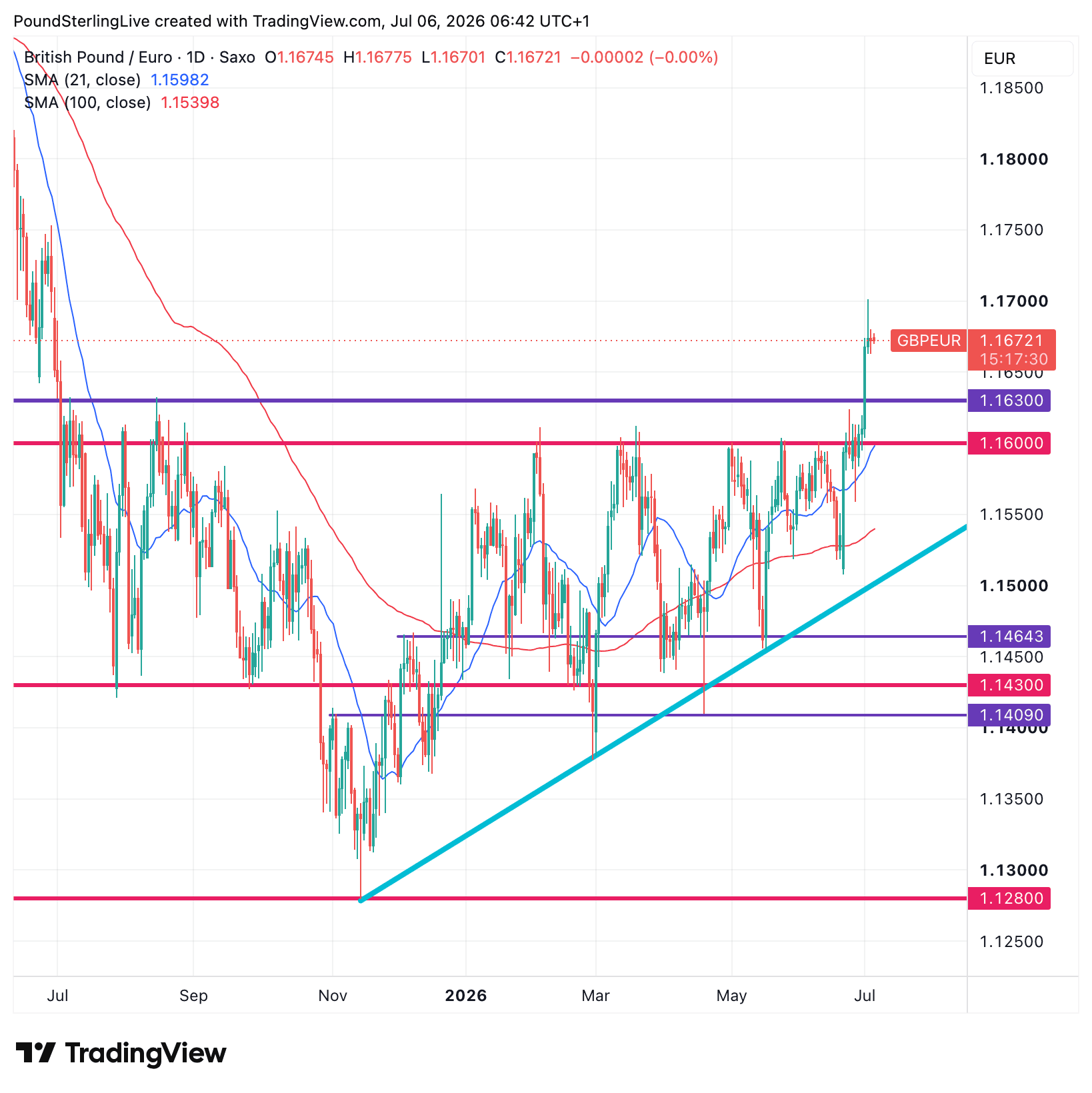
The pound-to-euro exchange rate broke decisively above resistance at 1.1600 last week and followed through above 1.1630, signalling a successful escape from the trading range that constrained price action through much of the first half of the year.
The move is supported by rising 21-day and 100-day moving averages, confirming that momentum and the broader trend are aligned with Sterling upside.
The key question for the week ahead is whether GBP/EUR can hold above former resistance.
If the breakout is genuine, the 1.1630-1.1600 zone should now transition from resistance into support, providing the platform for another leg higher.
While the rally has been swift, there is little evidence of exhaustion at present, meaning any short-term consolidation above these levels would reinforce rather than undermine the bullish outlook.
Provided the pair can hold above these former resistance levels over the coming sessions, the breakout should attract fresh buying interest and expose a move towards 1.1700, with 1.1800 becoming a realistic medium-term objective.
A retreat back below 1.1600 would cast doubt on the breakout, but the broader technical outlook remains constructive while price continues to trade above its rising 21-day and 100-day moving averages.
Key levels
Resistance
1.1700 - immediate upside objective and psychologically important round number.
1.1800 - next significant resistance if the breakout extends.
Support
1.1630 - former resistance, now first support following the breakout.
1.1600 - key breakout level; a hold above would confirm the change in market structure.
1.1540 - area of the rising 100-day moving average and an important medium-term support zone.
The Week Ahead: Yield Advantage Pound
There are no tier-one data releases due out of the Eurozone or the UK this week and the second-tier numbers are unlikely to move the market.
UK politics remains a background issue for now, with the new Prime Minister Andy Burnham flying below the radar and not giving any concrete policy decisions, leaving traders with little to latch onto.
That means Britain's relatively high bond yield advantage will dominate market flows, drawing international investor funds into the country to the benefit of the pound.
"With Andy Burnham seen as his unchallenged successor, political uncertainty has remained surprisingly contained. The pound has benefited despite looming fiscal concerns, prompting us to raise our short-term forecast modestly," says a monthly currency update from Julius Baer.
Eurozone Rate Expectations Deflate, Drawing EUR Lower
Although British politics is of interest, it looks as though the more influential currency in recent GBP/EUR gains has been the EUR.
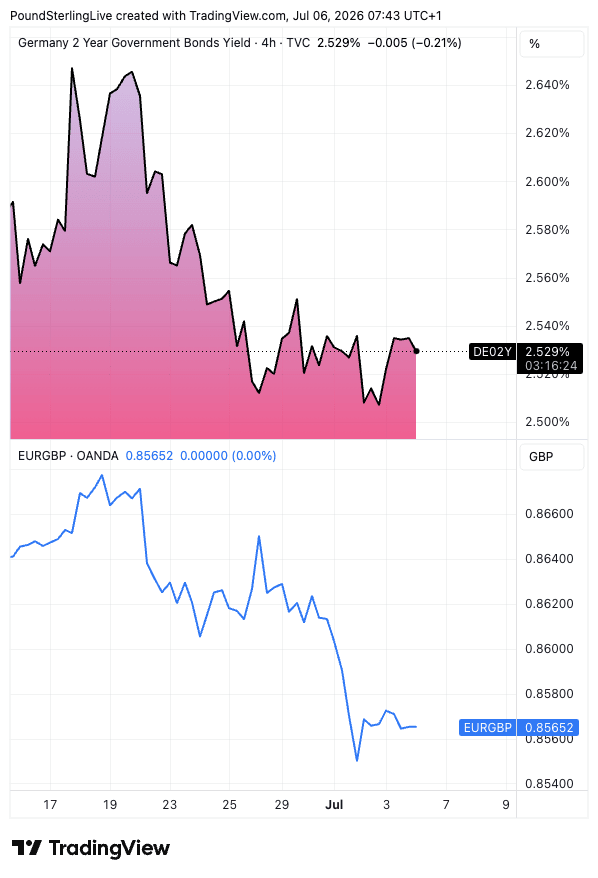
Of late, short-dated bond yields of Eurozone nations have fallen relatively sharply, which reflects the perception that the European Central Bank won't deliver as many rate hikes over the remainder of the year as previously expected.
The reason for this is a series of below-expectation data releases, and last week's Eurozone inflation data in particular, which suggested the ECB might have been too pessimistic in its inflation predictions.
The takeaway is the inflationary shock caused by the Iran war looks set to be less severe than thought and June's precautionary rate hike, in response to those fears, might prove a one-off as a result.
As markets price out an additional hike, short-dated bond yields fall. When they fall faster in the Eurozone than elsewhere, the euro would be expected to underperform.
As the chart above shows, that could be why euro-pound (EUR/GBP) has fallen. The extent of further GBP gains against the EUR therefore rest on how much further this repricing can run.