Sérgio Garcia/Your Image for ECB. Copyright: European Central Bank 2026.
Inflation trends question the need for further ECB rate hikes, posing renewed headwinds for the euro.
The euro faces renewed headwinds after softer-than-expected French and German inflation figures reduced the urgency for the European Central Bank to raise interest rates again.
The market entered Tuesday's dual inflation releases expecting one more hike from the ECB by year-end.
However, that pricing can come down further if it's acknowledged there's no need for the ECB to raise rates in light of growing disinflationary trends, potentially handicapping the euro against currencies where interest rate expectations are static or even rising.
"French and German inflation coming in incredibly soft today. The ECB has made a policy error and will pivot again soon," says Andreas Steno Larsen at Real Vision.
The Numbers
German inflation came in at -0.3% on the month, below expectations for 0% and down on the previous month's -0.1%. The annual rate slid from 2.6% to 2.3%, undershooting estimates for a repeat 2.6%.
French CPI read at -0.3% m/m in June, down on 0.1% in May and below expectations for a flat 0%. That dragged the annual rate down to 1.8% and is well below the 2.1% the market expected.
In June the ECB raised its key interest rate for the first time since 2023 in what was judged to be an insurance rate hike against a major inflationary event sparked by the war in the Middle East.
The ECB was keen to point out at the time that it stood ready to raise rates again, but some economists said at the time there were already signs the data was travelling in a direction that discounted the need for further hikes.
But the ECB Is Guarded...
So what do the central bank's rate setters think of the evolving situation? For now, ECB President Lagarde and her colleagues are maintaining caution, which should offer the euro some support on the edges.
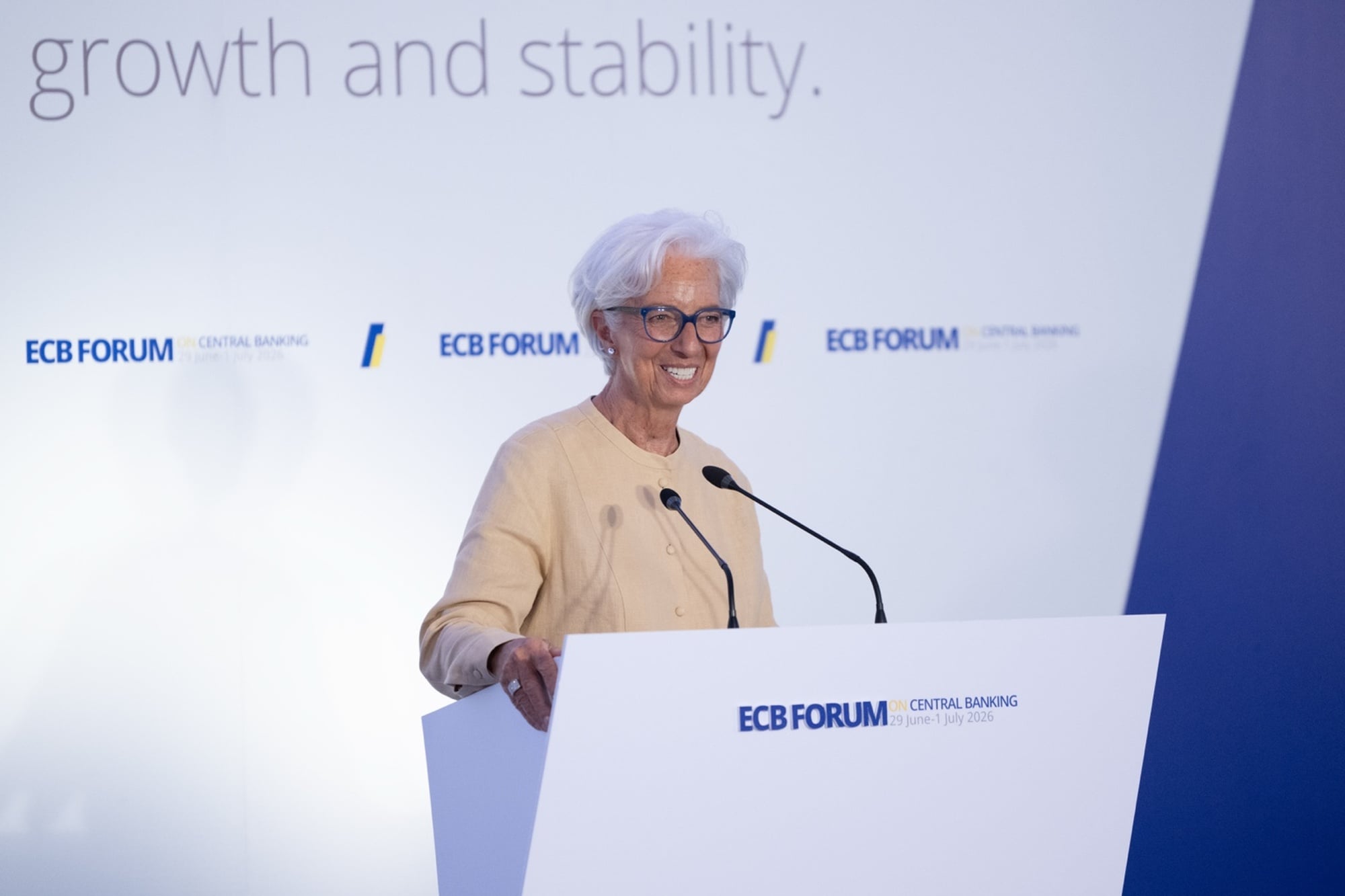
Speaking in Sintra, Portugal, Lagarde defended the move, saying the central bank can now "make measured adjustments to rates, calibrated to the shocks we face".
She said the ECB's focus would now be on stabilising inflation "with policy rates as primary tool."
Bundesbank President Joachim Nagel said at the same forum there is a probability inflation "will stay at an elevated level."
"The energy price shock… is still in the system. I suspect the inflation rate will stay significantly above our target," he said.
... And Maybe They Should Be
The current headlines are distinctly inflationary, but ECB rate setters and economists know that inflation will pick up from here as favourable seasonal comparators and tax rebates in some countries fall out of the equation.
"German headline inflation should still accelerate to around 3.5% YoY (but nowhere near the 2022 inflation numbers) in the second half of the year, before dropping below 2% YoY again in 2027," says Carsten Brzeski, Global Head of Macro at ING Bank.
In addition, he expects some knock-on effects from higher energy prices on transportation costs, food prices and other industrial products over the coming months.
It's Still Transitory
Yet, analysis from ING Bank finds that the upcoming inflation spike will be nothing like that of 2022 when Russia invaded Ukraine and triggered an inflationary spiral.
"There is still little evidence of any self-reinforcing inflationary spiral. Selling-price expectations in both manufacturing and services have started to come down again," says Brzeski.
"We know that the ECB doesn’t like the term, but to us this looks pretty 'transitory'," he adds.
With the ECB not ready to dampen expectations for further hikes, the euro can find residual support.
But we suspect the market will continue to digest the view that this is in fact a transitory inflation episode and move to reduce expectations for hikes.
That steady move should weigh on the single currency, all else being equal.