
Image © Adobe Images
Pound sterling is trending higher against the euro in defiance of analyst predictions.
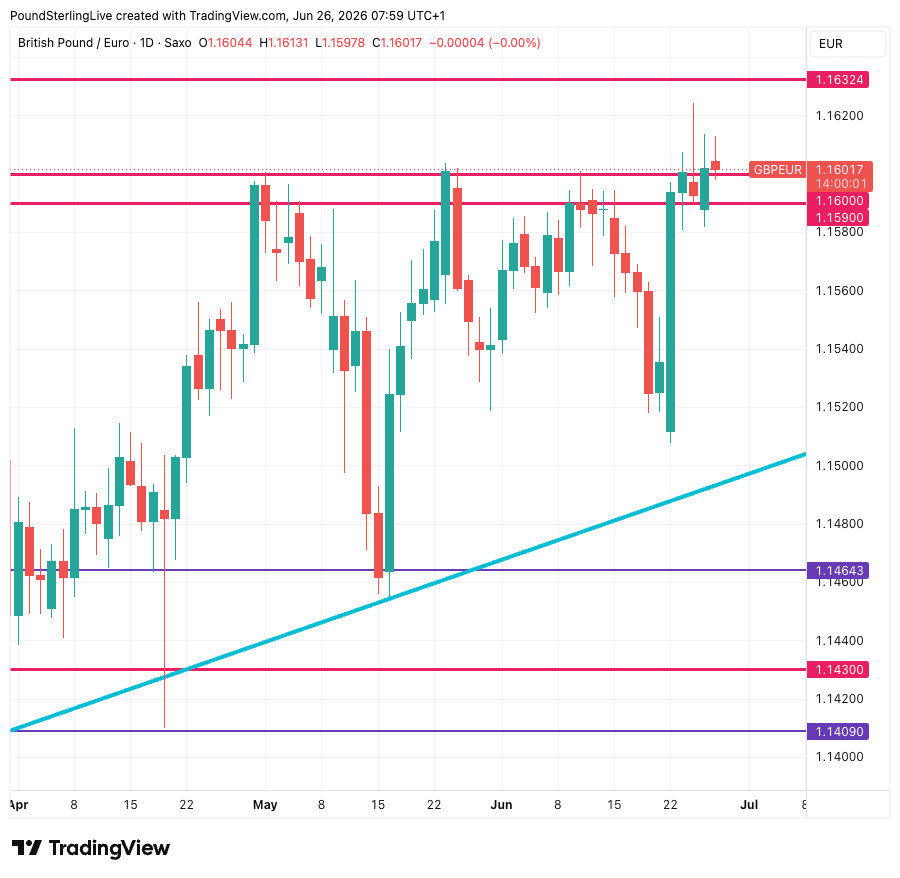
The pound-to-euro conversion hit 1.1624 earlier this week, the highest level in nearly a year, with subsequent pullbacks proving shallow and holding above 1.1590.
That's a constructive technical setup that bodes for a potential rise towards the August 2025 high at 1.1634 in the short term, above which there is clear air ahead of 1.1750.
What's striking is that the advance defies the consensus of analysts at the world's leading investment banks and institutions who looked for the pair to trade at lower levels than at this point in the cycle.
In fact, surveys of the major bank forecasts showed the consensus expected pound-euro to trade at 1.1363 by the end of June, which equates to 0.88 in euro-pound.
The pair is therefore more than 200 pips above the consensus, confirming the pound has outperformed expectations and there's a risk for the analyst community that this continues for a while yet.
Why the Pound has Strengthened against the Euro?
The pound has risen against the euro over recent weeks in a steady uptrend that started after last year's November budget: the pair had struggled in the lead-up to the budget as businesses and households feared another tax-hiking budget from Rachel Reeves.
Ultimately, the budget proved credible enough, and the subsequent reversal of UK risk premia helped the pound rise.
More recently, the war in the Middle East has stoked UK inflation expectations more than in the Eurozone, and British bonds saw their yield rise faster than those of Eurozone peers. That increase in the yield advantage proved a powerful driver for GBP/EUR.
"Some negatives are already priced into the GBP especially vs the EUR, given that the Eurozone would have to deal with the consequences from the negative oil supply shock in the wake of the Iran war as well," says Valentin Marinov, Head of FX Strategy at Crédit Agricole.
What is the Consensus Pound Forecast for the Next Three Months?
The pound is forecast to be lower against the euro in the next three months, with the consensus still eyeing the 0.88 level in EUR/GBP and 1.1363 in GBP/EUR.
What we're seeing across the analyst community is the expectation that the Bank of England will be a significant headwind.
"We have dropped our own forecast for two BoE hikes this year. It leaves room for the UK yields and the GBP to continuing moving lower as BoE rate hike expectations are scaled back especially against the USD after the Fed opened the door for hikes overnight," says a note from MUFG Bank.
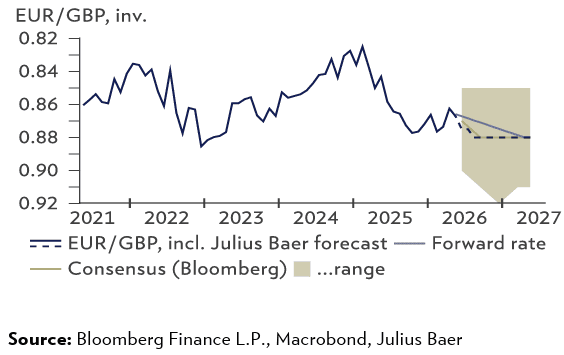
The pound will therefore be a yield play, and with the Bank of England not meeting market expectations to hike rates, those yields are set to come down and weigh on the pound.
"A relatively weak UK growth outlook and our dovish stance on BoE compared to market pricing weighs on our GBP call. We forecast EUR/GBP to move higher towards 0.89 on a 6-12-month horizon," says Danske Bank in its mid-year outlook.
(EUR/GBP at 0.89 is a GBP/EUR rate of 1.1235).
Political Uncertainty Could Rise Again
Discussions about the pound rarely deviate far from Britain's perennial political insecurities.
With Andy Burnham possibly taking over from Keir Starmer as early as July, a whole new policy mix might need to be digested by households and businesses.
This is a source of uncertainty that can often paralyse activity and weigh heavily on the pound: recall, the pound-euro rate sank into last year's budget, and the previous year's budget.
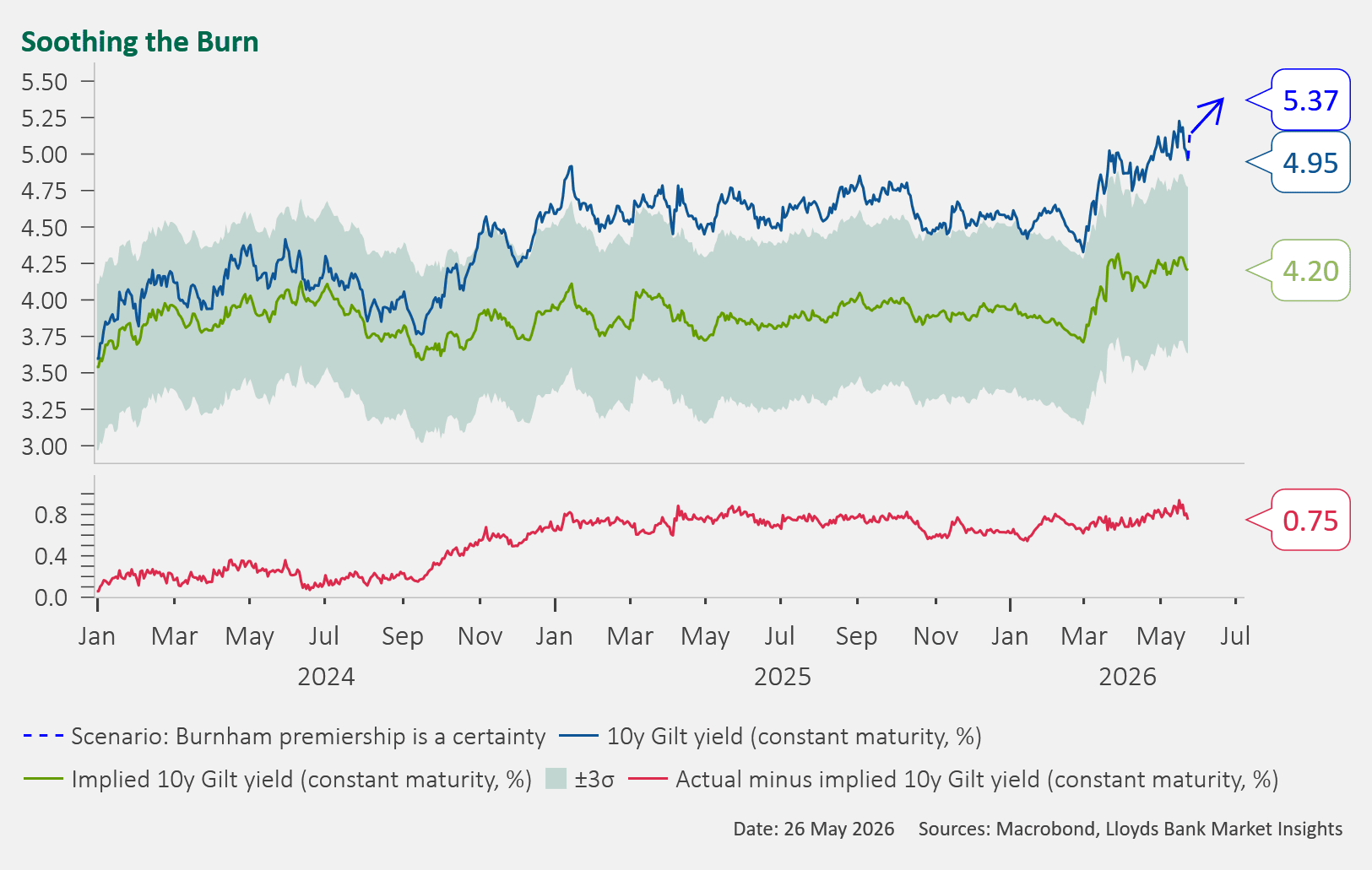
Above: The UK government is paying a premium to borrow money, with economists saying that's due to elevated political risks associated with the country.
With a Burnham government likely to announce fresh tax rises, the same could happen in 2026.
"UK resilience may frustrate shorts, but closer to the Autumn budget we expect fiscal risk premium to build," says Meera Chandan, FX strategist at JP Morgan in a recent GBP overview note that touches on current political developments.
JP Morgan holds a near-term GBP/EUR forecast target of 1.1235 on "fiscal risks being more fully priced in."
But There Are Short-term Positioning Tailwinds
The pound is therefore climbing a wall of worry, and it could continue to do so for a while longer.
A significant source of help appears to be the crowded short positioning against the pound, which means the speculators and businesses are invested in positions that expect ongoing weakness.
When the trade becomes too crowded, a counter-trend move can emerge as those positions become unprofitable and are cleared away.
"Speculators are heavily short sterling, close to levels seen shortly after the Brexit vote ten years ago," says Georgette Boele, Senior FX Strategist at ABN AMRO. "The market is net long the US dollar and slightly long the euro, according to the latest data. This matters."
Indeed, it does matter, and adds to the view that the pound could yet climb higher before the realities of British politics and repricing of Bank of England expectations eventually weigh.
Burnham Policies a Near-term Flashpoint

File image of Ed Miliband. Picture by Dan Dennison / DESNZ, copyright: Gov.uk.
We're watching next week's speech by Andy Burnham on the economy, where he could lay out some important path-finders on where his policy will lean.
There's a tension between Burnham's stated-left leaning and socialist tendencies and a need to be sober enough to keep markets onside by not committing too much.
How that tension is navigated will be crucial for the pound: too much spending and bond yields continue to rise, and the risk of a negative currency reaction grows.
A solid uneventful speech could help GBP/EUR extend gains.
His pick for Chancellor will also be important as it signals where policy will land. Currently, the centrist Wes Streeting is the odds-on favourite for the role. But we've seen odds rise for left-leaning Ed Miliband.
"Burnham’s plans are likely to be towards a more interventionist state," says George Buckley at Nomura. "Whether this can be achieved under the current set of fiscal rules is perhaps the most important question that needs answering by the incoming administration."
For the pound, a Miliband chancellorship is therefore a significant headwind in H2 that's currently underpriced.