
Image © Adobe Images
The pound is looking increasingly firm-footed against its Australian cousin.
The pound-to-Australian dollar exchange rate (GBP/AUD) rose 1.8% last week, hitting a high of 1.9172, making for the biggest single weekly advance since March.
That's a solid display that means the recovery sequence, in place since mid-May, is becoming increasingly confident and liable to yield further gains.
Construction of an increasingly bullish setup was bolstered by the technical break that followed the clearing of both the psychologically important 1.9000 level and the descending 100-day moving average.
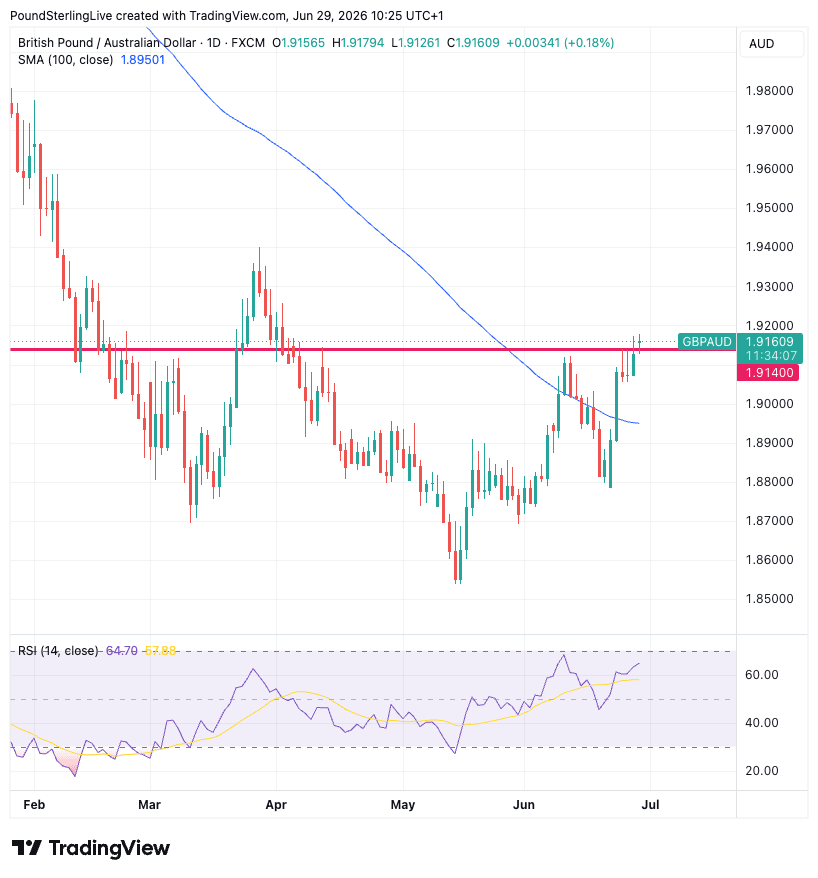
Pullbacks towards 1.9000-1.8950 now look more likely to attract buyers than sellers, while sustained trade above the moving average should encourage an extension towards 1.92 and potentially the March highs near 1.94.
The bullish case would only begin to weaken if the pair were to fall back below the 100-day average and surrender the recent breakout.
With the upside attracting, the 200-day moving average at 1.9163 will be the real indicator worth watching; as long as the pair is below here, we would consider it to be in a medium-term downtrend.
A test of 'the big 200' is still a good few weeks away, and the pair is at risk of turning lower again while below here.
That being said, steady GBP/AUD trade means the 200-day will inevitably fall to reach current levels of spot: either way, the meeting of the two will be the first real sign that the bigger selloff is done.
Bigger Picture: AUD Tailwinds are Fading
The AUD stormed ahead of most G10 peers in the first half of the year, helped by the rapid 'hawkish' repricing in Australian interest rates.
Three successive RBA rate hikes and the prospect of one more hike before 2026 is out have pulled the currency higher.
However, the end of the hiking cycle is nearing and talk could soon shift to the 2027 interest rate cuts that would be needed to help the economy in the wake of the dampening effects of the current hiking cycle.
If that's the case, AUD could soon find the rates story turns from a tailwind into a headwind.
Week Ahead for AUD is U.S.-Flavoured
There are no major releases from Australia that would shift the Aussie's fortunes, however, global drivers will be of interest.
The AUD is a high-beta currency that tends to outperform when the dollar's on the backfoot and stocks are rising.
Recent weeks have seen global equity markets suffer some jitters, while the U.S. dollar has strongly outperformed.
That's a classic backdrop for an AUD underperformance.
The global impulse will this week be determined by Thursday's U.S. jobs report, where a soft reading could prompt markets to reduce bets for a Federal Reserve rate hike. That would weigh on the dollar and boost stocks.
For AUD, that would be supportive.
On the other hand, a strong jobs print would have the opposite effect, pressuring AUD and helping GBP/AUD to another weekly gain.
"Looking ahead we expect the next major move in AUD and NZD to be down," says a currency market note from Commonwealth Bank of Australia released June 29. "We expect the USD to lift as a narrative of US economic outperformance builds this year."
CBA says the market is under‑pricing the risk of interest rate hikes from the Federal Reserve, which will also support USD against the major currencies, including AUD.
With the dollar and Fed story shifting, and the RBA readying to end its hiking cycle, H2 could prove difficult for AUD.