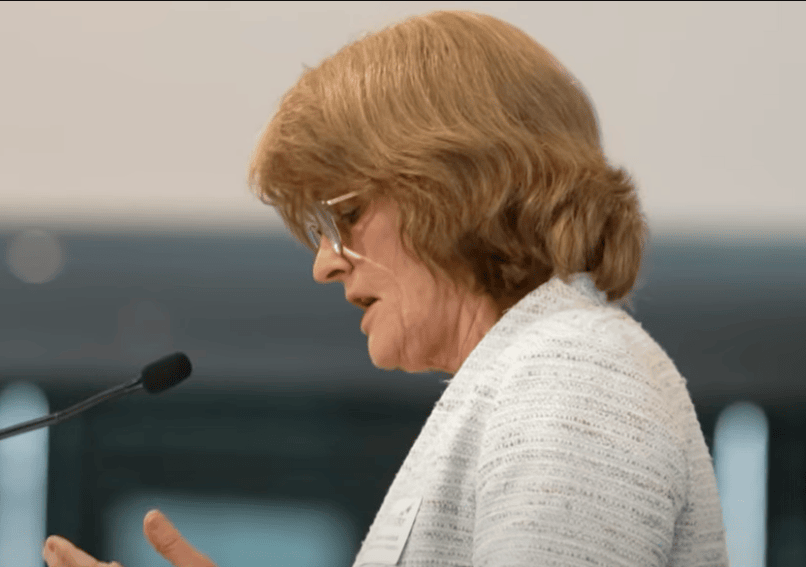
File image of Governor Bullock. Image still: ABC News.
The Reserve Bank of Australia is tipped to keep interest rates on hold, but that won't stop an AUD recovery, says one analyst.
The RBA maintained the base rate at 4.35% in its June decision, and economists we follow say the central bank will likely stand pat for the remainder of the year, potentially denying the Aussie dollar the 'hawkish' rates story that's driven it higher over recent months.
Indeed, the three rate hikes already delivered by the RBA this year played a decisive role in AUD outperformance in the first half of the year, as they ensured Australia's real yield was the most favourable in the G10 space.
That's a potent 'carry' tailwind for any currency, but that same tailwind could now fade as the RBA considers that it might have done enough.
"Our baseline for the foreseeable future remains that the RBA cash rate has peaked at 4.35%, as we expect a further slowdown in economic activity and loosening of the labour market to alleviate longstanding capacity pressures," says Nicholas Chia, FX and Macro Strategist at Standard Chartered.
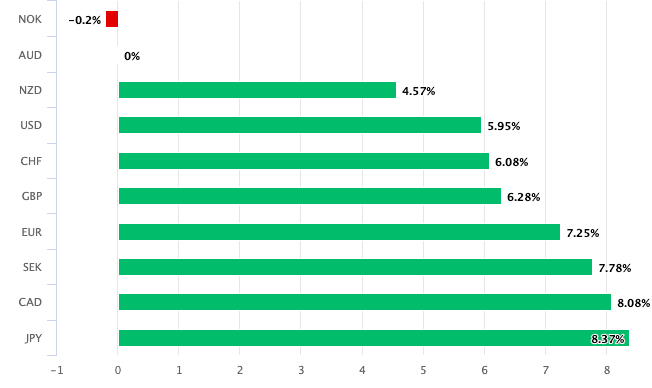
Above: AUD is 2026's second-best performer.
The RBA said it remains ready to raise interest rates again, noting that the hikes it has delivered in 2026 were a result of excess demand in the economy, i.e. a robust economy needed some help to cool down.
It sent a message of optionality and a readiness to respond to data, with Governor Michelle Bullock saying there remained upside risks to inflation.
That alertness should be enough to disuade the market from nixing expectations for future rate hikes entirely, ensuring the AUD can benefit from some latent rates support.
Economists at ING Bank also reckon that we've seen the end of the current tightening cycle.
"While risks persist and further rate hikes cannot be ruled out if data disappoints, inflation has broadly tracked the RBA’s baseline scenario. Combined with a potentially more benign global backdrop, this supports our view that the RBA is likely to remain on hold for the rest of the year," says Deepali Bhargava, Regional Head of Research for Asia-Pacific at ING Bank.
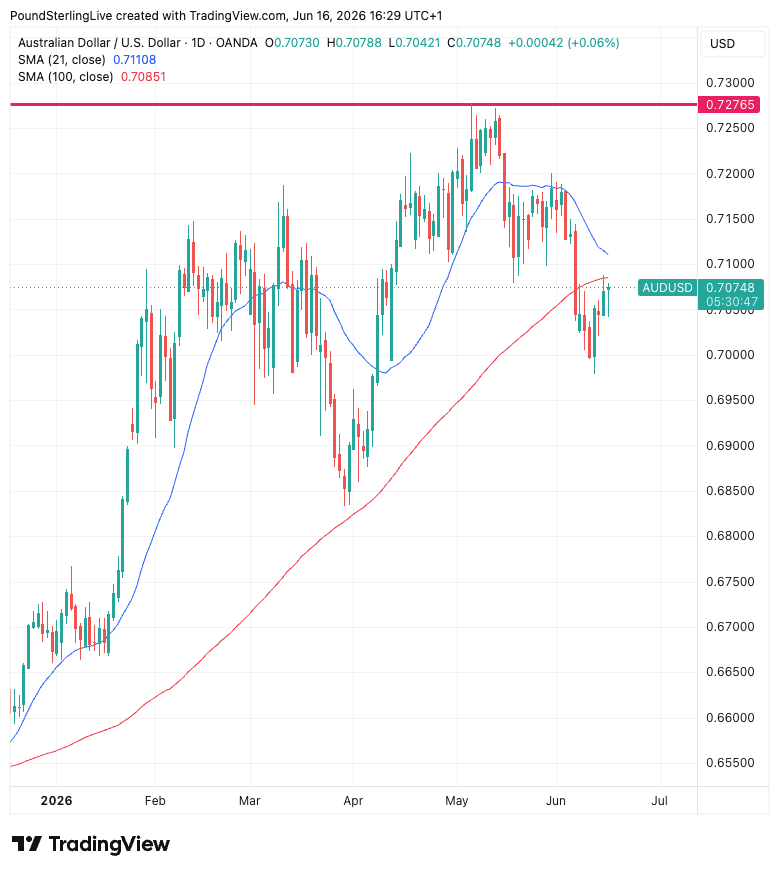
ING: AUD/USD can reclaim 0.73 this year.
If the view is correct and the RBA keeps rates on hold, Australia's attractive interest rate advantage, a key driver of AUD outperformance, will fade as the markets catch up to reality.
"Markets are still pricing about a half chance of another 25bp rate hike by year end. AUD/USD is likely to come under downward pressure if those expectations unwind, as we expect," says Samara Hammoud, FX Strategist at Commonwealth Bank.
"We continue to think a soft activity backdrop will give the Board enough comfort to keep the cash rate at 4.35%. Looking further ahead, with broader signs of an economic slowdown and interest rates restrictive, rate cuts are likely to be the next sequence of rate moves," says Adam Boyton, economist at ANZ Bank.
AUD Has Other Arrows to Draw
However, a softer rates story won't be enough to deny AUD strength later in H2, says ING's FX Strategist, Francesco Pesole.
"While risks persist, easing global pressures and a gradual slowdown support expectations the RBA will stay on hold for now. That shouldn't prevent AUD gains in 2H," he says.
He explains that much will depend on what the Fed does, and that some near-term caution by U.S. policy makers can pose a headwind.
However, Pesole explains that "further out, we expect some dovish repricing of the Fed in the second half as the US domestic narrative softens. That should gradually shift focus back to AUD fundamentals - terms of trade, carry, and the growth and fiscal mix. We don't think another RBA hike is a necessary condition for AUD/USD to return to 0.73 this year."
AUD/USD rising to 0.73 would be consistent with GBP/AUD falling back to the year's lows near 1.85.
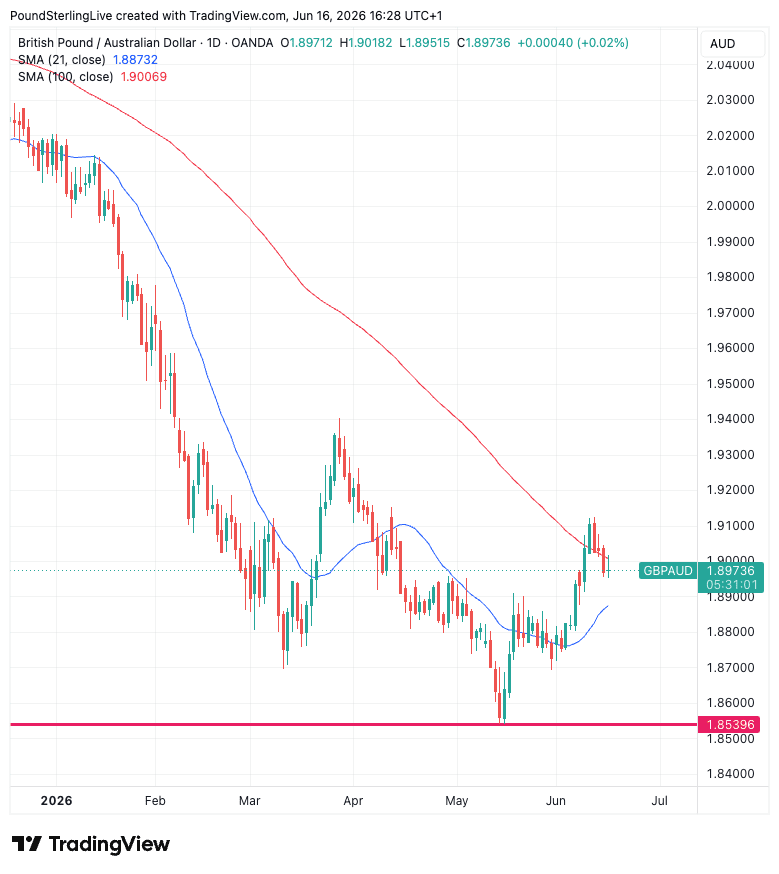
Economists at Westpac hold a more 'hawkish' base-case, which, all else equal, would be consistent with a more rapid AUD recovery.
The Aussie lender looks for further cash rate increases coming down the line:
"If we are right that the June quarter result for trimmed mean inflation will again be strong, the next hike will come at the August meeting. A longer pause is possible if the next few inflation prints are less alarming, but the direction of travel is still most likely up."
If that's the case, AUD might reach the highs sooner than under a no-hike scenario, and potentially even print fresh multi-year highs.