Photographer: Alain ROLLAND. Copyright: © European Union 2025 - Source: EP.
Pound sterling holds a constructive setup in a week dominated by fading political risks and central bank speeches.
The balance of probabilities remains tilted modestly in favour of further gains while pound-to-euro holds above its rising moving averages.
Another challenge of the 1.1600 resistance level appears likely, and repeated tests suggest the barrier is gradually coming under pressure.
However, the market still requires a decisive daily close above 1.1600 to confirm a fresh bullish breakout that opens the door to 1.1632, the next major resistance level.
Until then, the most likely outcome is continued consolidation within the established range, albeit with a slight bias towards sterling eventually forcing a move higher.
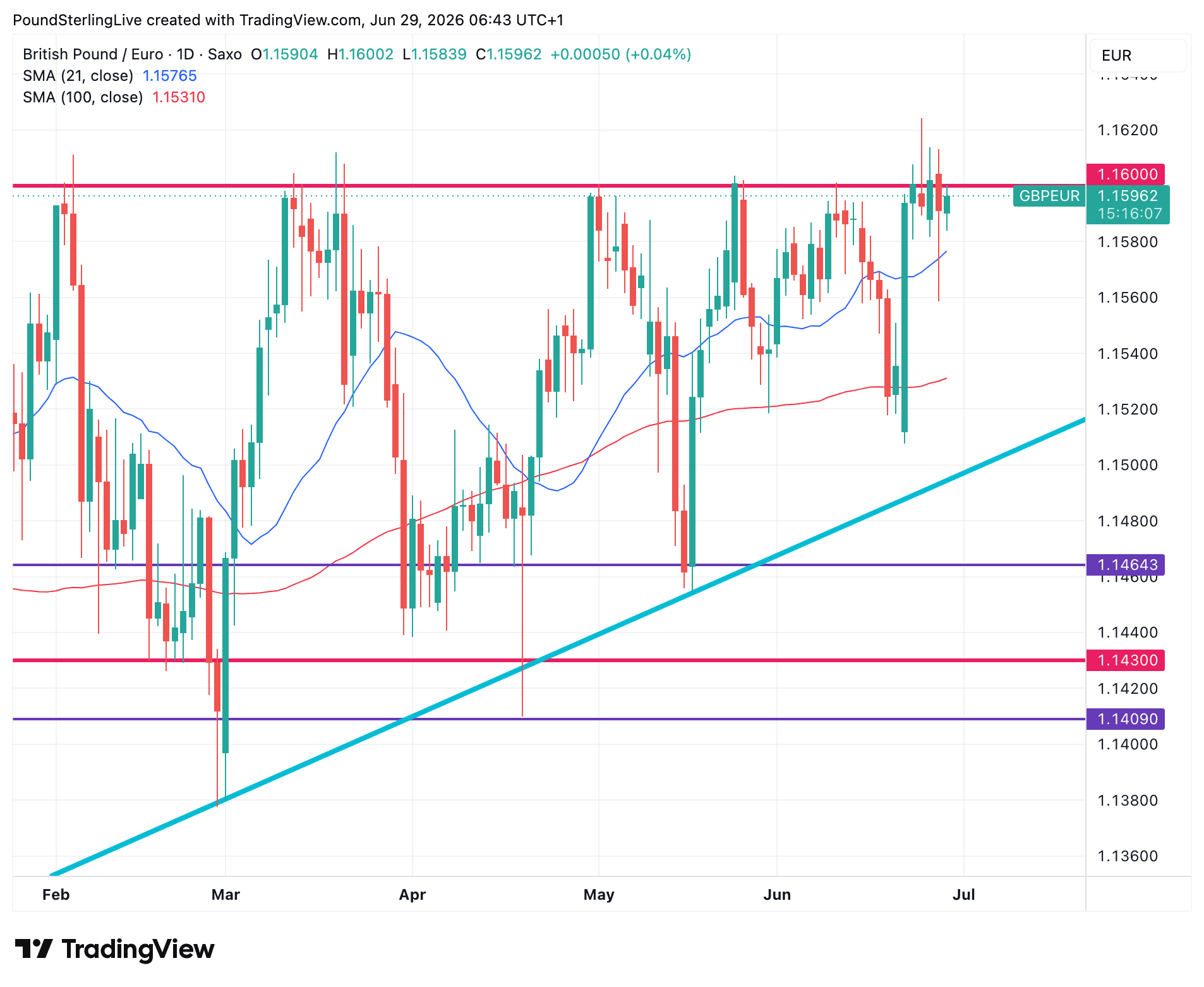
Looking at the details of the market setup, we see Sterling continues to trade above both its rising 21-day and 100-day moving averages versus the euro, confirming that the broader trend remains positive despite repeated failures to deliver a decisive breakout.
The sharp rebound from the mid-June low - and Friday's recovery from the low at 1.1560 - also reinforces the view that buyers remain willing to accumulate sterling on dips.
The underlying buying pressure is gradually building, even if bulls have yet to force a sustained move higher through treacle-like technical resistance.
Burnham Risks on Backburner
Early doors, it was Andy Burnham's speech delivered in Manchester on Monday morning that could have tripped up the pound.
But the soon-to-be Prime Minister gave little of substance and only offered a global overview of what he would try to achieve over a ten-year timeframe.
That timeframe immediately signals we're not likely to see anything radical in the coming weeks or months. There was something for the markets though:
"Perhaps the most telling thing from a market perspective was Burnham's commitment to the existing fiscal rules. There was no sense of trying to find ways to game the rules or increase borrowing, which would have worried markets," says Jack Meaning, economist at Barclays.
For markets, there's a tension between Burnham's left-leaning and socialist tendencies and the need to be sober enough to keep markets onside.
For now, Burnham's playing it safe - he didn't even take questions from the press - and that indicates no imminent risks to the pound from the political front.
"Markets have been unfazed by events so far, but we think many market participants are instinctively wary of Burnham given his previous comments. This means any missteps could see sentiment move against the new government," says a new research note from Oxford Economics.
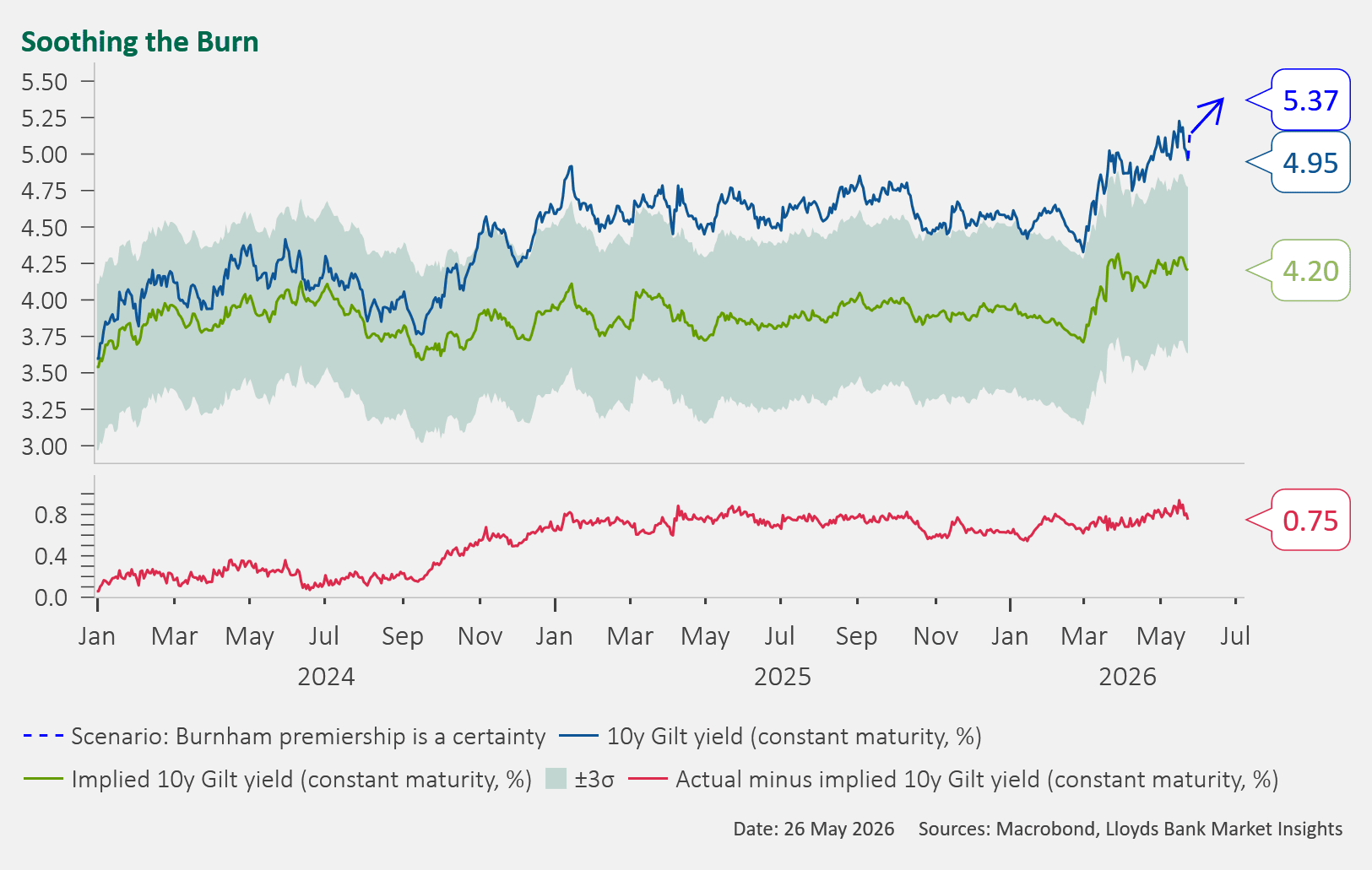
UK bond yields already trade at a premium to similar international benchmarks (above), which tells us investors see a challenging inflationary outlook in the UK owing to existing government policies that favour high borrowing and spending.
Watch who Burnham's pick for Chancellor will be, as it will signal where policy will land. Currently, the centrist Wes Streeting is the odds-on favourite for the role. But we've recently seen odds rise for left-leaning Ed Miliband.
"Burnham’s plans are likely to be towards a more interventionist state," says George Buckley at Nomura. "Whether this can be achieved under the current set of fiscal rules is perhaps the most important question that needs answering by the incoming administration."
For the pound, a Miliband chancellorship is considered the most likely to test the existing rules, meaning the pound faces a challenging H2 if he is selected.
All Eyes on Sintra
Sintra, Portugal, is the focus of the coming week as a number of central bankers will gather for the ECB's annual gathering.
For the euro, ECB President Lagarde's opening address late-Monday could be important if she touches on the ECB's latest thinking regarding interest rates. "If any meaningful signals on the future path of ECB monetary policy are to emerge from the conference, they are most likely to come from Lagarde’s introductory speech," says a market note from UniCredit Bank.
The global highlight could well be on Wednesday, when the conference closes with a policy panel in which Lagarde is joined by Kevin Warsh (Federal Reserve), Andrew Bailey (BoE) and Tiff Macklem (BoC).
For the pound, we will be on the lookout for any policy-relevant signals from Bailey.
The market currently expects the Bank of England to raise interest rates on one occasion this year, but this pricing could fall if Bailey strikes a more relaxed tone on inflation given recent falls in oil and gas prices.
If so, the pound could come under pressure.