The weaker British Pound has seen a notable increase in shoppers from the Irish Republic heading North to take advantage of a currency-inspired discount.
- At the time of writing 1 GBP = 1.1147 EUR on the inter-bank markets with 1 EUR = 0.8971.
The weaker Pound Sterling is yielding a spike in sales for UK businesses located close to the Irish land border.
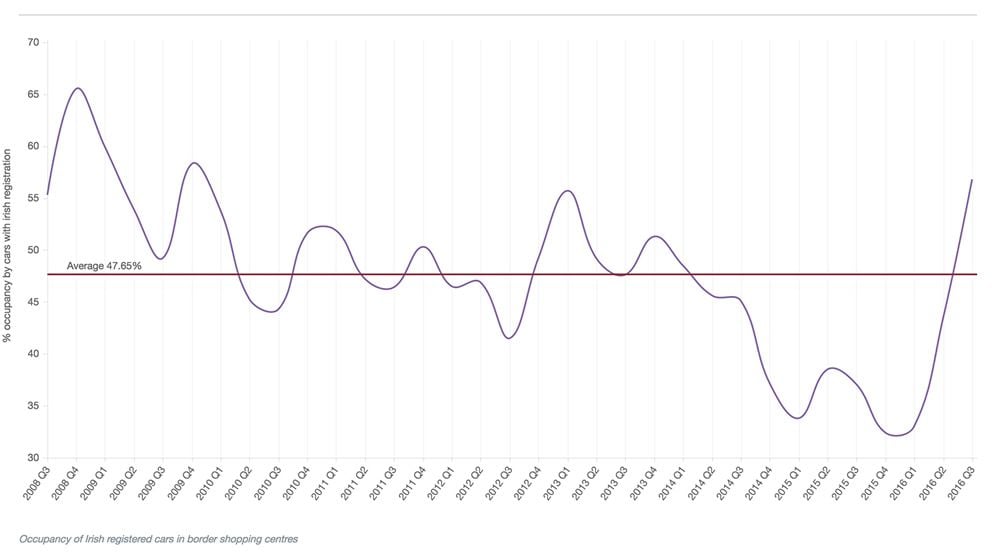
Data from InterTradeIreland shows that the percentage of Irish-registered cars in a selection of border-located shopping centre car parks in Northern Ireland has hit highs not seen since 2013.
Data shows that in the third quarter of 2016 the occupancy rate of Irish-registered cars hit 56.8%, this up from 32.9% seen at the beginning of the year.
This is the highest occupancy rate since the first quarter of 2013.
And what is driving the trend? It’s the exchange rate of course.
The Pound to Euro exchange rate has slumped from 1.36 at the start of the year to around 1.12 now.
Back in early 2013 the spot rate was down at one-year lows towards 1.13.
However, the BBC reported on October 26th that many shops on the UK side of the border were offering a 1:1 exchange rates to those who want to pay in Euros, provided they buy with them.
This parity in the conversion rate shows that for shop owners the effective rate they will derive once they have converted back to Sterling is essentially negligible.
Peter Murray, manager at Buttercrane shopping centre in Newry, said it had been "a real beneficiary" of the falling Pound.
With Sterling forecast to remain under pressure against the Euro through to the end of 2016 we would expect a bumper Christmas period for Northern Irish businesses.
Indeed, we have just reported that analysts at the world's largest foreign exchange trading institution, Citibank, believe GBP/EUR could go as low as 1.05, or 0.95 in EUR/GBP terms.
“The medium to longer term view remains to sell Sterling on the bounce pretty much across the board,” say Citi in a recent brief to clients. “Rising hard-Brexit risk and negative impacts of Brexit referendum may be reflected in economic data gradually.”
"At the minute it is good and going to stay good up until Christmas, which is great news for border areas," says Murray.
Latest Pound/Euro Exchange Rates
  | Live: 1.1741▲ + 0.29%12 Month Best:1.1828 |
*Your Bank's Retail Rate
| 1.1342 - 1.1389 |
**Independent Specialist | 1.1577 - 1.1624 Find out why this is a better rate |
* Bank rates according to latest IMTI data.
** RationalFX dealing desk quotation.
It has also been revealed that the tourism sector in Northern Ireland is receiving an exchange rate bounce with hotel occupancy rates hitting record levels in August.
The majority of incoming visitors are said to be EU nationals.
While the fall in Sterling has clearly provided a boost to some sectors there remain lingering concerns that the impact of Brexit on Northern Ireland will be hard.
The CBI's newly-appointed director told the House of Lords' European Union Committee that Northern Ireland is "more vulnerable" to the impact of the UK vote to leave the EU.
Angela McGowan said the main areas of concern include the impact of reduced Foreign Direct Investment, a reduction of incomes due to the drop in the value of the Pound, and concerns over the free movement of people.
The question over the shape of the land border is one of the more pressing issues but InterTradeIreland have told SMEs that they are committed to providing the help required to ensure the £6bn worth of trade in goods and services continues to grow.
UK GDP Confirms Little Economic Impact of Brexit Vote
UK economic growth released on October 27th has left many analysts scratching their heads.
The consensus forecast for UK growth in the third quarter - the first full quarter following the Brexit vote - was for a reading of -0.1%.
It was revealed by the ONS today that growth actually read at 0.5% - just a shade below the previous quarter's impressive 0.7% growth.
"The surprisingly solid Q3 GDP data show little evidence of a pronounced impact on the UK economy in the immediate aftermath of the Brexit vote," says Johnny Bo Jakobsen at Nordea Markets, "the Q3 GDP report underlines that risks to our forecast of a mild recession are currently tilted towards a more positive scenario."
The chances of a Bank of England interest rate cut following this release has certainly diminished, which is seen as a positive for Sterling.
"More signs of U.K. economic resilience in the face of Brexit propelled the pound to its strongest in a week against the dollar," says Joe Manimbo at Western Union. "The data, along with less dovish remarks this week from Britain’s central bank governor, suggested a receding risk of a U.K. rate cut over the foreseeable future, a view that could help sterling stabilize above multidecade lows."
Perhaps then, these are the best rates those from the Republic will get when it comes to heading up north?