Image © Adobe Stock
Higher oil and gas forecasts and surging freight costs all point to higher inflation.
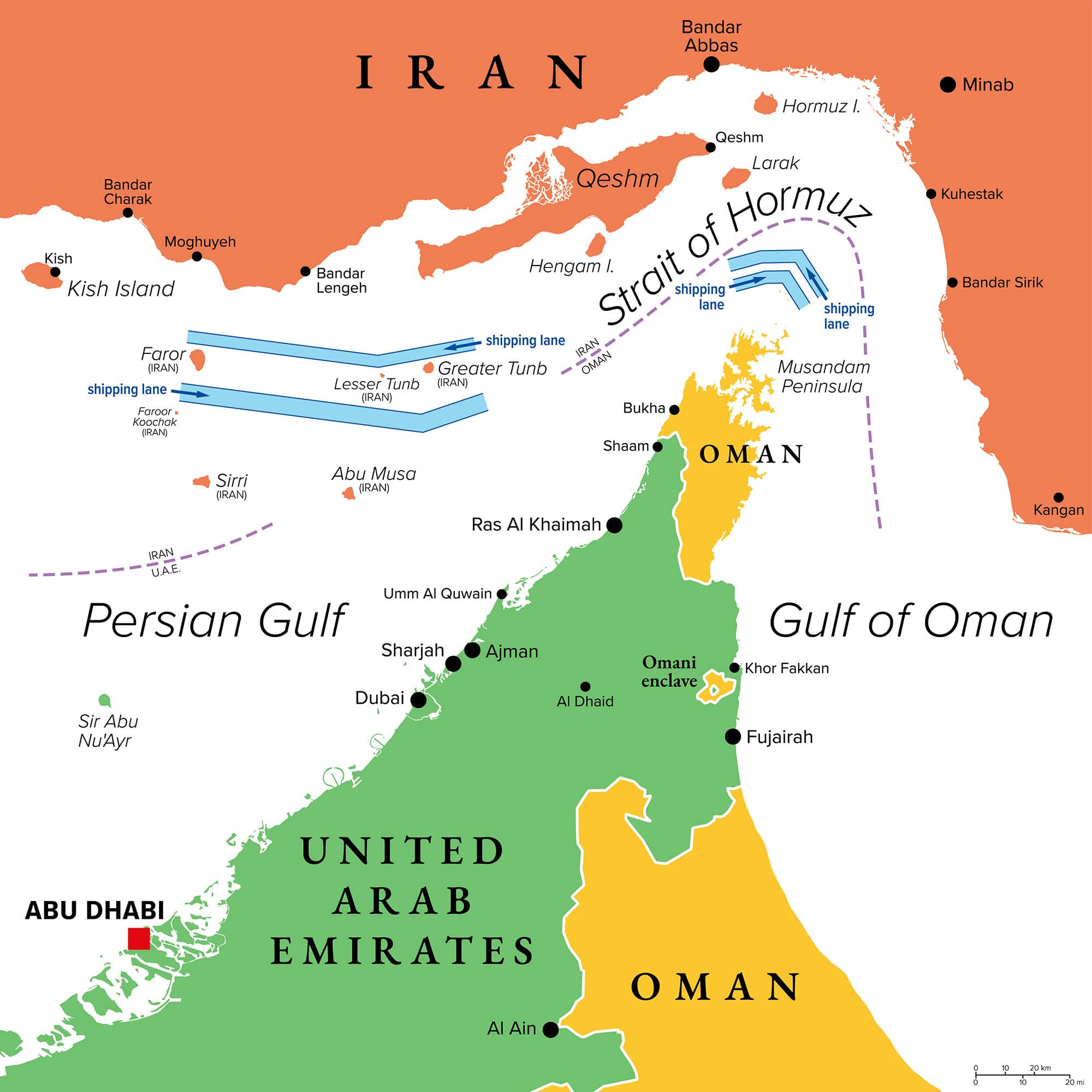
🔵 The Strait facilitates around 20% of global oil and Liquified Natural Gas (LNG) flows, 30% of fertiliser trade and 11% of all global shipping.
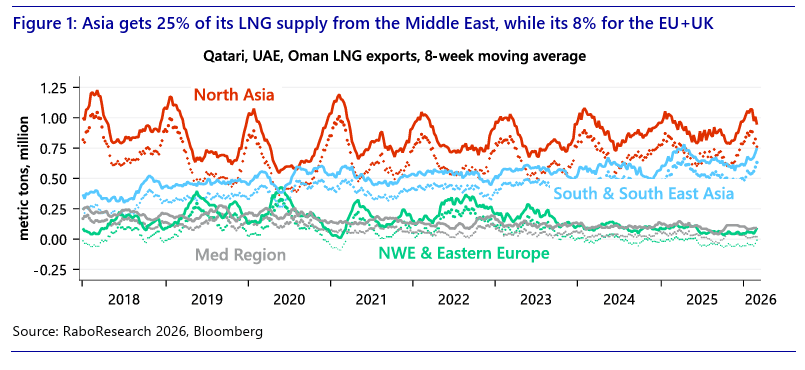
🔵 Qatar is the main supplier of natural gas, and exports have ceased following the shutdown of Qatar’s Ras Laffan complex after drone strikes.
🔵 Asia, which depends heavily on Qatari LNG, will bear the brunt of the disruption as it takes around 80% of LNG production from the region: 75% of energy (oil, LNG, etc) that flows through the Strait is destined for China, India, Japan and South Korea.
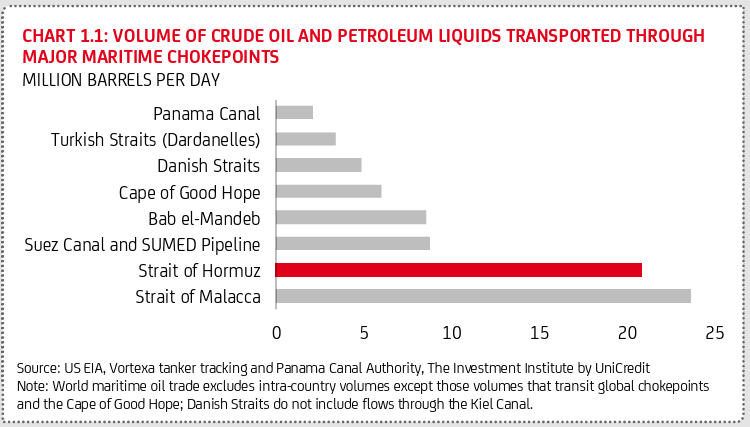
Image courtesy of UniCredit.
↩️ Don't forget the flows that go the other way: countries that comprise the Gulf Cooperation Council (GCC), including Saudi Arabia and the UAE, are the ninth largest global economic bloc.
Global exporters to the Middle East will therefore also feel the impact of the Strait's closure.
📈 Direct impact:
"Fuel prices are surging again, and for many households, filling up now hurts almost as much as during the 2022 energy crisis," says Carsten Brzeski, Global Head of Macro at ING Bank N.V.
Household gas prices will rise as wholesale delivery prices are pushed up by the global competition for remaining supplies.
Businesses might have to raise prices to cover the cost of heating and production.
"The Strait disruption has set off a cascading series of effects across global energy systems," says Joe DeLaura, Senior Energy Strategist at Rabobank. "Oil markets are tight, while some rerouting options exist and are being used. Gas markets are far more constrained and are driving the most significant shifts in price and behaviour."
🌡️ Rabobank is just one of the many major merchant and investment banks that raises its energy forecasts:
○ Brent will average $90/bbl in Q2
○ $86/bbl in Q3
○ $82/bbl in Q4
○ 2027 estimates up to $77/bbl on average for the year before moderating to $67.50/bbl in 2028
○ WTI quarterly average estimates are $83/bbl, $80/bbl, and $78/bbl for Q2-Q3-Q4 of 2026 and $72/bbl for 2027.
TTF and JKM wholesale gas price forecasts for 2026–2027:
○ With the 2026 surplus erased and the market now in deficit, TTF is forecast at €42/MWh for winter 2026/27 (and €33/MWh for 2027) and JKM at $14.75/MMBtu in 2026 (and $10.80/MMBtu in 2027) as structurally tighter LNG balances persist well into next year.
🚢 Rising Freight Costs:
Inflation and a slowing global growth impact can be expected, with the severity sitting on a sliding scale that depends on the duration of the conflict and shipping disruptions.
Container shipping costs are rising: UBS reports container quotes show a solid double-digit increase w/w.
"As a rule of thumb in the industry it generally takes 5-7 days to clear the backlog associated with 1 day of congestion at a port," says Cristian Nedelcu, Analyst at UBS.
The Strait's blockage points to a supply squeeze and inevitable downstream inflationary pressures in goods and commodities.