Image © Adobe Images
Surging oil and gas prices from Middle East conflict are set to derail the Bank of England's March rate cut.
An energy price shock will reignite inflation and will prevent the Bank of England from reducing interest rates later this month.
The Bank of England's March decision was supposed to be a shoo-in for another interest rate reduction, but events in the Middle East mean policymakers will instead sound the warning bell on the impact of rising oil and gas prices.
Oil prices are climbing again Tuesday as traders fret that the current conflict in the Middle East won't end anytime soon, ensuring major export terminals in the Gulf remain offline for a protracted period.
Iran's Revolutionary Guards announced yesterday that they intend to shell ships crossing the Strait of Hormuz, a crucial pinch point between Iran and the Saudi peninsula through which the region's oil and gas flow.
Saudi oil processing facilities were closed Monday following Iranian drone attacks and Qatar said its Ras Laffan plant was shuttered owing to an attack. This particular plant supplies a staggering fifth of the global Liquefied Natural Gas (LNG) supply.
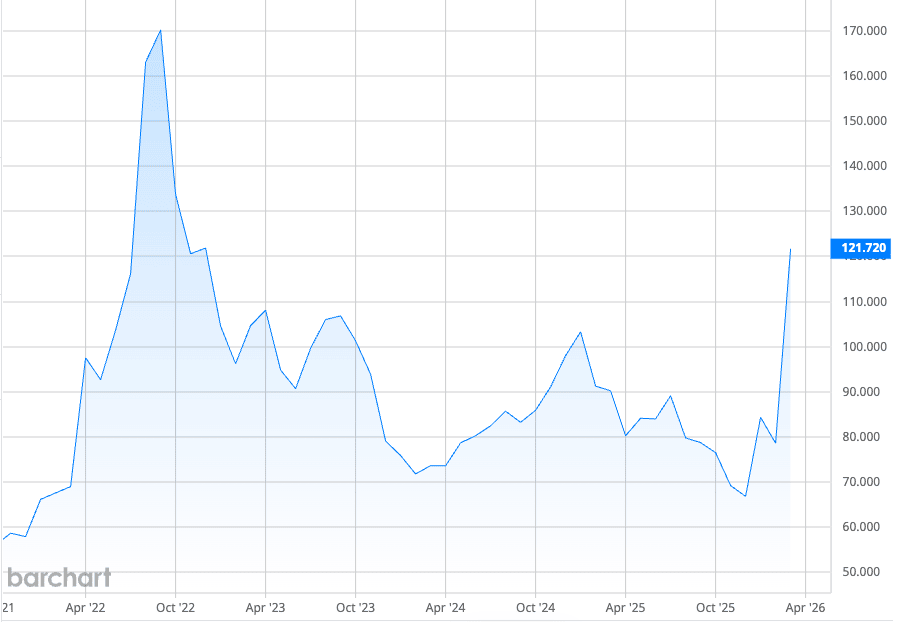
With supply squeezed, prices can only go higher: gas benchmarks in Europe and the UK surged 50% on Monday, to levels last seen in the wake of Russia's invasion of Ukraine:
Brits will endure higher costs on the forecourt when they fill their vehicles in the coming weeks, and households will see an inevitable uplift in future energy price caps in future quarters.
"If sustained, the resulting increases in oil and gas prices will raise inflation in Europe substantially. Were oil and gas prices to hold steady at their current level, UK CPI inflation would likely be 0.7ppt higher than our 2.1% forecast in Q4," says Andrew Wishart, Senior UK Economist at Berenberg Bank.
The Bank of England's forecasts showed CPI inflation would fall to the 2.0% target rate in April, making for a 'job done' moment on Threadneedle Street that would allow for another one or two interest rate cuts to be delivered by year-end.
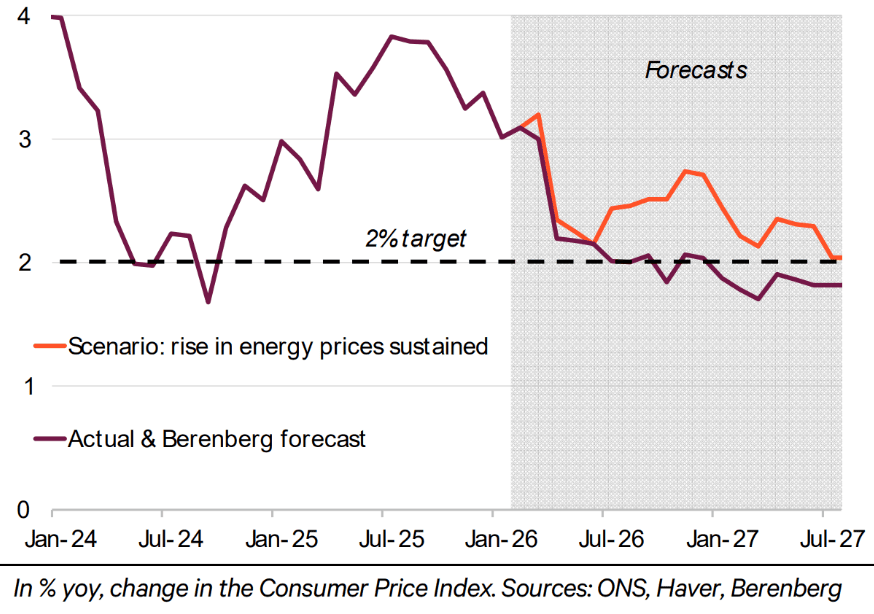
Above: Berenberg's alternative inflation forecast based on a lingering energy price spike.
Futures markets where investors factor future moves in Bank Rate show there's now slightly less than a 50/50 chance that the Bank of England cuts interest rates in March, down from 80/20 ahead of the weekend.
Robert Wood, Chief UK Economist at Pantheon Macroeconomics, warns that oil and gas prices must fall back quickly if a new inflationary pulse is to be avoided.
He says a sustained spike in price rises would mean inflation reaches a low of only 2.4% in July and rises to 3.1% in January 2027.
"Energy prices have the potential to stop the MPC from cutting rates this year," says Wood.
The Bank of England tends to look through energy prices when making interest rate decisions, as monthly rises tend to fall out of the inflation matrix a year later.
However, the worry for the Bank is how rises in energy feed through into inflation elsewhere via influencing expectations in households and businesses. If businesses see higher energy prices becoming a feature of the coming months, they might raise prices.
Workers would react by asking for higher wage settlements, meaning the dispersion of energy-linked prices has a more entrenched impact across the inflation basket.
The infectious nature of energy price rises is something the Bank of England cannot ignore, and it risks making a major policy error if it were to lower interest rates at a time when the public is anticipating another inflationary bump.
"The possibility of significantly higher energy prices will likely ensure that the BoE holds off from delivering another cut at its next meeting on 19 March," says Wishart.