Image © Adobe Stock
A classified briefing to U.S. lawmakers on the ongoing war with Iran has given markets a fresh signal that there is no strategy to unblock the Strait of Hormuz.
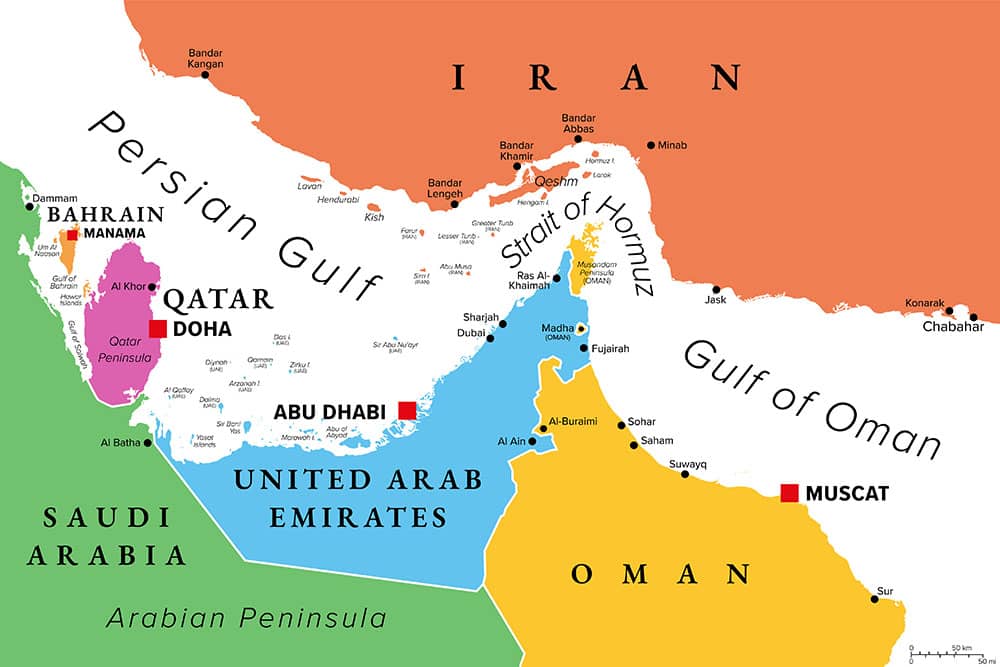
Oil prices are rising again amidst fading confidence that the U.S. will be able to guarantee safe passage for tankers through the Strait, which is enveloped by Iran geographically and militarily.
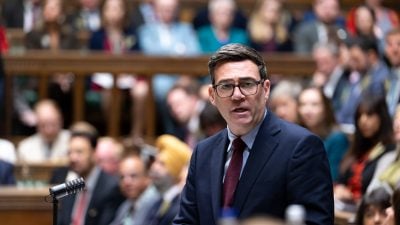
Senator Chris Murphy said a briefing he attended revealed the administration’s wider Iran strategy as "incoherent and incomplete."
"On the Strait of Hormuz, they had NO PLAN. I can't go into more detail about how Iran gums up the Strait, but suffice it say, right now, they don't know how to get it safely back open," he said on X.
He said this is "unforgivable, because this part of the disaster was 100% foreseeable."
Briefings to lawmakers on the war have taken place on Capitol Hill and involve officials from the Pentagon and national security agencies explaining the objectives of the campaign and its potential next phases.
The Connecticut Democrat said he could not reveal classified details but wanted to convey what he described as the lack of clarity surrounding the war's objectives.

File image of Senator Murphy. Source: murphy.senate.gov.
For markets, the insights into the Strait are important as it implies Iran will be able to restrict the flow of Middle East gas and oil to the global market for an extended period.
Brent crude is higher 3.8% on the day at $90 / barrel, European month-ahead gas is 3% higher at €49/kwh.
"The Strait disruption has set off a cascading series of effects across global energy systems. Oil markets are tight, while some rerouting options exist and are being used. Gas markets are far more constrained and are driving the most significant shifts in price and behaviour," says Joe DeLaura, Senior Energy Strategist at Rabobank.

Above: Brent crude prices on Wednesday.
Murphy said the briefing he attended revealed the war goals DO NOT involve destroying Iran’s nuclear weapons programme." He explains that this was surprising given repeated public statements from President Donald Trump that dismantling Tehran’s nuclear capability was a central objective.
"But then of course we already know air strikes can’t wipe out their nuclear material," says Murphy.
He also said the briefing confirmed that regime change in Tehran is not an official goal, raising questions about the ultimate purpose of the military campaign.
"A hardline regime - probably a MORE anti-American hardline regime - will still be in charge," he says.
According to Murphy, the strategy presented to lawmakers focused primarily on destroying Iranian military assets such as missile stockpiles, naval vessels and drone factories.
But he said officials struggled to explain how those objectives would translate into a lasting outcome.
"But the question that stumped them: what happens when you stop bombing and they restart production?"
Murphy said the response suggested the possibility of continued strikes.
"They hinted at more bombing. Which is, of course, endless war."
For markets, clear signs of a credible plan to protect shipping through the Strait is needed to bolster sentiment. Without it, oil and the dollar rise in tandem.
🚢 About the Strait of Hormuz: Key Facts
○ The Strait facilitates approximately 20% of global oil and Liquified Natural Gas (LNG) flows, 30% of fertiliser trade and 11% of all global shipping.
○ Around a fifth of global LNG supply – overwhelmingly from Qatar – normally moves through the strait, but exports have ceased following the shutdown of Qatar’s Ras Laffan complex after drone strikes.
○ Asia, which depends heavily on Qatari LNG, will bear the brunt of the disruption as it takes around 80% of LNG production from the region
○ 75% of energy that flows through the Strait is destined for China, India, Japan and South Korea.
○ In addition, freight flowing into the area can't be discounted: countries that comprise the Gulf Cooperation Council (GCC), including Saudi Arabia and the UAE, are the ninth largest global economic bloc.