While the GBP may be soft at the start of the new week our analysis confirms dips will likely be bought in anticipation of the continuation of the March recovery move.
- Pound 0.78% lower than witnessed at Monday's close at 1.4257
- Heading towards bottom of broader range, 1.38 possible say Lloyds
- Risk sentiment dominates FX trade in wake of Brussels terror attacks
The downtrend in the pound to dollar rate may be reasserting itself with the sharpy 0.8% fall seen on Tuesday inconsistent with a mere 'dollar correction higher' which was a valid assessment on Monday.
Risk sentiment is elevated on Tuesday with apparent terror attacks occuring in Brussels; this will likely see demand for 'safer' assets such as the dollar and yen rise.
As such we could well see selling interest in the exchange rate persist.
The declines in the GBP to USD conversion will also have some dollar 'relief buying' to thank; the dollar is notably cheaper than it has been for some time now ensuring strong 'real money' demand for the bargain-priced currency.
"Our current view – that the pair is developing into a broader 1.38-1.35 to 1.4650-1.4850 range – is unchanged," says Robin Wilkin at Lloyds Bank in a note to clients, "a decline through 1.4300/1.4275
negates the short-term bull bias."
Latest Pound / US Dollar Exchange Rates
  | Live: 1.3395▲ + 0.27%12 Month Best:1.3867 |
*Your Bank's Retail Rate
| 1.2939 - 1.2993 |
**Independent Specialist | 1.3207 - 1.3261 Find out why this is a better rate |
* Bank rates according to latest IMTI data.
** RationalFX dealing desk quotation.
A Break Above 1.4668 Needed for Pound to Reassert Dominance
Nevertheless, the outlook, at this time, remains positive with more sterling gains being readable.
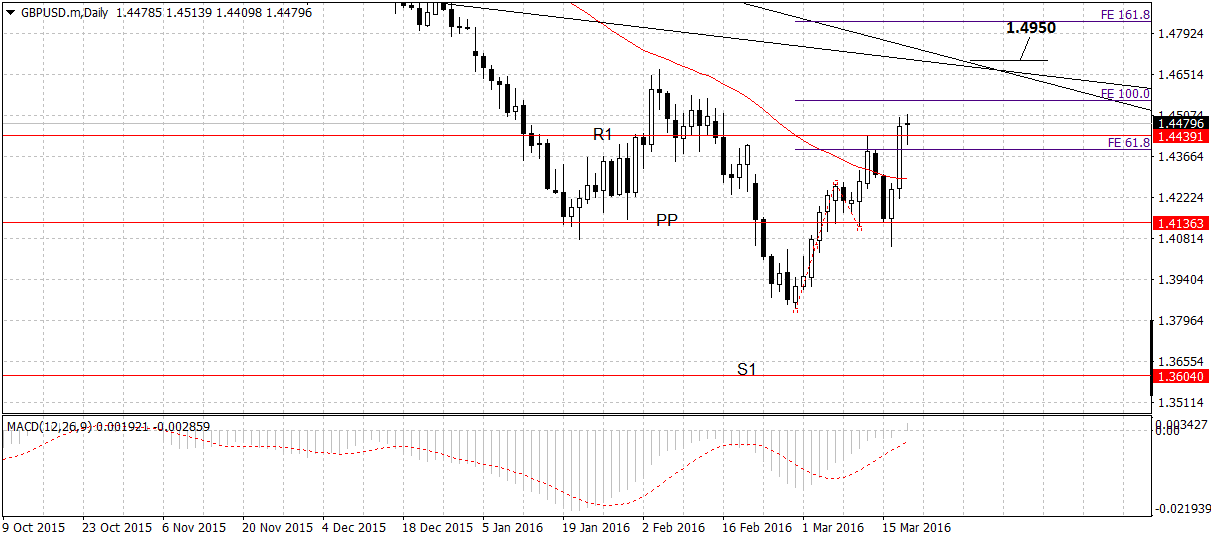
GBP/USD's daily chart clearly shows the exchange rate zig-zagging higher, and that the previous week ended on a new high – so overall sterling came out on top.
A break above the key 1.4668 peak of the previous down-trend would be a major game-changing moment for the currency, signalling the medium-term trend was probably reversing from down to up.
Such a break would likely see the exchange rate rise to an initial target at 1.4950, just below the R2 monthly pivot (monthly pivots are areas of increased buying and selling, where prices often pause, correct, reverse or consolidate).
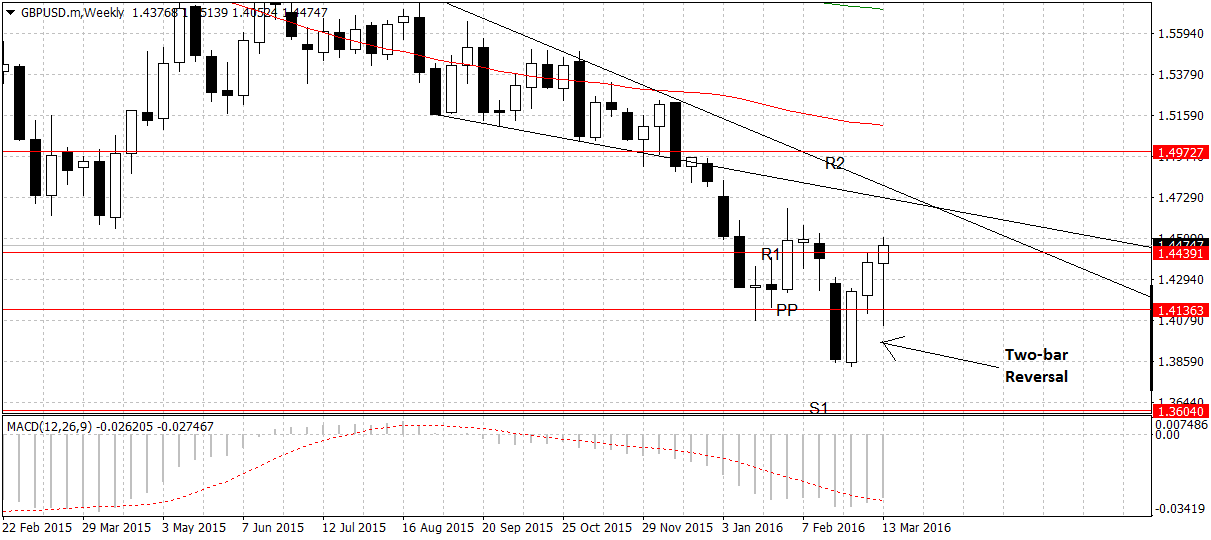
On the weekly chart the bullish daily outlook is supported by a bullish reversal sign in the shape of a two-bar reversal pattern, a relatively good sign that the trend may be reversing in the medium-term.
Indeed limited proof of this already lies in the fact that we have had two up-weeks since its formation.
The Fundamental Basis of a Continuation Higher
A weaker outlook for the dollar may be the main bullish driver for the exchange rate until Brexit referendum risks resolve themselves.
The weakness following the Federal Reserve’s decision to reduce the amount it expects to increase interest rates in 2016 has probably already been absorbed into the exchange rate so there is unlikely to be any further dollar weakness from that source.
It is unlikely the many Fed members who are giving speeches this week will signal a shift in their outlook so soon after they published their views following the last Fed meeting,
Their views about when interest rates should rise are published in the Federal Reserve's ‘dot-plot’, a graphic which illustrates how much Fed members expect interest rates to rise in the future.
Fed members scheduled to speak in the week ahead include District Presidents' Lacker (non-voting), Lockhart (non-voting), Evans (alternate but not voting next time), Harker (alternate but not voting next time), Bullard (yes voting) and Williams (non-voting).
The main economic data release in the coming week is Durable Goods Orders, which can move the dollar when it misses expectations by a large enough margin. Next week on Thursday March 24 Core Durables, which miss out civilian aircraft or other transportation orders which can skew the data because they are so large, is forecast to come out at 0.4% from 1.2% previously.
A further source of dollar weakness may come from central bank’s running out of ammunition with which to weaken their currencies. Central banks often use monetary policy to weaken their currency so that their exports grow and help the economy. Exports from country’s with cheap currency’s tend to be more competitive because they are more affordable.
However, currency weakening as an aim has been dropped by the European Central Bank, and the Bank of Japan have been unable to weaken the yen. From the dollar’s perspective this change of tack means the dollar may have less scope for strengthening in the future.
The dollar could also be pressured by the growing threat of Donald Trump ending up in the White House, due to concerns that his isolationist agenda might isolate the US and damage its economy. The probability of that happening, however is less than 50%, currently forecast at 12/25 according to the Evening Standard, which places it as more likely than a Brexit (8/25) but less than China's economy crashing (20/25).
Sterling’s Risk
The week ahead sees the release of UK inflation data, with Headline UK CPI (yoy), which is forecast to come out at 0.4% in February from 0.3% previously. The pound could move as a result of the release, especially amidst speculation inflation may have risen due to the recovery in oil prices. Rising inflation impacts on a currency as it increases interst rates which can help attract foreign capital.
UK Public Sector Net Borrowing for February, which is expected to rise to 5.4bn from -11.8bn previously.
Brexit remains the dominant influencer of the pound, however, with a break from the EU seen as pound negative in the short-term due to a negative impact on trade links with Europe.
The most recent polls, according to the telegraphs poll tracker, could not be closer.
Smart Currency Exchange’s Charles Purdy sums it up succinctly when he says:
“With concerns around the “Brexit” lingering on…The downside risk for sterling certainly seems to exceed by a significant margin its upside potential.”