
Image © Adobe Stock
“Gold is rapidly gaining share, with no signs of stopping"
The dollar is expected to face sustained structural pressure against major counterparts, Morgan Stanley says, as central banks continue to increase gold holdings at the expense of traditional reserve currencies.
The bank says the US dollar’s international footprint continues to decline gradually, particularly within central bank reserves, even though it remains the single largest reserve currency globally.
Morgan Stanley says gold has emerged as the dollar’s most significant challenger, with its share of global reserve assets rising to roughly 25–28% from around 14% previously.
“Gold is rapidly gaining share, with no signs of stopping,” the authors write, describing the trend as a defining feature of the current reserve reallocation process.
The report shows that foreign central banks now hold more gold than US Treasuries for the first time since the mid-1990s, reflecting both sustained purchases and rising gold prices.
Morgan Stanley attributes the shift to a structural change in central bank behaviour that began in 2022, when annual gold purchases more than doubled to above 1,000 tonnes per year.
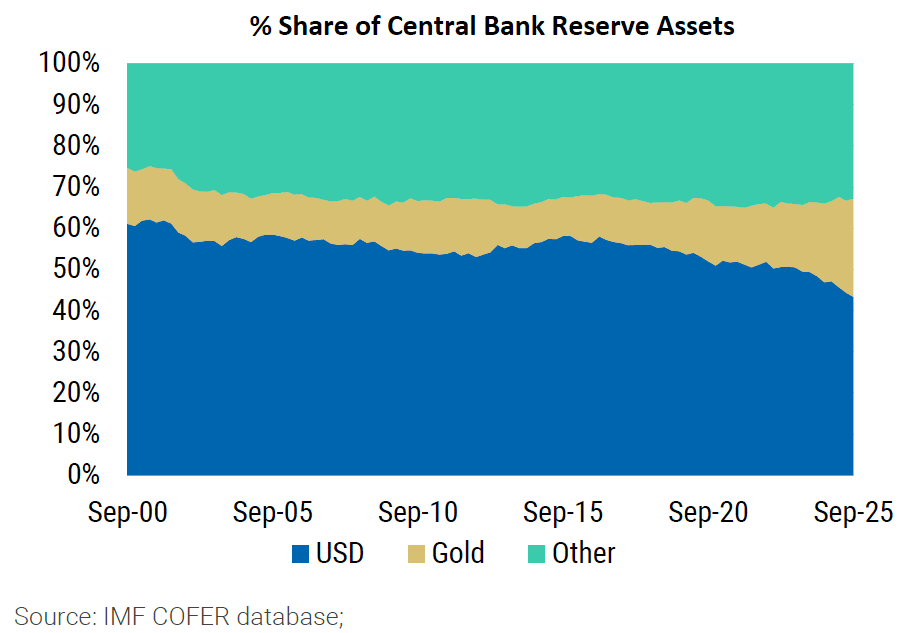
Image courtesy of Goldman Sachs.
“We expect risk premia and hedging trends to keep USD under pressure and remain bullish on gold,” the authors say, citing strong physical demand from central banks and exchange-traded funds.
Survey data referenced in the report show that 43 percent of central banks expect their gold reserves to rise over the next 12 months, while none anticipate a decline.
Highly accurate consensus projections for the next four quarters, compiled from leading investment banks.
Access the full forecast →
At the same time, 73 percent of central banks surveyed expect overall US dollar holdings to be slightly lower in five years’ time, reinforcing the longer-term nature of the trend.
Morgan Stanley notes that the official data may understate the pace of diversification, pointing to a growing share of unreported gold purchases by central banks and other official institutions.
“Adding in the implied extra buying, gold takes an even higher share of total reserves,” the report says.
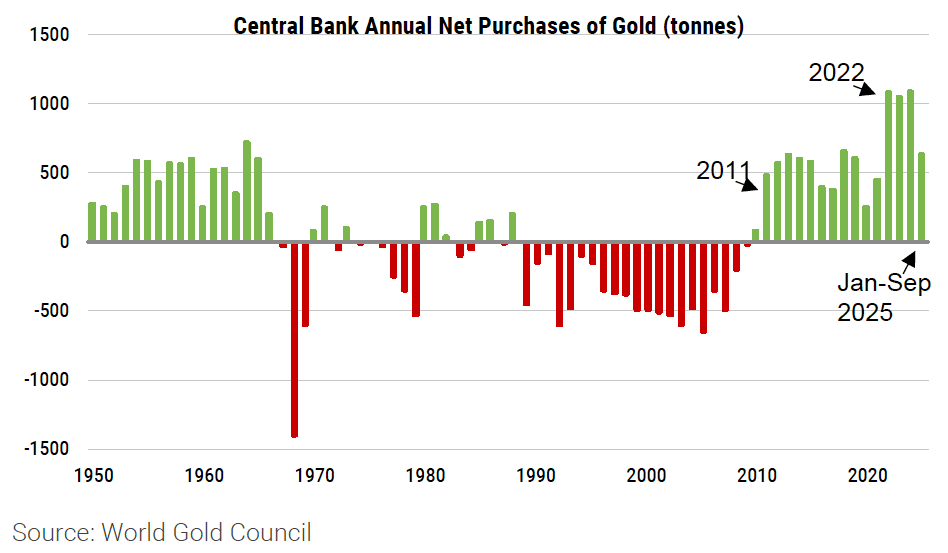
Image courtesy of Goldman Sachs.
The analysis stresses that the dollar’s declining reserve share has not yet been matched by the rise of an alternative fiat currency, leaving gold as the primary beneficiary of diversification.
“Despite the declining share, USD remains comfortably the largest presence in central bank FX reserves, suggesting no significant currency challengers for now,” the authors write.
The report adds that policy and geopolitical factors are neutral to slightly accelerating the transition away from the dollar, with trade uncertainty and sanctions risks among the contributing forces.
“On net, we think policy factors are neutral to slightly accelerating this transition away from the USD,” Morgan Stanley says, while warning that near-term developments will shape the pace of change.
The bank concludes that central bank demand for gold represents a durable and ongoing challenge to the dollar’s dominance rather than a cyclical adjustment.