
Image © Adobe Images
FX markets are now more interested in labour market figures, which tells us something important about trading patterns in the coming weeks.
Research from Deutsche Bank confirms U.S. inflation data is proving less important to currency and fixed income markets, but labour statistics are of increased interest.
The findings are released in the wake of the U.S. inflation data release for December, which showed inflation increased 0.3% m/m. The dollar and U.S. bond yields were largely unfazed by the revelation.
"That reaction is broadly in line with the increasingly muted response to inflation surprises over the past year," says Deutsche Bank.
The bank's research into how the FX market reacts to U.S. inflation and labour market data shows the following:
The reaction to inflation surprises rose sharply in 2022 as inflation soared and the Fed undertook a historically aggressive campaign of rate hikes to bring it back down.
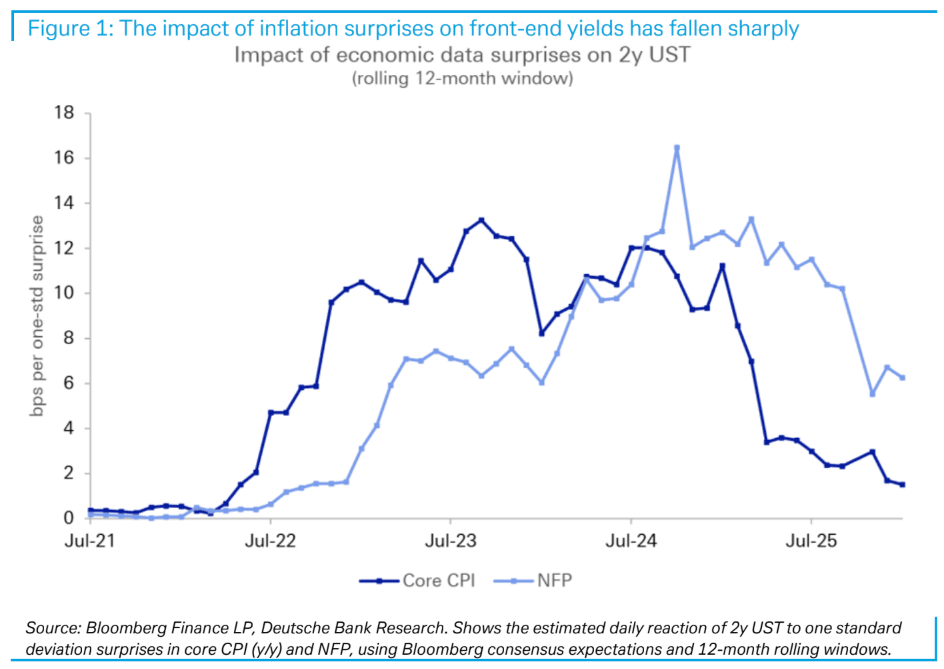
That was followed shortly thereafter by a rise in sensitivity to labour market data.
Starting around last April, the sensitivity to inflation data began to fall
precipitously.
"This was partly a return to more normal historical reactions as disinflation progressed and focus increasingly shifted towards labour market risks," explains Deutsche Bank.
The findings confirm that going forward, it's U.S. employment dynamics that FX watchers must focus on, given this is likely where the Federal Reserve's interest rate function now resides.
(The Fed has a dual mandate of controlling inflation and defending employment. With inflation becalmed, deteriorating jobs look to be the main concern).