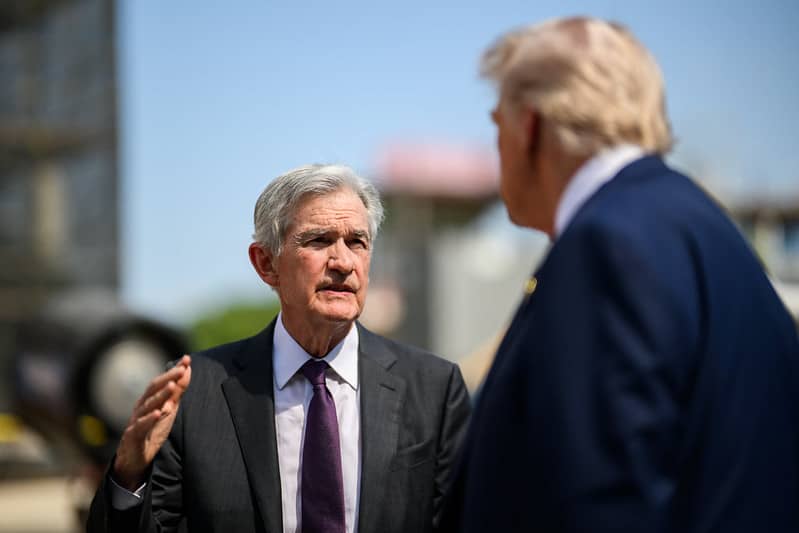
President Donald Trump speaks to Fed Chair Jerome Powell during a tour of the Federal Reserve in Washington, D.C., Thursday, July 24, 2025. (Official White House Photo by Daniel Torok)
The dollar fell after the U.S. government threatened criminal charges against the Federal Reserve Chair.
The Department of Justice and has served a grand jury subpoena on the Federal Reserve and threatened a criminal indictment against its Chairman Jerome Powell.
The action relates to the renovations of the Fed's headquarters, where upgrade works are underway.
In response to the charges, Powell said, "this unprecedented action should be seen in the broader context of the administration's threats and ongoing pressure."
"The threat of criminal charges is a consequence of the Federal Reserve setting interest rates based on our best assessment of what will serve the public, rather than following the preferences of the President," said Powell.
The administration of Donald Trump has long made it known it was not happy with the Federal Reserve, accusing it of not cutting interest rates fast enough.
In 2025, the administration sought the removal of Powell, accusing him of overseeing an improper renovation of the Fed's main headquarters. Analysts warned that the moves would threaten the independence of U.S. monetary policy, which had long-term negative implications for the dollar.
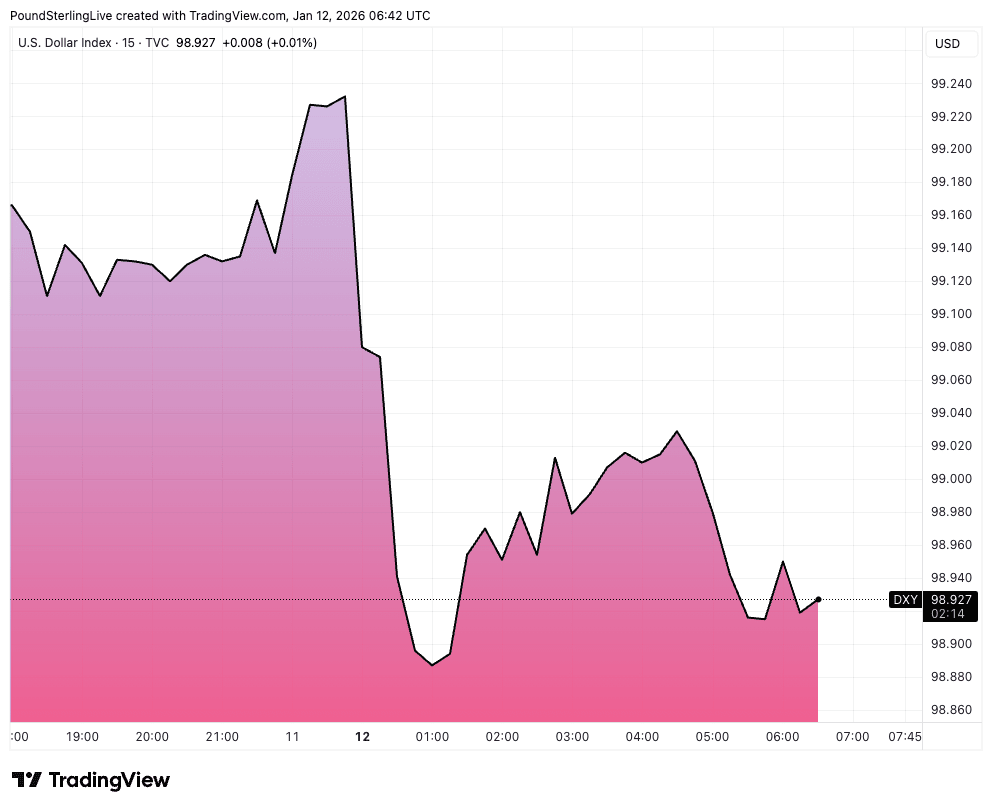
Above: The dollar index - a broad measure of USD performance - falls on Monday.
Trump accused the Fed of overspending on the renovations, and he made a site visit to observe the works that were underway.
The matter seemed to have been put to bed following the tour, making the latest developments something of a bombshell for financial markets.
"Continued political interference in the Federal Reserve could undermine its independence, potentially leading to higher inflation, higher long‑term interest rates, and a weaker USD," says Samara Hammoud, an analyst at Commonwealth Bank.
In a statement, Powell said the reasons were merely "pretexts" and that the threat of criminal charges is a consequence of the Fed setting rates "based on our best assessment of what will serve the public, rather than following the preferences of the president."
In response, U.S. equity futures and benchmark Treasury futures declined materially.
The dollar fell across the board, allowing the pound to dollar exchange rate to recover to 1.3434 and the euro to dollar conversion to rise to 1.1669.
"I take no pleasure in pointing out that we have long warned that the market is underestimating the monetary policy risks associated with political pressure on the Fed. But this step, at the very latest, should be a wake-up call for some," says Thu Lan Nguyen, Head of FX and Commodity Research at Commerzbank.
Although the current actions are unlikely to impact near-term interest rate policy - meaning the dollar's reaction should be relatively limied - the implications for long-term policy are profound.
"The point is that the central bank's response function is likely to change fundamentally and in the long term if the White House succeeds (which we assume it will). This may only become relevant if inflation risks rise significantly again. In that case, it is to be expected that the Fed will not respond adequately. However, as the foreign exchange market is forward-looking, this already justifies a higher US dollar risk premium today," says Nguyen.