Image © Adobe Images
The dollar fell but then recovered as traders tried to pin a narrative on a decidedly ambiguous jobs report.
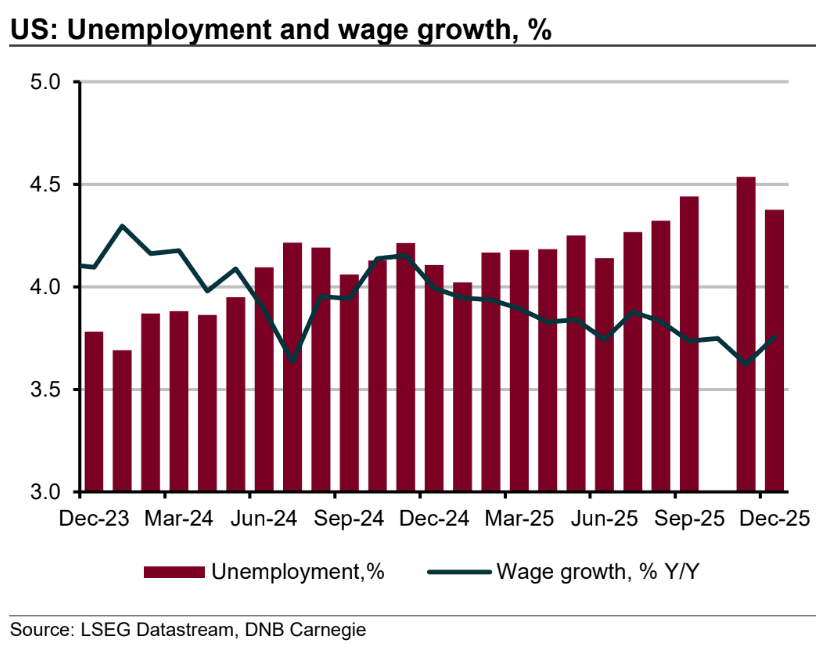
The currency's recovery suggests traders are leaning towards the positive elements of these data, namely a reported fall in the U.S. unemployment rate to 4.4% from 4.5% and a rise in annual wages.
"Despite the weak employment trend, the unemployment rate fell slightly from November, and the recent trend appears more stable," says Knut A. Magnussen, an economist at DNB Carnegie.
'Stable' is the watchword here, as it implies there is not enough reason for the Federal Reserve to rush through a series of interest rate cuts.
It is expectations for more cuts in the coming year that underpins a bearish dollar thesis. Anything that questions that thesis will ultimately support the dollar:
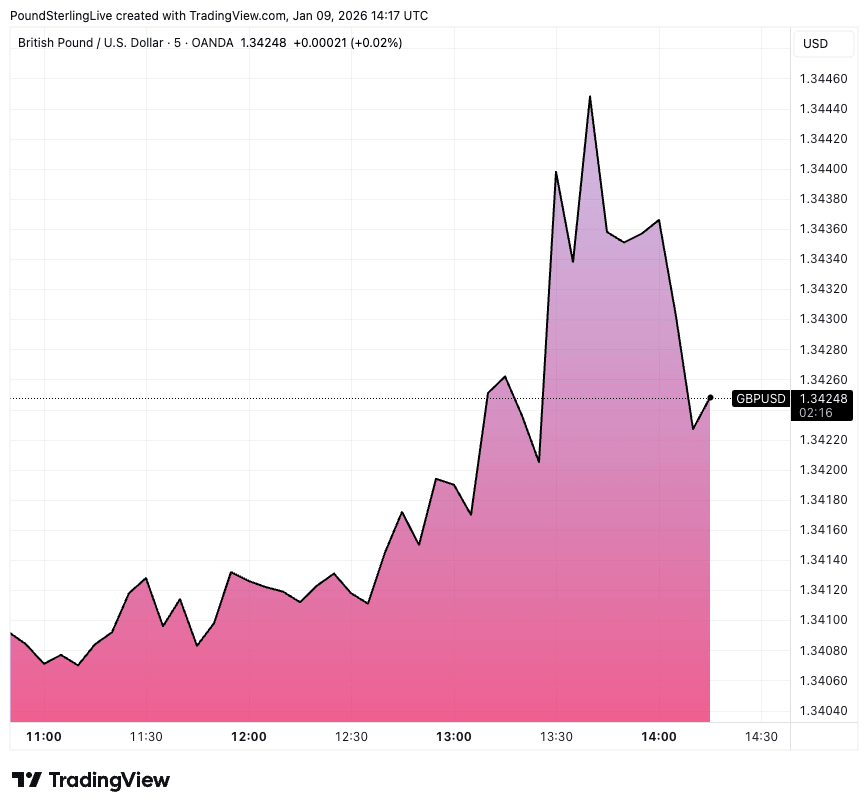
Accordingly, the pound to dollar exchange rate rose to 1.3450 in the minutes following the report, but then sold off to 1.3414 by the time of writing. Euro-Dollar followed a similar pattern, peaking at 1.1660 before capitulating to 1.1637.
✳️ Secure today's exchange rate for a future payment. You may also book an order to trigger your purchase when your ideal rate is achieved. Learn more.
"The dollar is ticking higher and Treasury yields are up slightly across the front end of the curve as investors price a slightly slower pace of easing from the Fed," says Karl Schamotta, analyst at Corpay.
The initial strength in GBP/USD and EUR/USD reflects a knee-jerk reaction to the headline non-farm payroll data, which is usually where algorithmic reactions are triggered.
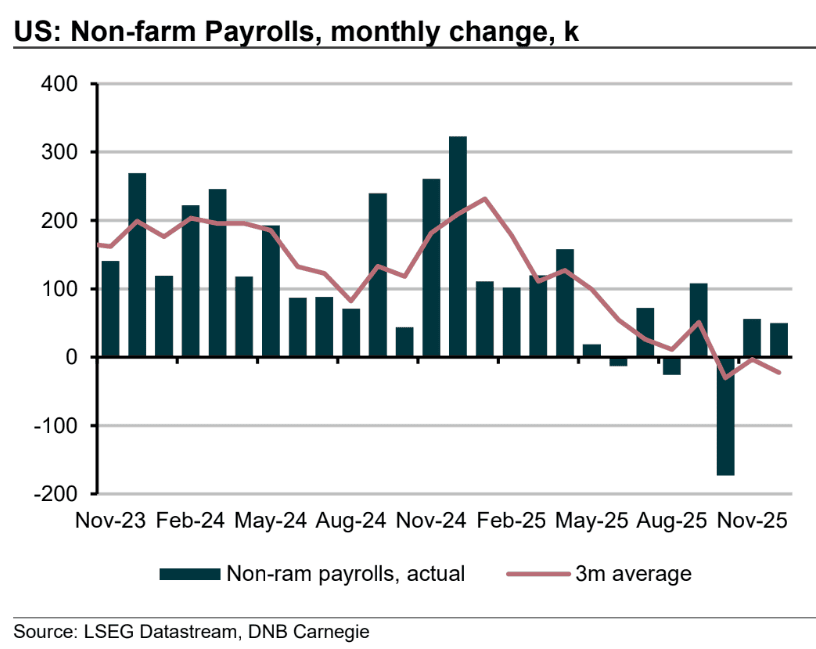
Here, a 50K non-farm payroll undershoot of expectations for 60K triggered a selloff in USD on the notion the jobs market was deteriorating faster than most had expected.
Indeed, the outcome reaffirms the trend of a softening jobs market:
But, the unexpected fall in the unemployment rate suggests the labour market has less 'capacity' than was initially thought, and to top it off, annual wage growth picked up from 3.6% Y/Y in November to 3.8% Y/Y in December.
As the next chart shows, wage growth is still elevated, and this will underpin inflation, complicating the Fed's ability to lower rates.
Markets now anticipate the Fed will remain on hold until mid-2026. Caution against expecting much more by way of Fed cuts supports U.S. bond yields and the dollar.
"Fears of a labour market collapse have eased as the December nonfarm payroll report corrected what failed the 'smell test' in November’s data," says Atakan Bakiskan, U.S. Economist at Berenberg.
"The US economy generated fewer jobs than anticipated, but the unemployment rate declined last month, giving the Federal Reserve room to slow the pace of monetary easing over the course of 2026," says Schamotta.
✳️ Secure today's exchange rate for a future payment. You may also book an order to trigger your purchase when your ideal rate is achieved. Learn more.