
Image © Pound Sterling Live
The Bank of Japan joined the Fed in tightening while the Bank of England held Bank Rate at 3.75%.
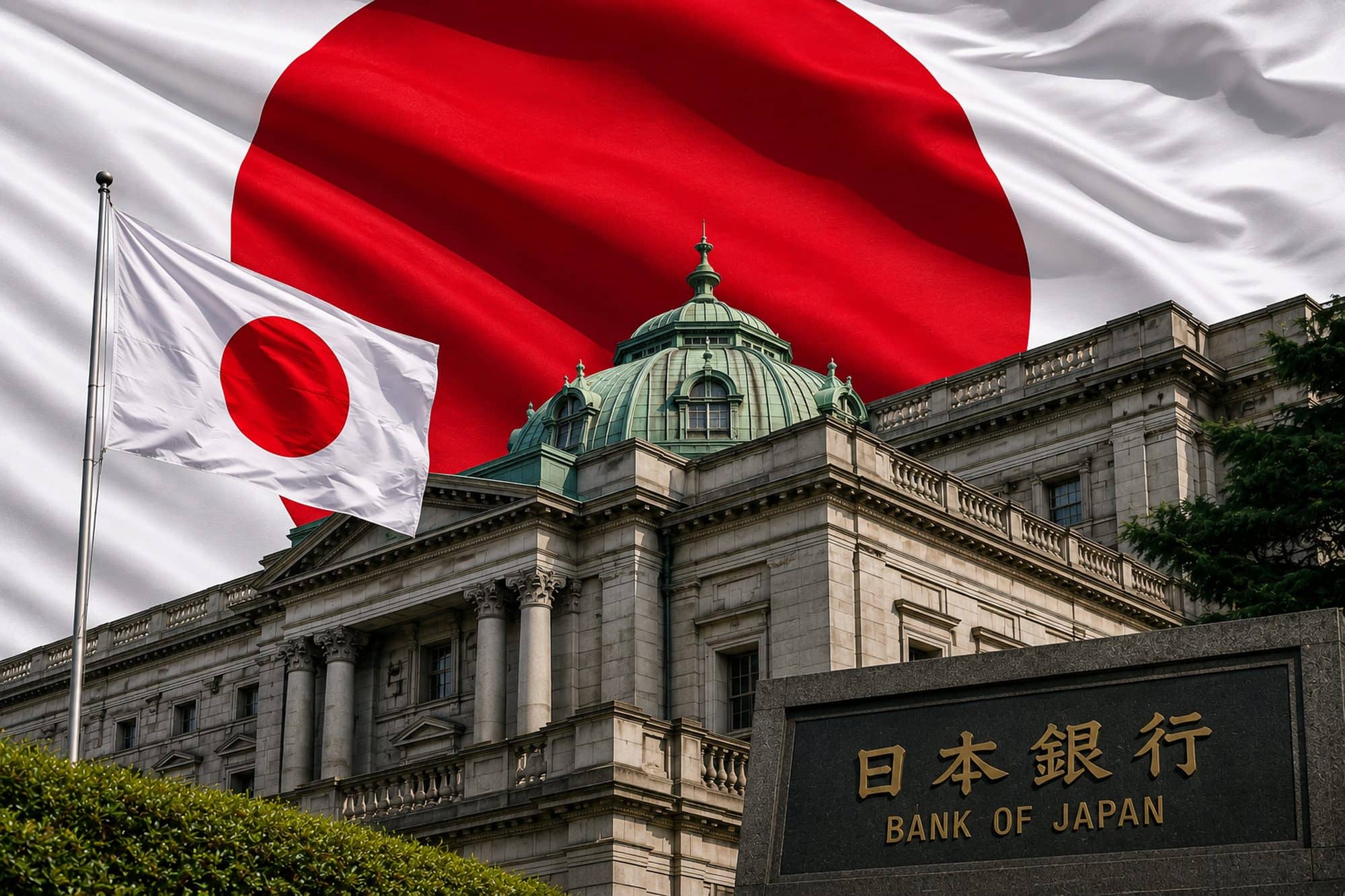
The Bank of Japan raised interest rates on 18 September 2026, joining the US Federal Reserve in tightening policy while the Bank of England held borrowing costs steady. The decisions reflected different judgements about domestic demand and the risk that higher inflation would become embedded in wage and price-setting.
Japan’s central bank lifted its short-term policy rate from 1% to 1.25%, its highest in 31 years, in a 7–2 decision, Reuters reported. Governor Kazuo Ueda said its focus was shifting towards preventing inflation from exceeding its target. The new guideline for Japan’s overnight money-market rate takes effect on 24 September.
The British decision, announced on 17 September, left the Bank Rate at 3.75%. Six policymakers backed the hold, and three preferred an increase to 4%. The majority judged that domestic conditions were still restraining inflation, even as rising energy costs increased the danger of broader price pressures. Britain’s unchanged rate therefore came with a warning that further tightening could become necessary.
AlphaWire reported that the Federal Reserve “raised its benchmark interest rate by 25 basis points” on 16 September. The Fed’s statement put the new federal funds target range at 3.75–4% and recorded a unanimous 12–0 vote, while describing economic activity as expanding solidly.
The US decision moved the upper end of its target range above Britain’s Bank Rate, while Japan’s rate remained substantially lower than both. A quarter-point increase in Tokyo and Washington did not put their economies under the same monetary conditions. Their starting rates and assessments of demand were different.
Domestic pressures diverge
The Bank of Japan said businesses were passing wage increases into selling prices and that higher costs in transactions between companies were beginning to reach consumers. It described underlying inflation as approaching 2%, with a risk that changing wage and pricing behaviour could push it above that target.
Financial conditions would remain supportive of economic activity after the increase, the Japanese central bank said. Its statement envisaged further rate rises, with their timing and pace dependent on economic activity, prices, and financing conditions. It also described a moderate recovery, resilient consumption, and a tight labour market.
The Japanese board was divided over the need to act immediately. Dissenter Toichiro Asada pointed to recent inflation below 2% on the measure excluding fresh food and questioned the economy’s strength. Ayano Sato, who also opposed the increase, argued that economic activity and prices had not accelerated substantially enough to justify raising rates at this meeting.
Ueda did not rule out consecutive increases or larger, half-point moves, according to Reuters. Those options were not a commitment to either course. The bank’s published guidance left the pace of adjustment dependent on developments.
The Fed’s account of the US economy emphasised resilient domestic spending, strong productivity growth, and robust capital investment. Job creation had kept pace with growth in the workforce, while unemployment had changed little. Officials said inflation remained elevated and that the increase would help bring it back to their 2% goal sooner.
The move was the Fed’s first increase since 2023. By contrast, the British majority saw financial conditions already bearing down on activity. The two decisions reflected different assessments of how much additional restraint their economies needed to bring inflation under control.
Energy prices shape Britain’s outlook
The Bank of England’s minutes showed a different balance of pressures. Annual consumer price inflation reached 3.1% in August. Using energy prices recorded on 14 September, staff expected it to rise to around 3.75% in the fourth quarter of 2026 and around 4% in early 2027. Those projections depended on energy costs, rather than describing inflation already recorded.
Officials had seen little evidence that the energy shock was producing material, persistent changes in wage and price-setting. They nevertheless judged that the longer expensive energy persisted, the greater that risk became. A soft labour market and higher borrowing costs for households and businesses were expected to help restrain inflation over time.
ING economist James Smith said in a 17 September assessment that another hold remained his base case, assuming energy prices declined over the following six weeks. If that assumption proved wrong, he expected the Bank to raise rates in November and probably again in February 2027. That was ING’s conditional forecast, rather than an announced timetable from the central bank.
Smith argued that Britain’s weaker jobs market, tighter fiscal policy, and pressure on sectors sensitive to interest rates made the case for additional increases less compelling. In his assessment, a rise could serve as insurance against inflation becoming more persistent, even without clear evidence that energy costs had spread widely through the economy.
ING also judged market expectations of four UK rate increases over the following year to be excessive. Its outlook depended on falling energy prices allowing officials to keep rates unchanged, with scope for reductions in 2027. Continued high oil and gas prices would challenge that view.
The Bank of England’s next decision is due on 5 November. Its September minutes warned against waiting too long for evidence of broader inflation pressure, given the time such effects take to emerge. But officials also left room for the outlook to change materially. The remaining question is whether persistent energy costs strengthen the case for an increase before higher borrowing costs and weak labour demand further restrain domestic inflation.