The British pound is incredibly stable in the run-up to Thursday's European Central Bank Decision and we feel a big move is in the air
- Pound higher against euro on Wednesday, holds its March gains to stay above support at 1.2850 but remains below 1.30
- Prospect of a big move ahead as moving averages squeeze the price, Associated Foreign Exchange (AFEX) believe breakout will be lower
The pound to euro exchange rate is carving out an incredibly tight range for itself above 1.2850 and just below the resistance line at 1.30.
There has actually been very little movement in this market to speak of since the 2nd of March which hints at a big impending move; think of this price action as being akin to a coiled spring.
Rest assured though, we will likely see a break out of the range soon, the question is, to which side?
Latest Pound/Euro Exchange Rates
  | Live: 1.1661▲ + 0.01%12 Month Best:1.1828 |
*Your Bank's Retail Rate
| 1.1265 - 1.1311 |
**Independent Specialist | 1.1498 - 1.1544 Find out why this is a better rate |
* Bank rates according to latest IMTI data.
** RationalFX dealing desk quotation.
Sterling has the momentum in the immediate-term after we saw the pound to euro exchange rate record its best weekly advance against the euro since October 2015 last week in a move that has given fresh hope for those looking to exchange pounds and euros.
However, upside momentum has waned as the GBP/EUR finds itself tucked between the rapidly consolidating 20 day and 50 day moving averages.

When a financial asset crosses a moving average the assumption is the energy required for the move will lend itself to further momentum.
As the graphic clearly shows, the pound-euro will have to cross the threshold soon.
AFEX: The Move Will be Lower
Those looking for better exchange rates should be wary as the pair's longer-term trend is down and only a breach above 1.3050 would confirm the onset of a more bullish environment:
“Unless 1.3050 gives way as well, no interim bottom will be signalled and the market thus remains vulnerable to another sell-off over coming sessions,” says Lucy Lillicrap, head of the risk management desk at AFEX.
Should the pound deliver a break above 1.3050 then we could well see further gains to 1.3150 and 1.3250.
Meanwhile, Lillicrap highlights three tiers – at 1.2795/05, 1.2690/00 and then 1.2600/10 - where support can be found. These levels could afford a temporary easing of selling pressure.
ECB policy Review Biases Euro Weakness in Short-term
Consolidation in GBP/EUR could be the dominant theme over coming days, however.
The euro will be subjected to heightened expectations the European Central Bank (ECB) will respond to persistently weak Eurozone inflation with a robust menu of policy initiatives at their highly-anticipated policy meeting on Thursday March 10.
The event is the highlight of this week's currency market calendar and could spell notable weakness in the euro exchange rate complex.
Indeed, a report from ING Bank forecasts a 1.5% drop in EUR/USD if the ECB follows their base case scenario of a 5bn EUR rise in monthly purchases and a 0.20% cut in the deposit rate, reducing it from -0.3% to -0.5%.
Traders would typically sell a currency on the hint of rate cuts but ahead of Thursday’s ECB meeting they are wary.
No doubt they will still be suffering a hangover from the December meeting where those selling the euro were caught out by a massive rally as the action delivered by the ECB was deemed to have been too modest.
"However, the ECB’s mantra is to surprise and with positioning now decidedly leaning towards a less dovish ECB," say CitiFX in a foreign exchange briefing to clients.
This thinking also explains the inability of USD to rally following the strong February jobs report released last week.
"Shorting EUR is now seen as the better risk/ reward play tactically," say CitiFX.
Brexit to Hang Over the Pound, Could See Interest Rates Go Negative
With several high profile analysts and economists, including Woolfson prize-winner Roger Bootle, forecasting sterling to weaken by between 15 and 20% in the event of a win for the ‘out’ vote in the EU referendum on June 23, the medium-term risks for GBP/EUR are negatively biased.
Monetary Policy sentiment also seems to be souring, according to a recent note by Royal Bank of Scotland (RBS), who suggest the vogue for central bank’s adopting negative interest rates could well be, “spreading to these shores.”
“Negative interest rates might seem the stuff of fiction. But financial markets reckon there's a one in five chance of them being adopted in the UK by the end of 2017.”
Negative interest rates basically mean that central banks charge commercial and high-street banks for saving, or depositing money with them.
With heightened expectations of rates falling below zero the pound is not well placed from a monetary policy perspective as the risks that the Bank of England cuts rates further, instead of raising them, becomes a more real prospect.
Bank of England Soothes Concerns Over EU Referendum
Sterling is significantly lower than where it should be thanks to the Brexit Premium we are seeing take effect.
The Brexit Premium is essentially the gap between where fundamental economic conditions would normally place sterling and where it is actually trading. The gap opened towards the start of December 2015 and has been in control ever since.
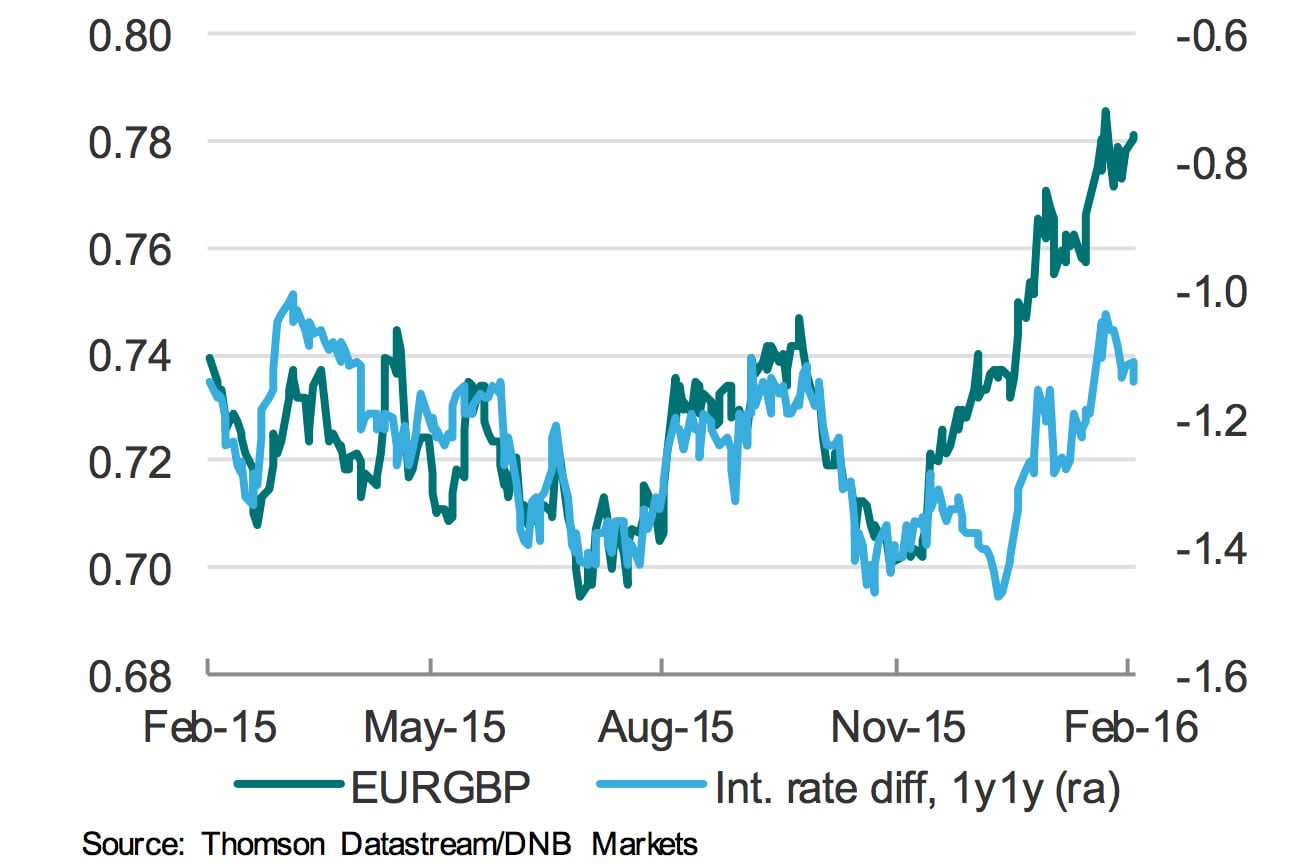
Concerns over the vote will have been eased overnight on news that the Bank of England will open extra funding facilities around the time of the EU vote to ensure markets operate in as smooth a manner as possible.
The Bank intends to offer 3 long term repo operations between June 14th and June 28th to ensure liquidity in the markets and provide flexibility for banks and other large institutions.