
File image of Chancellor Reeves. Picture by Kirsty O'Connor / HM Treasury.
The UK government borrowed less money than was expected in December, although January's critical self-assessment payment deadline will "make or break the fiscal year" we are told.
Public sector net borrowing was £11.6BN in December said the ONS Thursday, down on December 2024’s figure of £18.7BN. The consensus looked for a reading of £13BN.
November's monthly figure was revised down to £10.9BN from £11.7BN in the initial estimate.
"It's likely to be taken as a positive signal for government borrowing costs and interest rate expectations, adding to the positivity on London markets, which are close to record highs," says Derren Nathan, head of equity research, Hargreaves Lansdown.
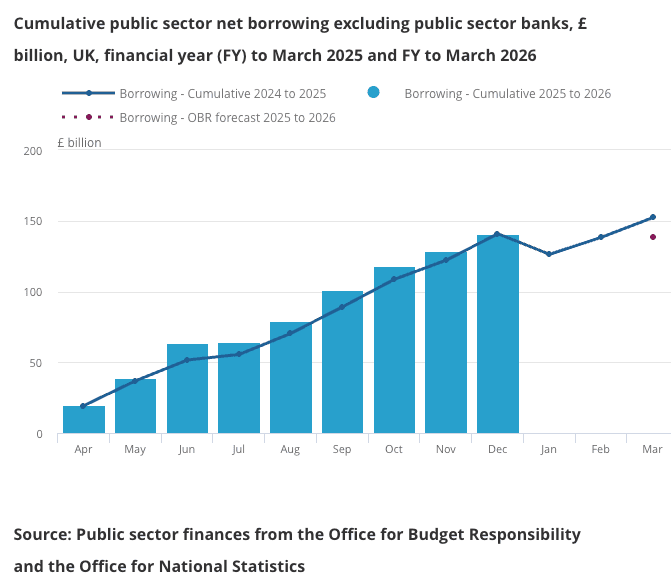
Borrowing in the fiscal year to November was revised to £128.8BN from £132.3BN previously, which is still ahead of the projections issued by the Office for Budget Responsibility.
Nevertheless, these are welcome figures for Chancellor Rachel Reeves and come at a time when global markets are becoming increasingly tetchy about the amount governments worldwide have to borrow.
This week saw a significant selloff in Japan's bond markets that pushed borrowing costs up in all developed economies.
Simply put, now is not the time for the UK to publish disappointing borrowing data.
Looking ahead, much now rests on January's outturn, given the surge of self-assessment payments that must meet the January 31 deadline.
"Next month's data will make-or-break the fiscal year," says Elliott Jordan-Doak, Senior UK Economist at Pantheon Macroeconomics.
"Looking ahead, we think risks to public sector borrowing remain firmly to the upside. Granted, the risk premium in gilts has fallen as the market deemed the November Budget more credible than expected and today’s data will help. But we continue to think the Chancellor’s package of large, backloaded tax hikes and harsh real-terms spending cuts remains vulnerable to reversal as political pressures mount," he adds.
Today's data were highly anticipated as market attention turns increasingly to the issue of significant borrowing demands from the world's indebted nations.
A sell-off this week in Japanese debt spread to bond markets around the world, in the latest sign of investors' worries over record borrowing by rich nations.
Barclays forecasts a €100BN increase in gross debt sales by EU countries this year, with which the UK government must compete.
Germany is a key driver here: the "scarcity of Bunds is definitely over" said Tammo Diemer, an executive board member at Germany's finance agency. Germany will issue more debt after removing its constitutional borrowing limit to allow for a huge increase in infrastructure and defence spending.
We expect the issue of government debt issuance to be a major financial market concern for the coming years.