
Warnings Sounded Over Rising Bond Yields
Rising bond yields hint that trouble is brewing again for Chancellor Rachel Reeves.
The cost of borrowing from debt markets is rising again, an unwelcome development for Chancellor Rachel Reeves, who will hope the moves don't extend.
UK two-year yields are up 0.75% on the day at 3.70%, 10-years are up 1.65% at 4.5% and 30-years are up 1.72% at 5.24%.
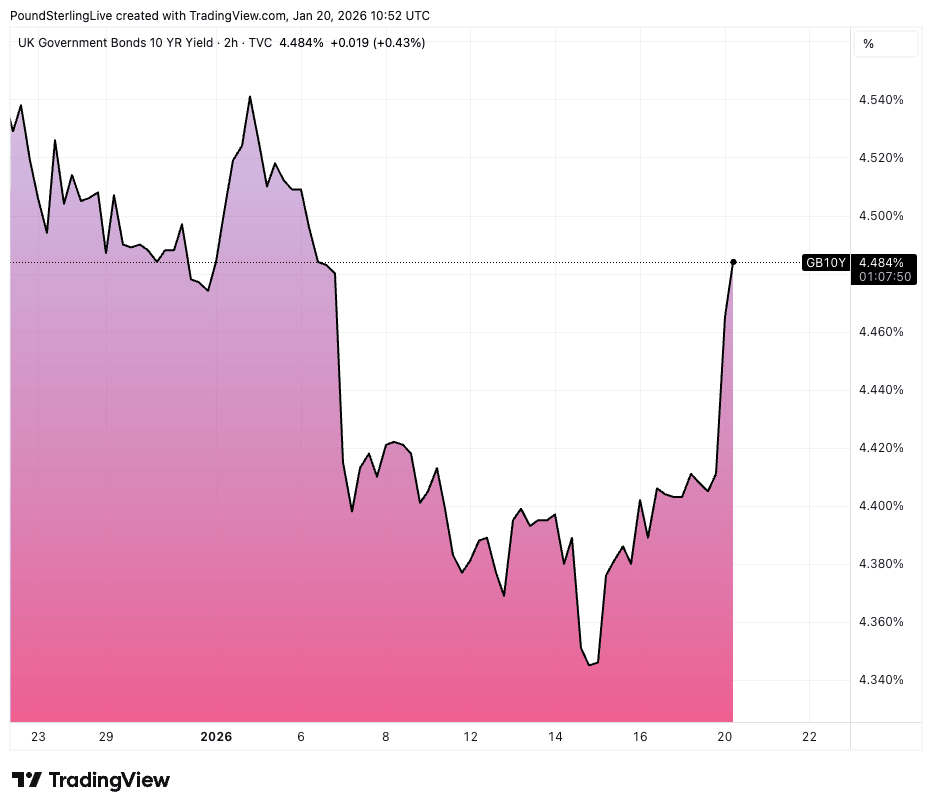
Above: The yield on UK ten-year bonds.
To be sure, the rises are still relatively contained but they mark a decisive ending to a period of decline.
There's also no UK-specific trigger behind the rise which have global roots:
1️⃣ U.S.-EU tensions are rising over Greenland:
"The steepening carnage in global bond curves overnight carries a resemblance to April last year when global bonds sold were spooked by the Liberation Day tariffs," says Kenneth Broux, a strategist at Société Générale.
2️⃣ Japan is struggling to find buyers for its debt.
"Japan long-end yields surged after poor demand for the 20year JGB auction," says a note from TD Securities. "Spillovers from the JGB move were visible across the global rates space."
✳️ Secure today's exchange rate for a future payment. You may also book an order to trigger your purchase when your ideal rate is achieved. Learn more.
Bond yields rise as investors sell the underlying bonds, signalling unease with holding bonds over long periods for fear they will be devalued by inflation.
Inflation fears are rising as recent data warn the disinflation process has stalled for most global economies, while renewed U.S. tariff fears risk stimulating inflation further. After all, a tariff is largely footed by the consumer who pays for a more expensive import.
At the same time, there's a deluge of bond supply as nations finance hefty spending requirements.

File image of Sanae Takaichi: Official White House Photo by Daniel Torok.
Japan is the source of concerns as the new Prime Minister Sanae Takaichi promises fiscally loose policies (lower taxes, more spending) that threaten to flood the global bond market with more debt.
"The price action in early January is a continuation of the sell off at the end of last year, precipitated by doubts over debt sustainability (in Japan and elsewhere)," says Broux.
Just how much debt can the market absorb? The answer will be crucial for the UK which relies heavily on foreign investors to buy its debt.
This is why the UK will inevitably feel the impact and could end up being the biggest G10 casualty owing to its precarious debt dynamics.
Gilt yields had dropped since November's budget as investors saw receding risks associated with UK public debt dynamics. "The market judged Ms. Reeves’ Budget to have increased fiscal credibility," says Elliott Jordan-Doak, an economist at Pantheon Macroeconomics.
"But we think markets are underpricing the potential for a resurgence in fiscal risk," he adds.
Jordan-Doak explains the Budget rests on "shaky economic grounds" even without political risk rising (see here). "The Budget raised fiscal headroom with implausible spending cuts and distortionary back-loaded tax hikes for four to five years’ time, which the government could easily fail to deliver."