The British pound is at risk of slipping back below the 2.0 level unless it can break the upward bound of an increasingly entrenched downward sloping channel.

The pound to Australian dollar exchange rate has been trending lower since August / September when the multi-month rally ran into resistance at 2.20 and major banks started selling.
It has been downhill from there with sellers staying in charge, save for a number of occasions when corrective bounces took place.
However, these bounces have proven temporary in nature and merely allowed Aussie dollar bulls to double-up up on their ‘sell’ strategies.
The gains for the Aus dollar have also flown in the face of institutional forecasters who reckoned the currency would suffer on the continued slowdown in global commodity prices and interest rate cuts at the Reserve Bank of Australia (RBA).
What is of note is that the non-mining economy in Australia is picking up pace having reacted to previous interest rate cuts suggesting the RBA has done enough for now.
This simply spells for a more robust currency.
Outlook for the Pound v Australian Dollar: A Mid-December Crunch?
Turning to the GBP to AUD conversion in particular we note that there is some good news for those looking for a stronger British pound with which to buy Australian currency.
The level that lies between 2.0850 and 2.0728 has stopped previous major declines. On three occasions in 2015 have we seen major institutional sellers exit the market at these points as they are layered with exit orders.
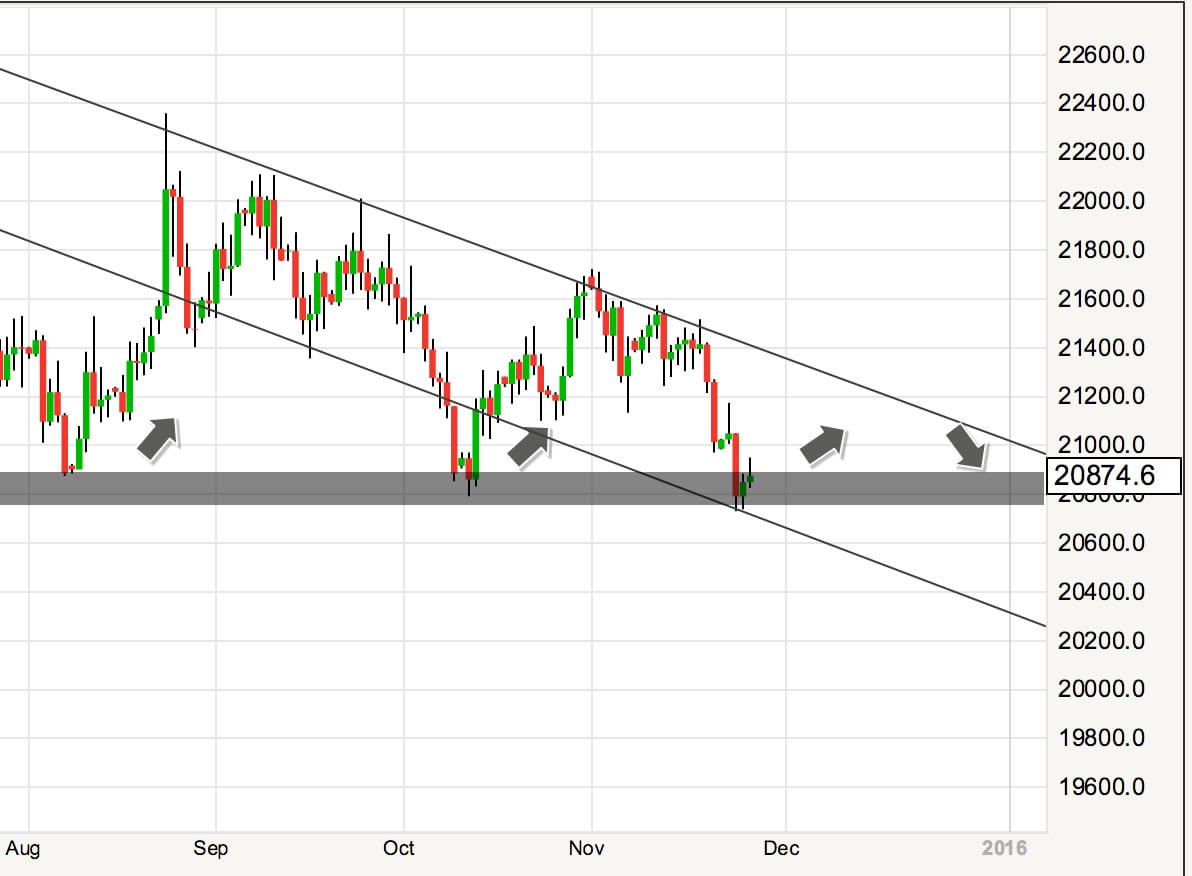
We could well see the same process happen in late November / early December.
Note too that if the present bounce were to extend it would coincide with the lower bound of the downward channel which has formed since August.
The problem for those looking for the GBP to AUD back at 2.20 is that the upper bound of that downward channel could well invite the start of the next bout of selling pressure.
So we could project any recovery to end around 2.12 in mid-December.
What sterling bulls need here is a fundamental game changer that will crack the technical patterns that are dictating play.
We believe the GBP/AUD recovery at this stage will rely primarily on pound strength as opposed to Australian dollar weakness.
Latest Pound / Australian Dollar Exchange Rates
  | Live: 1.8814▲ + 0.06%12 Month Best:2.1037 |
*Your Bank's Retail Rate
| 1.8174 - 1.8249 |
**Independent Specialist | 1.855 - 1.8626 Find out why this is a better rate |
* Bank rates according to latest IMTI data.
** RationalFX dealing desk quotation.
The Bank of England is the pound’s best bet at finding strength - markets will be watching to see if the timing of the first interest rate rise is brought forward from the end of 2016 / beginning of 2017.
We have heard from UniCredit that the single most important factor that could prompt such a move is the return of inflation.
“As we move into 2016 and the negative base effects in headline inflation fade, inflation will pick up sharply,” says Dr. Vasileios Gkionakis at UniCredit, “wage growth effects will then start to surface, setting the stage for an earlier BoE lift-off than is currently priced in.”
The caveat to UniCredit’s pro-GBP stance is that oil prices keep falling.
One way higher for inflation is via rising oil prices as the decline in fuel prices over recent months has undermined inflation notably.
Many forecasters are calling the floor in the oil price decline, but the problem for those watching the Aussie dollar is that rising fuel prices can have a supportive influence as commodity prices are key to Aussie dollar levels.
Nevertheless, the Bank of England will start seeing through fuel prices and if other components of the price basket start rising they may start sounding a more hawkish tone on rates which would give the GBP/AUD the kick it needs to move higher.
The next inflation release is on the 15th of December while wage growth figures will be released the next day.
Funnily enough these release dates coincide with when we expect the GBP/AUD to run into the upward bound of the declining channel.