Consensus projections for the next four quarters, compiled from leading investment banks.
Access the full forecast →
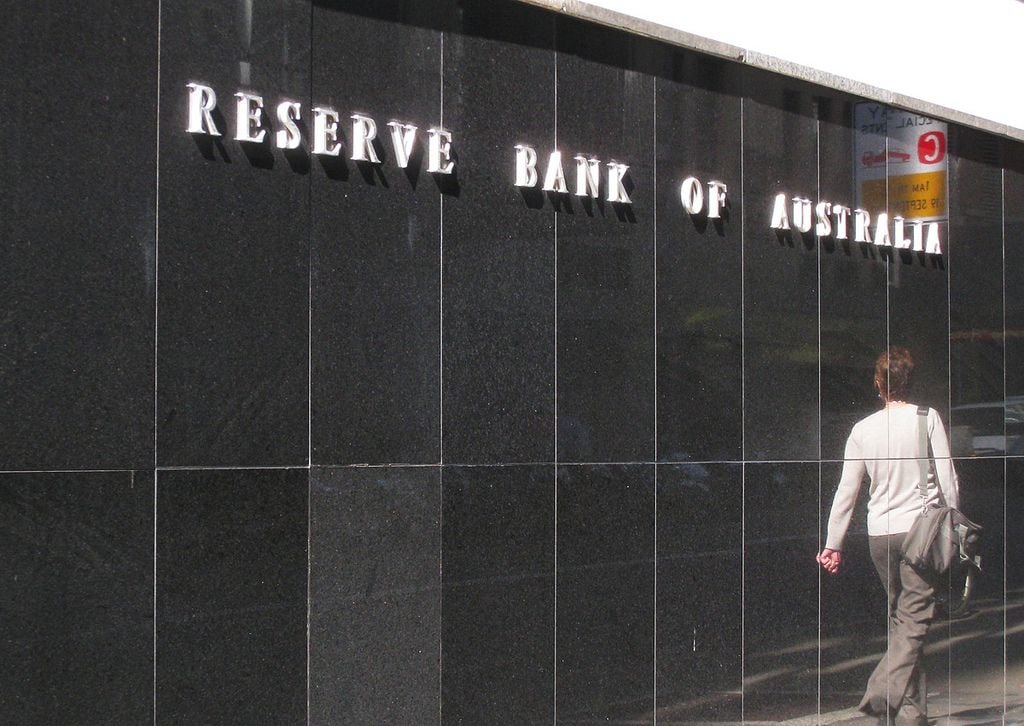
Image © Newtown Grafitti, Reproduced under CC Licensing.
The Australian dollar’s recent gains could extend if the Reserve Bank of Australia delivers a hawkish interest rate hike and signals that policy will remain restrictive in response to persistent inflation pressures.
Bank of America expects the RBA to raise the cash rate target by 25 basis points to 3.85% at its February 3 meeting, saying ina new research note that inflation remains too high for policymakers to keep a pause on current levels in the base rate.
“Persistent inflationary pressure, a positive output gap with demand accelerating amid supply-side constraints, and a tight labour market suggest a more restrictive stance is necessary,” Bank of America says.
Analysts add that while the RBA is likely to stress data dependence, it should also signal that further hikes are possible if inflation does not ease.
The key for FX markets is the tone of the guidance: does it encourage markets to 'price in' further rate rises.
If the answer is yes, then the stance is branded 'hawkish'. The Australian dollar is 2026's best performing G10, and such an outcome from the RBA will fuel the rally further.
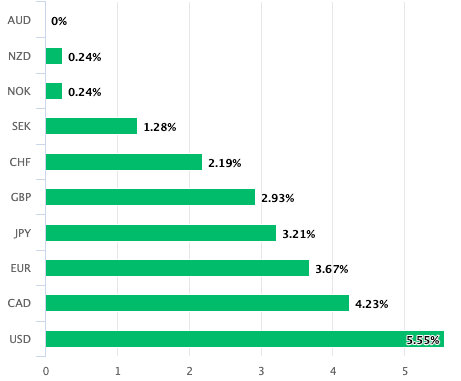
Above: AUD in 2026.
Consensus projections for the next four quarters, compiled from leading investment banks.
Access the full forecast →
Bank of America says three key risks outlined in the RBA’s November Statement on Monetary Policy have all evolved in a hawkish direction, particularly on demand, labour market capacity and the global backdrop.
Household spending has surprised to the upside, with consumption rising 1.3% month on month in October against expectations of 0.6%, followed by a 1.0% increase in November compared with forecasts of 0.6%, suggesting domestic demand is running ahead of the central bank’s assumptions.
Bank of America expects the RBA to revise up its near-term consumption forecasts, noting that housing momentum also remains firm and that prices could rise by 6% to 8% in 2026, adding further support to private demand.
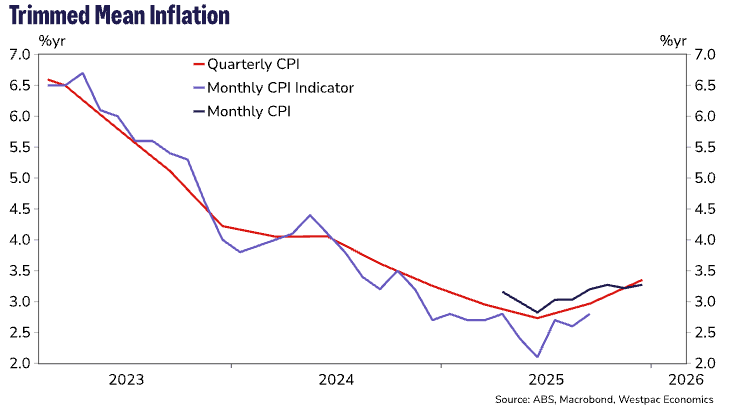
Labour market indicators also point to less spare capacity than previously assumed, with capacity utilisation above its long-run average and continuing to rise through the fourth quarter, a development the bank views as consistent with ongoing cost pressures.
"We see a risk that the trend decline in the unemployment rate continues in 2026 as strong private demand flows through, putting further upwards pressure on inflation and ultimately leading to a higher-for-longer cash rate path," Bank of America says.
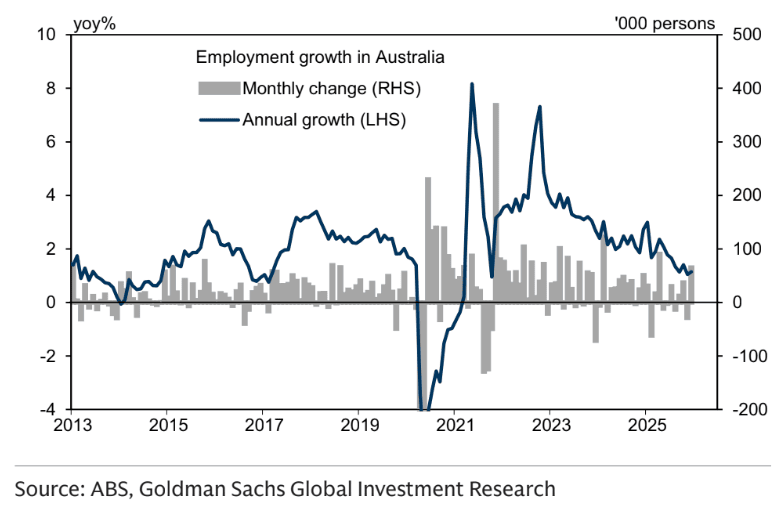
While some analysts point to slower jobs growth as a sign that labour demand is easing, Bank of America says employment is still growing above its estimated breakeven rate, especially in the context of slower population growth.
External conditions are also seen as supportive, with Bank of America highlighting unexpectedly resilient global growth, estimating the world economy expanded by around 3.4% in 2025 and expecting that momentum to carry into 2026.
Against that backdrop, the bank warns that holding rates steady in the face of persistently above-target inflation and upside risks could undermine confidence in the RBA’s inflation-fighting credentials.
“Holding rates amid persistently above-target inflation with upside risks would raise questions about the RBA’s commitment to the inflation target,” Bank of America says.
✳️ Secure today's exchange rate for a future payment. You may also book an order to trigger your purchase when your ideal rate is achieved. Learn more.
It adds a hike would be consistent with the central bank’s increasingly hawkish communication.
Analysts reference the RBA’s own guidance that the Monetary Policy Board will be “attentive to the data and the evolving assessment of the outlook and risks to guide its decisions.”
That suggests policy flexibility remains skewed toward further tightening.