
Image © Adobe Images
A weaker pound cuts the value of every pension withdrawal converted into another currency abroad.
Retiring abroad is one of those long-term goals that sounds better the closer you get to it. But a pension that stretches comfortably in the UK won't automatically do the same once it's converted into euros, dollars or whatever currency the local supermarket accepts. DWP data shows around 1.1 million UK State Pension recipients were living overseas as of August 2025, and most private pension drawdown payments still go out in pounds.
Every withdrawal gets converted at whatever exchange rate the market happens to offer that day. A dip in sterling will chip away at retirement income in the background, and the real cost only becomes clear once it's been compounding for months or years.
How a Few Cents Compound Over Years of Drawdown
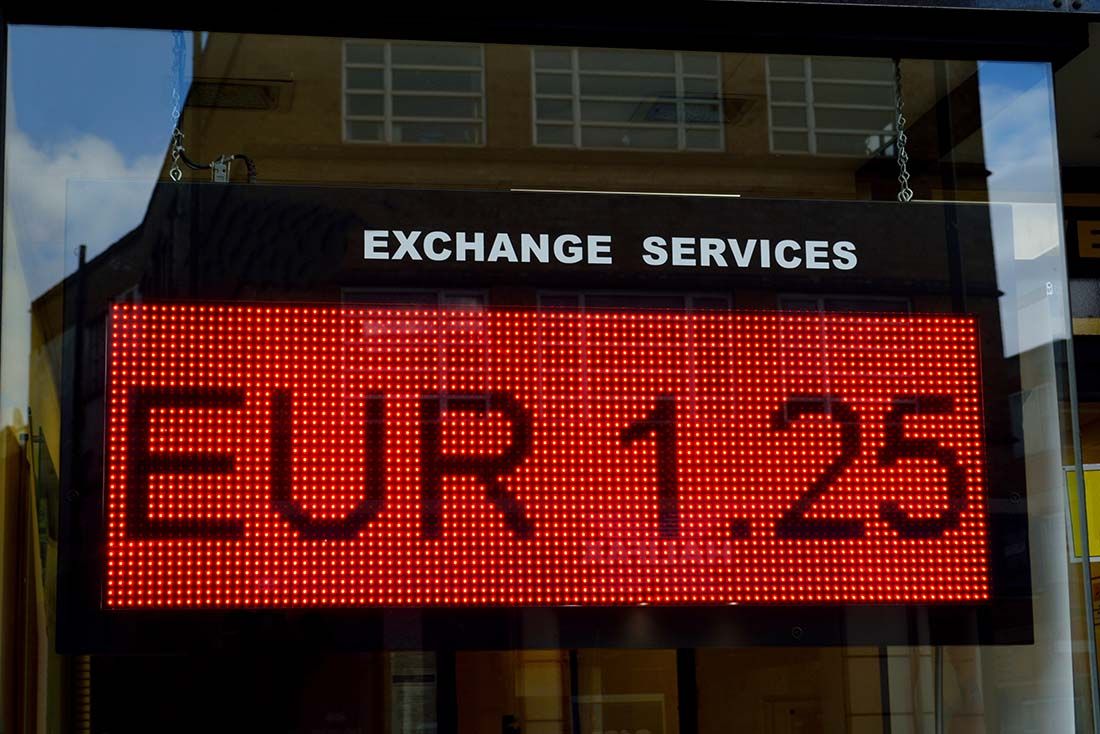
On a single transaction, a small move in the GBP/EUR rate looks like nothing. If the pound drops from 1.18 to 1.14 against the euro, a £1,000 monthly drawdown delivers roughly €1,140 instead of €1,180. That's €40 less in a month, which on its own isn't going to keep you up at night. But pension drawdown runs for decades, and that four-cent gap gets applied to every single withdrawal across the entire period.
Over a full year, a loss of that size adds up to close to €500 in purchasing power that just disappears. Stretch it across ten years with the rate still depressed, and the cumulative hit runs well into the thousands. Most retirees do the maths before they leave the UK and assume the numbers are settled, but the exchange rate keeps moving underneath them long after the plane has landed.
Frozen Pensions Add a Second Layer of Loss
Currency weakness hits harder for retirees in countries where the UK State Pension is frozen. Under current rules, pensioners living in countries without a reciprocal social security agreement don't get the annual triple lock increases that UK-based pensioners receive. Their pension stays locked at whatever rate applied when they left or first claimed. According to DWP figures, over 40% of the 1.1 million overseas pension recipients are caught by this policy, with the vast majority based in Australia, Canada and New Zealand.
So the pension itself doesn't keep pace with inflation or earnings, and the currency it arrives in may also be losing ground against the local one. Think about a retiree in Australia who left the UK a decade ago. They could be getting a state pension that's significantly lower in nominal sterling terms than what a UK-based pensioner receives, and on top of that, each pound buys fewer Australian dollars than it did when they originally emigrated.
Why Drawdown Timing Matters More Than Retirees Expect
Private pension drawdown gives retirees control over how much they take and when, but that control comes with currency exposure baked in. A retiree pulling £2,000 a month from a SIPP will make 12 separate currency transactions a year, each one landing at a different exchange rate. If the pound stays weak for several months running, every one of those withdrawals converts at a worse rate than planned.
How badly this affects the pot depends on its size, the annual withdrawal amount, how long the drawdown needs to last and whether the growth assumptions are actually realistic. Running those variables through a SIPP calculator before committing to an overseas move will show how long the pot lasts under each scenario, and any currency planning will then have a solid number to build around. Taking larger withdrawals while the pound is weak will drain the pot faster than the original projections assumed, leaving less capital in place to benefit if sterling eventually recovers.
How to Soften the Blow When Sterling Drops
Nobody can predict where the pound goes next, but retirees aren't stuck accepting whatever rate the market serves up each month. A forward contract will lock in today's rate for transfers up to 12 months ahead, usually for a small deposit, which turns an unpredictable monthly income into a fixed one. The trade-off is that the contract holds even if sterling recovers, so the certainty cuts both ways.
A simpler option is keeping a buffer of two or three months' spending in the local currency. With that cushion in place, a retiree can delay converting when the rate takes a sharp dip instead of selling pounds at the worst possible moment. Combining the two, a fixed rate for the predictable costs and a buffer for everything else, will take most of the monthly stress out of the exchange rate without requiring anyone to become a currency trader.
The Gap Between Planning at Home and Living It Abroad
Most retirement planning tools and conversations assume the retiree will spend their pension in sterling. The projections, the sustainable withdrawal rates, the growth assumptions and the tax planning all operate inside a single-currency model that stops being accurate the moment a person moves overseas. For the 1.1 million UK pensioners already abroad, exchange rate movements decide how much money actually arrives in their account each month.
For retirees approaching retirement with plans to leave the UK, the currency side of things deserves just as much thought as the pot size. Getting it wrong can cost more over a 25-year retirement than most people would lose on a bad investment, and by the time the shortfall shows up in the bank account, there's a lot less room to fix it.