We disagree with those commentators who say recent declines in the British pound should be blamed on the latest EU referendum polls.
- May historically a poor month for sterling
- Technicals confirm further GBP upside increasingly hard to justify
- No major shift seen in EU referendum odds or polling despite what other commentators are saying
We have been warning since late April that the strong recovery in the British pound exchange rate complex was due to fail.
The pound to euro exchange rate was a particular worry for us as we noted heavy technical resistance at the 100 day moving average which we felt would be a bridge the UK currency would be unable to cross.
A lack of solid economic data suggested to us the catalyst required to propel the market above the barrier was not available. This view has been proven correct and the pound sterling has sold off from highs above 1.29 to the current 1.2666 levels currently quoted.
We were not the only ones who could see sterling was in need of a break. Trader Sean Lee at ForexTell told his community that he sniffed the prospect of a euro recovery and told clients, "I quite like the risk-reward associated with EUR/GBP at current levels and I am starting to re-build my long position."
Lee is now in the money as the euro started advancing in late April.
Weakness in GBP/EUR has in turn fed into the GBP/USD exchange rate which appears to have topped.
Trade in sterling is also very much 'pair dependent' at the moment e.g advances are seen against the Australian dollar which was hard hit by the decision at the Reserve Bank of Australia to cut interest rates by 25 basis points at their May policy meeting.
Latest Pound/Euro Exchange Rates
  | Live: 1.1655▼ -0.02%12 Month Best:1.1828 |
*Your Bank's Retail Rate
| 1.1259 - 1.1305 |
**Independent Specialist | 1.1492 - 1.1538 Find out why this is a better rate |
* Bank rates according to latest IMTI data.
** RationalFX dealing desk quotation.
Some are Blaming Brexit…
Some commentators reckon the recent decline in sterling is owed to Brexit polling.
Reuters state that sterling, "was hurt further after the publication of the ICM poll, which showed 45 percent of voters favoured a Brexit, against 44 percent who believe Britain should stay in the 28-member bloc."
We disagree with this analysis.
Tuesday’s ICM poll is unchanged on last week’s poll. Furthermore a poll from TNS, released hours later, showed an increase in support for the remain camp - hardly the shift in sentiment that would bother sterling.
It would be nice to attribute sterling’s moves to easily definable events, but the truth is that often moves are the result of more subtle changes in the market.
For instance, the euro is on the move higher at the start of the new month as the effects of positive GDP data and sentiment surrounding the European Central Bank continue to foster demand.
The US dollar has meanwhile had a poor few weeks as traders continue to shed exposure to a currency that is finding no support from the US Federal Reserve.
The Fed appears intent on keeping interest rates where they are an until they indicate a more aggressive interest rate raising bias demand for the USD should remain tepid.
This has allowed the GBP to USD exchange rate to flourish alongside the EUR to USD rate which is seen testing multi-week highs.
However, the dollar sell-off would also ultimately have to die as markets know they can't push their luck. With strong levels of employment the US economy remains robust and should US inflation start advancing then the Fed could quickly turn more hawkish on interest rates.
"The foray of GBP/USD above 1.4750 faltered after the weak UK manufacturing PMI survey which saw the cross drop back towards 1.4620 before renewed US dollar strength pulled it below 1.4550," says a note from Lloyds Bank Commercial released mid-week.
We are potentially seeing the dollar’s sell-off fade, this corresponds nicely with the fading of the GBP/USD’s rally seen at the start of May.
Then there are the technical barriers to the advance.
"Cable has solid resistance levels near 1.4650 and I suspect that many of the speccy pre-referendum GBP shorts have already been culled (though I have been wrong before," notes ForexTell’s Lee.
To put it another way, much of the recent rise in sterling was a result of the realisation that markets over-cooked it earlier in the year by selling the British pound on an outsized fear of an UK exit from Europe.
The recovery was merely an attempt to put the currency back where it belonged.
However, this recovery action would always have a limit and solid lines of resistance would likely emerge (for instance the 100 day moving average in GBP/EUR I mentioned and the 1.4650 area Lee mentions in GBP/USD).
What those hoping for a higher exchange rate really need is a return of solid UK data.
This would encourage the Bank of England to bring forward their first interest rate in years which would in turn stoke demand for sterling by foreign investors seeking higher yield.
The good news is that with sentiment towards UK data so low the chance of upside surprises is growing.
While manufacturing activity remains weak, "we would caution attributing too much of this to uncertainty surrounding the EU referendum. After all, last week’s CBI industrial trends survey showed a pick-up in investment intentions," notes Paul Hollingsworth at Capital Economics.
Instead, Hollingsworth suggests it probably reflects sterling’s past appreciation and weak overseas demand to a greater extent.
"Looking ahead, the fall in the pound since around mid-November should help in time, and we are upbeat about the prospects for the global economy. Accordingly, we continue to think that things will improve for UK manufacturers later this year," says Hollingsworth.
So the outlook is positive and we expect the British pound to recover through the second half of the year.
The only major risk in the near-term therefore remains a vote to leave Europe, and until we get real evidence that this is likely we expect sterling to trade around current levels.
May is Not a Good Month for Sterling Against the Dollar
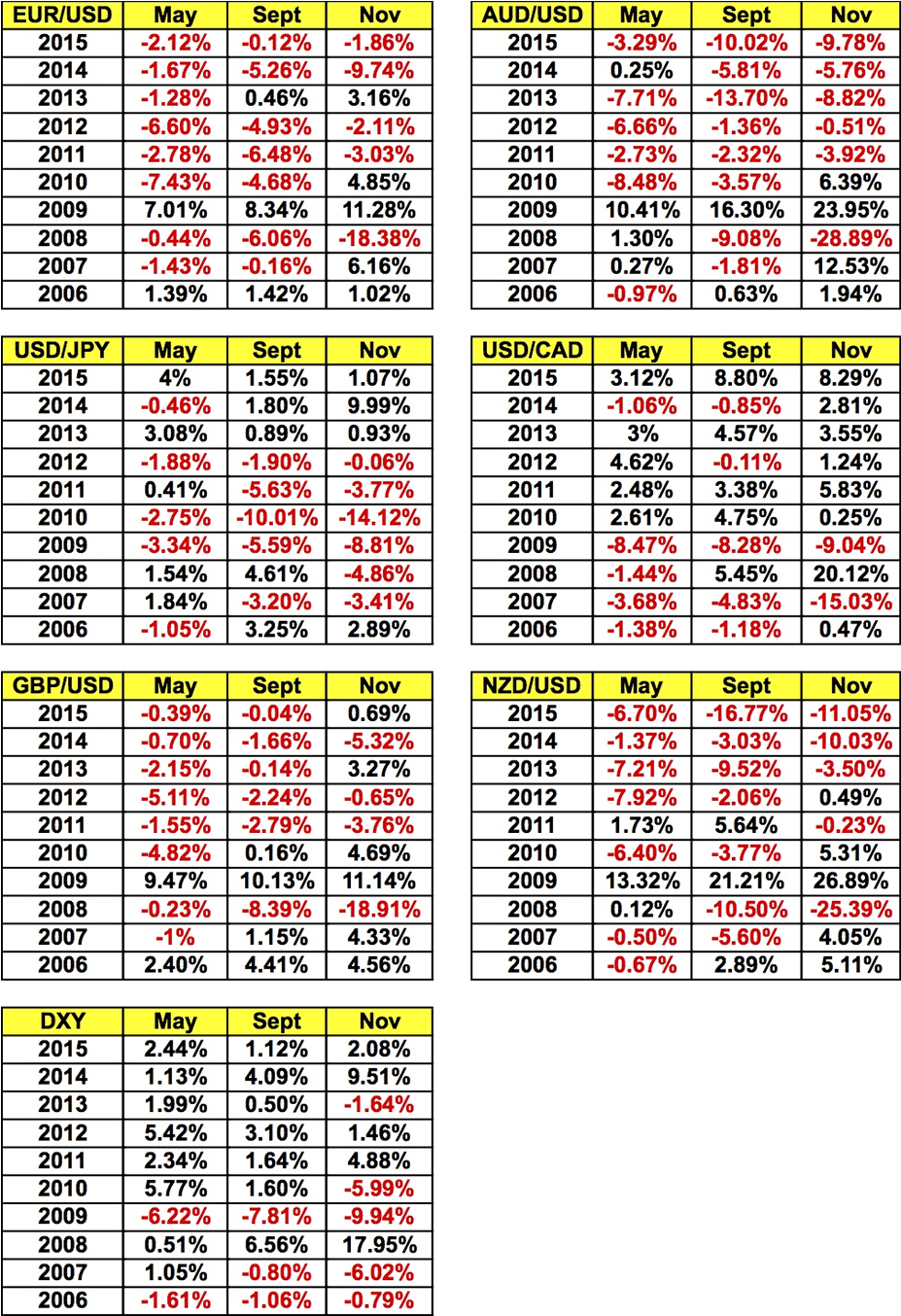
Beware - a look at the archives shows that the month of May is typically a bountiful month for dollar bulls.
According to data (thanks to BK Asset Management for this), May tends to be a very good month for the dollar and as the first week of the month progresses, the dollar appears to be reverting to form.
"In 8 out of the last 10 years, the Dollar Index appreciated in the month of May with particularly consistent gains seen in EUR/USD and GBP/USD. Interestingly enough these are two of the currencies that have seen the smallest losses against the dollar. Nonetheless the greenback is rising and enjoying particularly strong gains versus the commodity complex," says Kathy Lien, Director at BK Asset Management.
Data shows that the pound tends to perform poorly against the dollar in May having only risen in two out of the past ten years while the broader dollar index has recorded gains.
This seasonality combined with a more pro-USD shift in Fed interest rate hike expectations could be a clear warning of how coming weeks should progress.