Image © Adobe Images
The British pound is headed for a weekly loss against the euro, dollar and other majors, with a solid retail sales report unable to halt the decline.
Surprisingly strong retail sales data failed to lift the British currency, signalling that domestic macroeconomic data is being overlooked by currency markets, for now.
Sales rose 1% month-on-month in June, which was well ahead of expectations for -0.3%. The annual rate increased by 4.2%, beating the consensus estimate for 2.3%.
The data is consistent with stronger-than-expected underlying demand in the economy and will encourage the Bank of England to keep interest rates unchanged at next week's policy meeting.
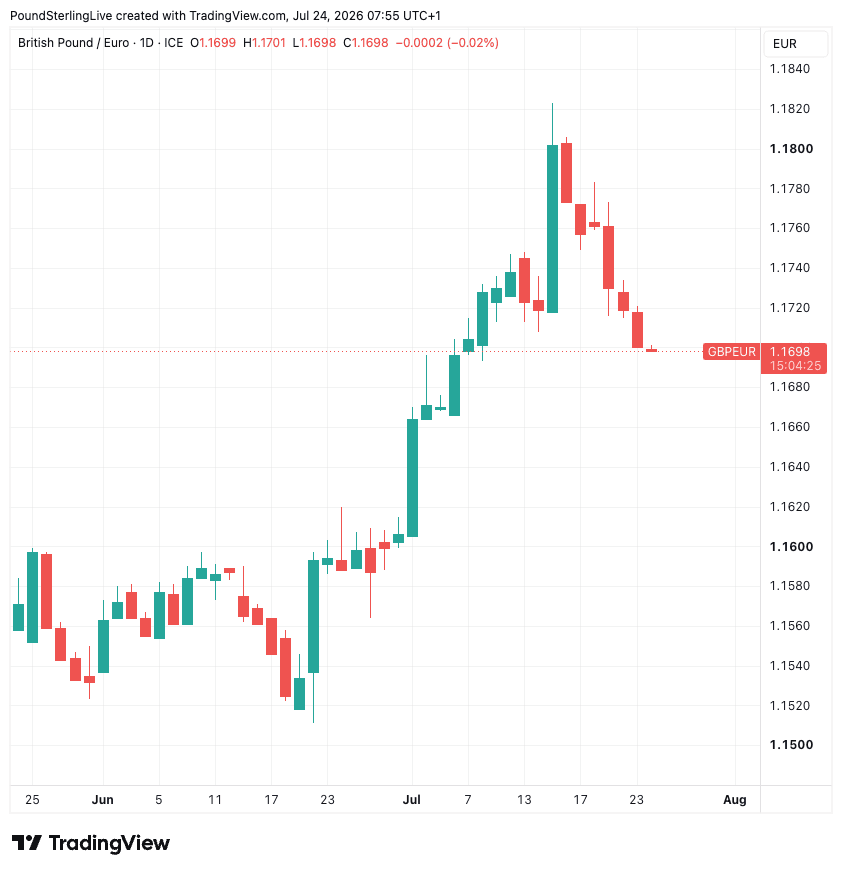
Despite these data beating expectations, the pound's slide continues with the pound-to-euro sliding through 1.17 over the past 24 hours and the pound-to-dollar dropping to 1.3312.
"GBP/EUR has gradually moved lower through the 1.17 handle, with 1.16 now emerging as the next key support level, coinciding with the 21-day moving average," says Antonio Ruggiero, analyst at Convera.
The pound strengthened against the majority of G10 currencies through the course of April, helped by market repositioning and the breaking of some key technical barriers.
But that move looks to have run its course, indicating that the significant short bet against the pound - that had been in place for many months - has unwound.
Market Sentiment Setback is Weighing on GBP
The key pairs of the pound-euro and pound-dollar are typically pro-risk, meaning they rise when sentiment on global markets is strong.
This week has seen sentiment deteriorate with the main U.S. indices all retreating amidst growing investor fears about the valuations involved in the AI trade.
"A palpable sense of caution is pervading global markets after Alphabet reported stronger-than-expected second-quarter earnings but raised its capital expenditure forecast, reigniting concerns about the sustainability of the AI investment cycle," says Karl Schamotta, a strategist at Corpay.
As stocks come under pressure, so too does the GBP.
Analysts are also wary of the upcoming Federal Reserve policy desicision, judging that any 'hawkish' tone would bolster the dollar and further weigh on stocks.
"I comprehend the softness in stocks and the strength in the USD, and I am here for it. I still believe the run-up into the Fed should see a hawkish trade: Buy USD, sell stocks, sell bonds," says Brent Donnelly, FX Strategist at Spectra Markets.
Energy prices are also climbing to growth-sapping levels again - crude hit $100/barrel for the first time since May late on Thursday - as the conflict in the Middle East widens to multiple fronts. That's pushing up expectations that inflation will rise in future months, and bond yields are responding by going higher.
For now, the negative sentiment posed by this confluence of negative drivers is helping the GBP give back some of its July advance.
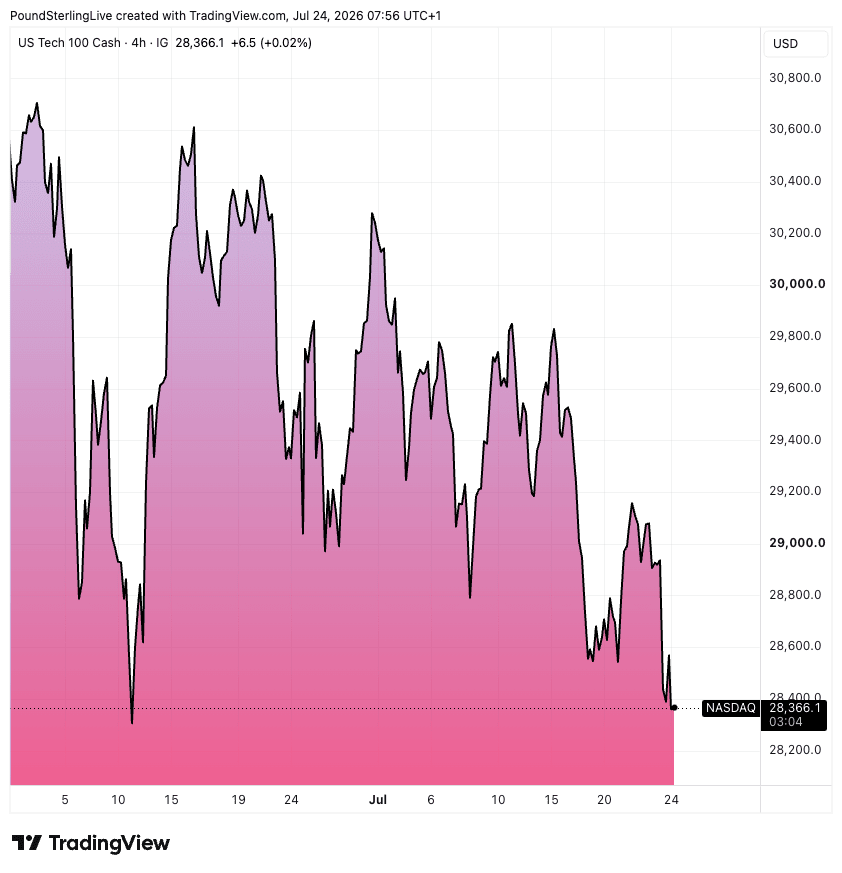
Above: Tech stocks are under pressure, weighing on sentiment.
Is the Summer Fun Over?
We have been saying for some time that there was a window of opportunity for the pound to advance: the transition of power in the UK was proving benign, market sentiment was helpful and allowing the UK's bond yield advantage to shine.
The first hurdle, we said, was the Autumn budget where the new Prime Minister's policy objectives would meet the reality of the fiscally constrained country he inherits.
Analysts at UBS say in a new research note that "fiscal policy uncertainty is limiting further GBP gains."
"We have been constructive on GBP, viewing it as supported by a benign fundamental flow backdrop alongside attractive carry-to-vol properties," says UBS, acknowledging the UK's elevated bond yields in the context of a supportive global risk framework.
However, "given the significant policy uncertainty as the new government takes shape," UBS are minded to maintain its forecast for the pound to hold near current levels.
UBS expects EUR/GBP to rise back to 0.8500, and says it won't lower that forecast in expectation of a higher sterling.
EUR/GBP at 0.85 gives a GBP/EUR of 1.1765 and implies two things: the rally has ended but that weakness should be relatively shallow.
Point forecasts are nevertheless not precise targets, but rather anchors, and the pair would be expected to oscillate around it going forward.
"We have been of the view that as long as new Prime Minister Andy Burnham and his team remain committed to fiscal prudence, anchored by the existing fiscal rules, sterling can stay relatively insulated from political developments. Despite this, markets are clearly still nervous on this front and market scrutiny on the fiscal outlook is only likely to intensify as we approach the Autumn Budget in Oct/Nov," says UBS.