Image © Adobe Images
Foreign exchange markets look set to extend recent trends as the news veers on the downbeat ahead of the weekend.
The overarching theme is a stronger dollar against all, with the euro and Swedish Krona looking to be the weakest of the G10 bunch.
The pound-euro pair has rallied to near one-month highs in light of the euro's laggard status, but we are VERY much alert to the fact that a capitulation in global stocks would torpedo this exchange rate and sink it.
We're not at panic stations yet, but there's enough lingering anxiety to suggest this week's currency trends can extend into the next week.
U.S. President Donald Trump said Friday he will only stop on the complete surrender of the Iranians, which seems like a high bar to pursue and suggests the conflict will continue for a great deal longer than might have been expected.
The president of Iran has meanwhile said mediation efforts to end the war have begun. Masoud Pezeshkian said Iran was "committed to lasting peace", but added that his country would keep defending itself.
What to Watch From Here
Assuming talks aren't forthcoming, Can Kasapoğlu, Senior Fellow at the Hudson Institute, says these are what market participants should be watchful of in the coming days:
1️⃣ A further decline in the pace of Iran’s missile and drone salvos could indicate a significant degradation of the Islamic Republic’s strike capacity, especially if Tehran stages fewer than 30 launches per day.
2️⃣ Any friction within Iran’s security apparatus, especially between the Islamic Revolutionary Guard Corps and Artesh, could indicate growing dissension within the regime’s ranks.
3️⃣ Iran’s attempts to widen the war geographically, including by targeting Türkiye or Azerbaijan or ramping up attacks on the Gulf Arab states, could spell trouble for allied efforts to contain the diplomatic costs of the conflict.
4️⃣ If the depth of the Gulf Arab states’ air and missile defences runs low, those nations may be forced to ration interceptors or prioritise the protection of specific areas, just as Ukraine has in its war with Russia. This could leave energy infrastructure more exposed.
Here are the latest market-moving developments:
Qatar's energy minister says Friday that even if the conflict ended immediately, it would take the country "weeks to months" to return to a normal cycle of deliveries following the shutdown of the world’s largest LNG plant earlier this week.
🚢 Traffic through the Strait of Hormuz has ground to a near-complete halt confirm multiple publications.
🔥 TTF - the European gas benchmark - set to end the week 60% higher as U.S. free-on-board seaborne liquified natural gas exports are reportedly rerouted to Asia.
Brent crude is another 4.0% higher Friday and 24% higher this week at $86/barrel.
"We estimate the conflict in the Middle East will add 0.4ppts to UK inflation in 2026." - Oxford Economics.
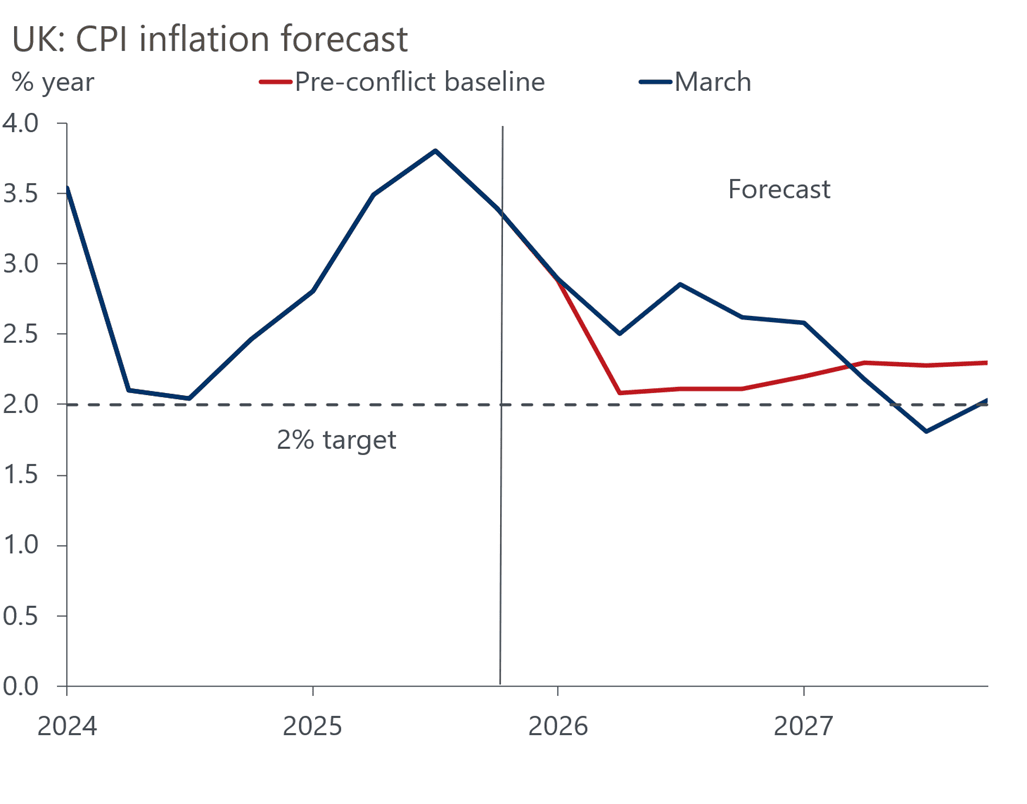
Above: UK inflation forecasts upgraded at Oxford Economics.
⛽ Susannah Streeter, chief investment strategist at Wealth Club says the effects are already being felt in the UK: "The market is driven by real physical supply, and severe disruption continues in the Middle East, particularly through the Strait of Hormuz. Already prices are filtering through to the pumps, with diesel reaching a 16-month high, and more increases are set to come given the lag effect of wholesale to forecourt prices."
U.S. gasoline prices are reported to have hit their highest since 2024.
Identifying the stresses, news reports suggest President Trump will use alternate methods to ease pressures on U.S. consumers, with some exotic ideas being bandied about. This weekend will surely bring news of waht those are.
👁️ Polymarket, the prediction market place, sees a 50/50 chance that a ceasefire is agreed by the end of April.
The odds are closer to 30% for end-March.
UniCredit says its baseline scenario is short-lived disruption where military operations against Iran last for a few weeks, "after which tensions and energy disruption ease. Oil and natural gas prices gradually decline from recent highs."
⤵️ But from now until that ceasefire, there is plenty of room for energy prices to move higher and break something in financial markets. There's no panic yet, but capitulation is never far off.