Consensus projections for the next four quarters, compiled from leading investment banks.
Access the full forecast →
Image © Adobe Stock
British currency navigates the treacherous markets whipped up by surging energy prices.
The pound extends recent gains against the euro, dollar and other major currencies as energy-driven inflation fears shift interest-rate expectations in its favour.
Oil and gas prices are still elevated but off their highs and global equities are more sure-footed after it's reported Iran’s Intel Ministry reached out indirectly to the CIA on Sunday, a day after the conflict began.
"While retrospective, this is new information to the market and could suggest there may be subsequent discussions on de-escalating the conflict," says Sarah Ying, strategist at CIBC Capital Markets.
📈 Surging commodity prices have boosted the dollar - the ultimate petro-currency - across the board and weighed on the currencies of fuel-importing nations. However, hopes of some off-ramp from the conflict see the U.S. currency pare recent advances and the pound-dollar exchange rate turns higher on the day at 1.3377.
👀 Perhaps surprising to some observers is the pound, which is holding its ground against most G10 peers as the energy price surge lifts expectations that inflation could stay higher for longer across the globe.
This isn't good news for anyone, anywhere, but it does mean the Bank of England won't be able to lower rates again anytime soon, ensuring pound sterling will be able to hold onto its interest rate advantage for longer.
Interest rate dynamics were evident on Tuesday when sterling advanced against the euro and several other peers after UK government bond yields jumped.
The two-year gilt yield, which closely tracks expectations for central bank policy, surged to 3.74% after rising sharply over the previous two sessions. GBP/EUR tracked the move to go back above 1.15.
📈 Those gains reflect a rapid shift in market thinking:
Late last week, traders saw roughly an 80% chance the Bank of England would cut interest rates by 25 basis points at the March 19 meeting.
By the close of trading on Tuesday that probability had fallen to below 25%.
GBP/EUR
When investors scale back expectations for rate cuts, short-term government bond yields tend to rise because markets assume interest rates will remain higher for longer.
Higher yields increase the return available on sterling-denominated assets, which in turn tends to support the currency.
That relationship has been visible in the recent performance of the pound-euro exchange rate; Kathleen Brooks, analyst at XTB says the pound "is one of the more resilient currencies... as higher yields and a reduction in BOE rate cut expectations for this year bolster the pound."
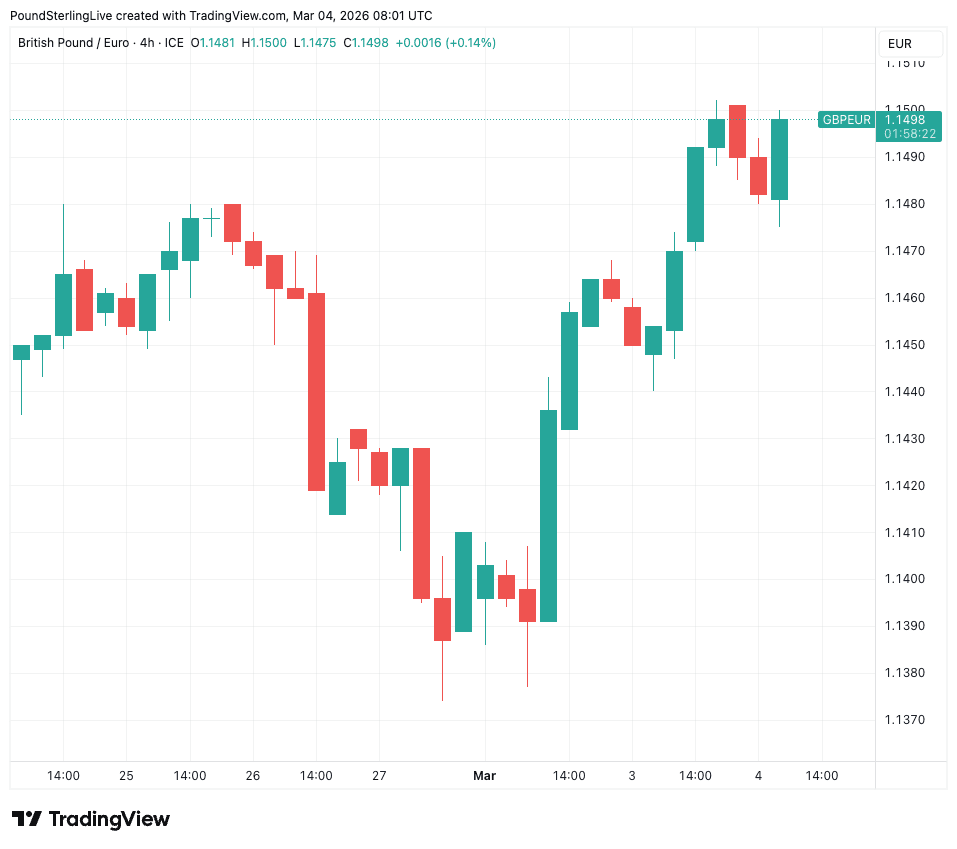
Price action confirms a rejuvenated link between bond markets and currencies and marks a shift in the market narrative: for much of late 2025 sterling’s moves were dominated by political and fiscal developments following the autumn budget.
But since early January, interest-rate differentials appear to have reclaimed their traditional role as the dominant driver (see chart above).
With investors previously expecting deeper rate cuts from the Bank of England than from the European Central Bank, the pound weakened through much of early 2026.
Now that assumption is being challenged.
Energy-driven inflation fears are forcing markets to reconsider how far the Bank of England can ease policy, pushing yields higher and giving the pound intermittent support.
The result is a choppy and volatile trading environment that requires those with payment needs to be more watchful of market developments and reactive to beneficial movements.