
Image © Adobe Images
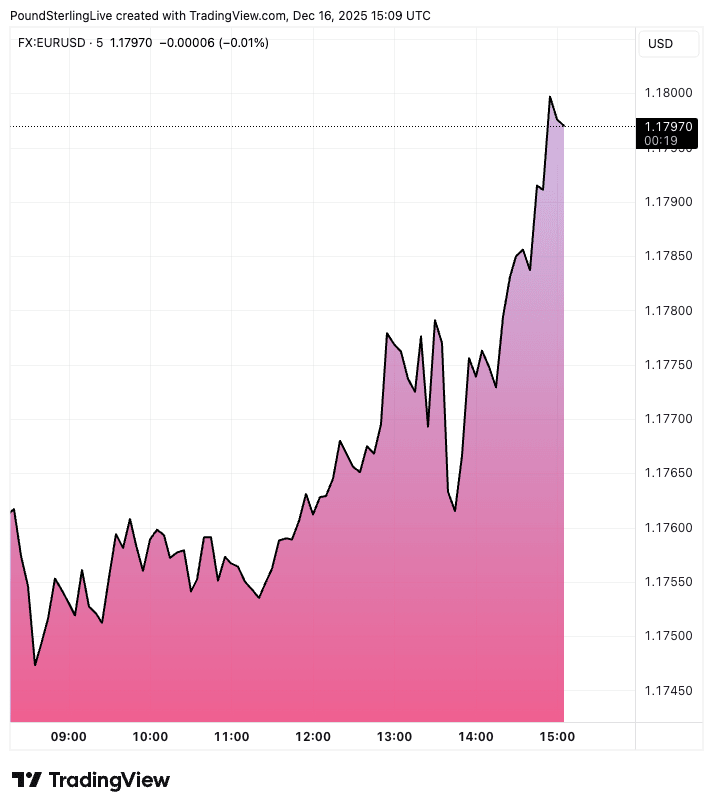
The euro to dollar exchange rate (EUR/USD) is closing in on 1.18.
The dollar fell back after a much-anticipated U.S. jobs report confirmed soft undercurrents in the labour market.
Sure, the U.S. economy created 64K new jobs in November, outstripping consensus bets for 50K, but that's where the positive figures ended:
The revised October report shows 105K jobs were shed, while the unemployment rate ticked to 4.6%.
✳️ Secure today's exchange rate for a future payment. You may also book an order to trigger your purchase when your ideal rate is achieved. Learn more.
The smoothed three-month job creation rate is now at just 22K, underscoring how much momentum has been lost and why the Federal Reserve will feel justified in lowering rates to try and assist the economy.
To be sure, the economy is humming away nicely on the surface, but a weakening labour market points to a two-speed economy.
"While investment in artificial intelligence – a key driver of GDP growth – is rising, other areas of the US economy are struggling. The cyclically sensitive logistics sector for example, has cut jobs over the past three months, showing that many areas are experiencing turbulence," explains Dr. Thomas Gitzel, Chief Economist at VP Bank.
Further rate reductions by the Fed underpin expectations for further USD weakness in the coming weeks.
"The rise in the unemployment rate is likely to be seen as a warning sign by Fed officials. Three interest rate cuts in the coming year are considered realistic," says Gitzel.
"Job creation continues to slow and unemployment is on the rise, which will mean the doves at the Federal Reserve will continue to make the case for further interest rate cuts," says James Knightley, Chief International Economist for the U.S. at ING.
Looking ahead, there's an important indicator that suggests the jobs market won't turn itself around anytime soon.
Data shows workers are deeply pessimistic about the outlook for the jobs market, suggesting the risks remain skewed towards more aggressive action from the Fed.
Knightley explains, "workers see and feel changes before they show up in the data and, if the relationship holds, would suggest that the Fed could end up having to cut rates below 3%."
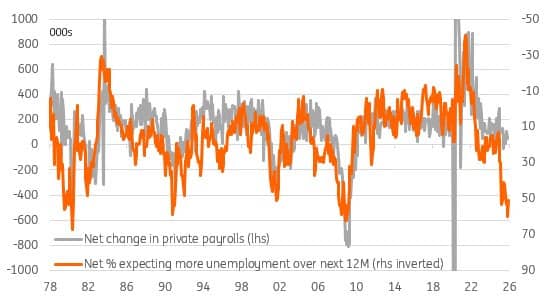
Above: Workers know the labour market is deteriorating. The official data will duly follow. Image courtesy of ING.
More cuts mean more dollar weakness.
By contrast, the European Central Bank (ECB) is unlikely to shift interest rates, noting policy to be in a "good place".
With U.S. rates falling, and those in the Eurozone staying steady, the differential will tighten. That closing differential will mechanically push euro-dollar higher.
"EUR/USD is eager to test the 1.18 big figure," says a note from KBC Bank following the payrolls report.