
Image © Adobe Images
There's a critical flaw in the budget: its credibility hinges on big tax revenues flowing into Treasury coffers at the end of the decade.
Why it matters: markets are behaving because they think the government has announced measures that will generate the revenues it requires to honour its debt.
🔺The problem? The tax hikes announced today will only start generating significant revenues in later years; there's a worry the government will backtrack on the plans as the pain bites.
💬 "Most of the tightening is pencilled in for 2029," says Andrew Goodwin, Chief UK Economist at Oxford Economics. Here's a chart he's put out to his company's clients:
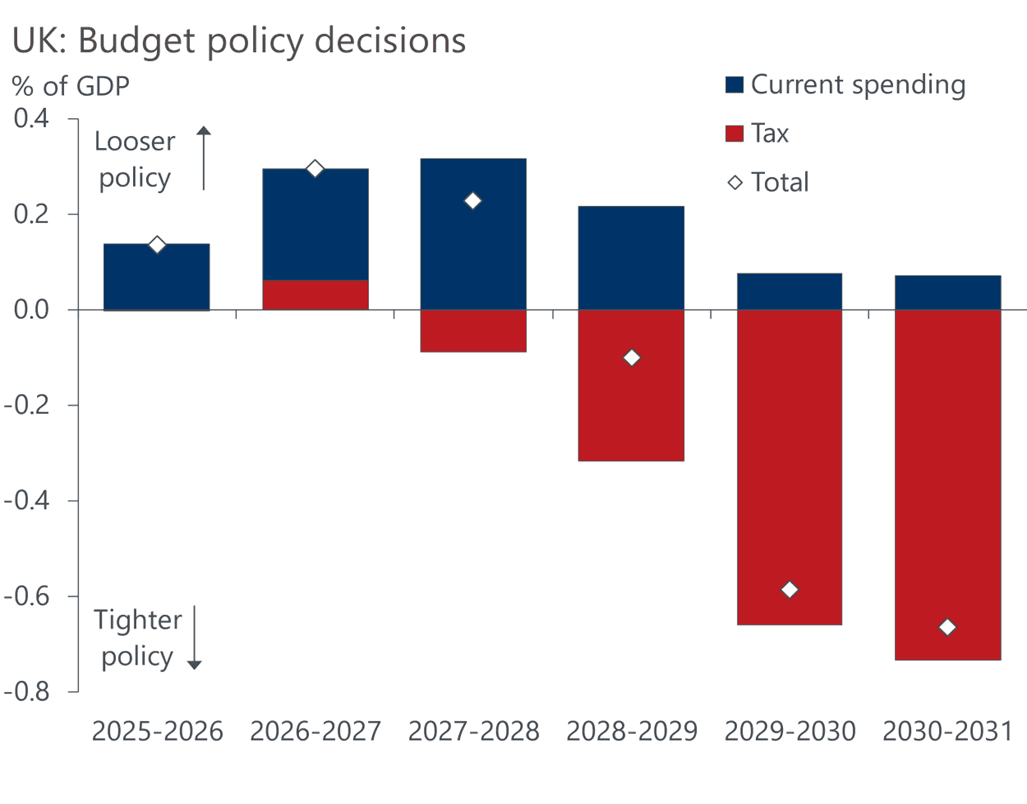
📊⬆️ How it works: the government has frozen tax brackets. This means more people will pay more in taxes as their salaries rise in the coming years to account for inflation.
But this is a problem: "Given most of the tightening is pencilled in for 2029, which is an election year, we're sceptical it will be fully implemented when the time comes," says Goodwin.
✳️ Secure today's exchange rate for a future payment. You may also book an order to trigger your purchase when your ideal rate is achieved. Learn more.
And here's the crux of the matter: market stability - that's bond markets and currency markets - will only stay on side if investors believe the government will generate enough revenues to pay its debts.
It's therefore a question about credibility, with analysts questioning whether the strategy of hoping for a future tax bonanza is politically feasible.
🌪️ The risk is that it's not credible and market jitters rise again, putting pressure on UK financial markets.
"The backloaded nature of the measures, the uncertain impact on revenues of many of the tax-raising measures, a lack of spending restraint, and the absence of any growth measures undermine the credibility of the package, in our view," says Goodwin.