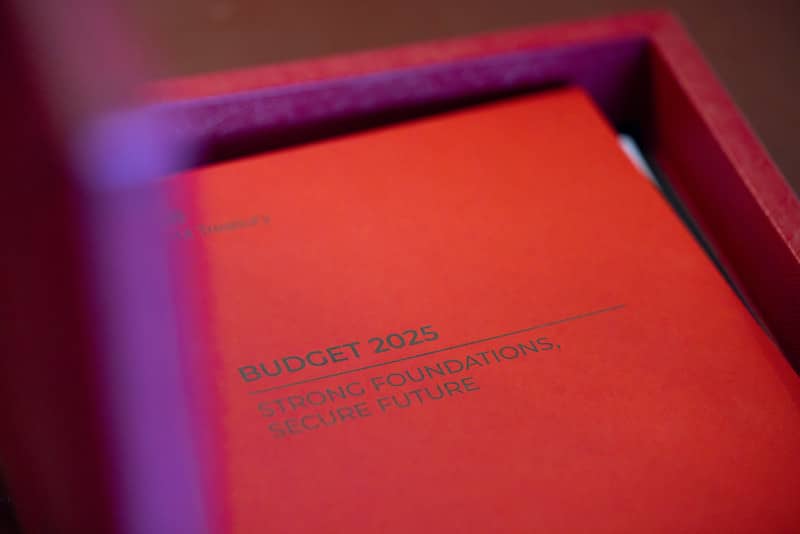
Picture by Kirsty O'Connor / Treasury.
Raising dividend taxes will hurt the UK's small businesses and entrepreneurial economy, warn workers in the sector.
Chancellor Rachel Reeves announced she will be raising tax rates on dividends, property income, and savings by 2 percentage points.
This means the basic rate dividend tax moves from 8.75% to 10.75% and the higher rate from 33.75% to 35.75%.
"Raising dividend tax is another blow to Britain’s small business owners," says Eamonn Prendergast, Chartered Financial Adviser at Palantir Financial Planning Ltd.
✳️ Secure today's exchange rate for a future payment. You may also book an order to trigger your purchase when your ideal rate is achieved. Learn more.
"Entrepreneurs, company directors and investors already face a growing list of stealth taxes, and this 2% rise feels like yet another raid on those who create jobs and take risks," he warns.
The dividend tax raid is expected to raise £1.2BN every year for the Treasury.
However, it makes life even harder for the country's small business owners who rely on dividend income to compensate for the risks associated with starting and running a small businesses.
These companies often lack the significant bank balances to guarantee regular salaries for their owners and employees.
"For many small business owners, dividends aren’t a luxury, they’re their livelihood," explains Prendergast.
✳️ Secure today's exchange rate for a future payment. You may also book an order to trigger your purchase when your ideal rate is achieved. Learn more.
A tax raid on dividends is basically the government saying to business owners, "thanks for taking all the risk, now hand over more of your pay," explains Kate Underwood.
Underwood is the Founder & Chief People Strategist at Kate Underwood HR and Training. She explains that if you live off dividends, that extra 2% is your mortgage, food shop and kids' stuff, not some abstract number in a report.
"You're the last one to get paid and they’re still coming for you. Keep squeezing owner-managers like this and lots of people will quietly decide a normal job looks a lot more appealing. The UK's entrepreneurial spirit is being crushed," she says.
James Dixon, a Tax Director at Gravitate Accounting, says raising dividend tax hits investors and businesses where it hurts most.
"From a tax advisory perspective, higher rates sharply reduce the appeal of dividend income, potentially discouraging investment in dividend-paying companies, particularly SMEs and family-owned businesses," he says.
He warns that firms may be forced to retain profits rather than reward shareholders, disrupting cash flow and undermining growth incentives.
"Meanwhile, high-net-worth individuals are likely to shift toward capital gains or tax-efficient wrappers, while companies may restructure remuneration toward salaries or bonuses, increasing employer costs. Over time, this move could have a big impact on corporate behaviour, curb investment and harm the UK’s competitiveness in capital markets," says Dixon.