Image © Adobe Images
The Australian dollar remains well supported and the constructive backdrop is intact, Lloyds says, even as the currency absorbs a run of softer domestic data that has trimmed rate hike expectations at the margins.
The Aussie is "brushing off slightly softer inflation data and a weaker labour market report," the British bank says in a currency analysis released Tuesday, adding that the AUD/USD trend "remains bullish."
AUD/USD rose to a new four-year high of 0.7277 in early May but has since pared the gain to 0.7165. Alongside, GBP/AUD has recovered from its lowest level since 2024 at 1.8539 to 1.8788.
A pause in the trend looks consistent with a softening of the 'hawkish' stance the market has held on Australia's interest rate profile: three rate hikes in 2026 have burnished the Aussie with a solid interest rate backing. With three hikes in the bag, the question now becomes whether or not the RBA stop raising rates, and if so, will that disadvantage the Aussie and call time on its outperformance?
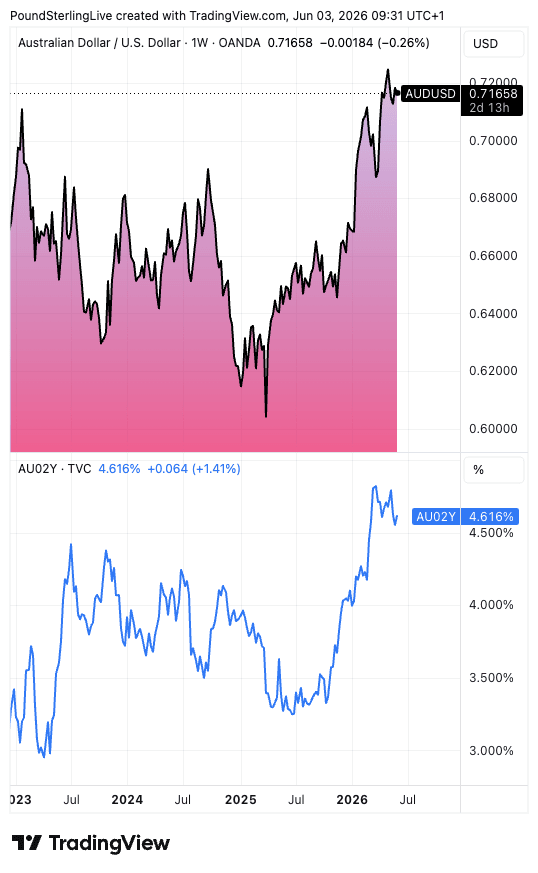
Above: AUD/USD rises helped by two-year bond yields (lower panel), which reflect market pricing for the RBA's base rate.
Lloyds says although the central bank is keen to lean on inflationary risks, it sees uncomfortable demand trade-offs too. "And monetary conditions are now restrictive, so one further hike looks the most we’ll now see."
"That looks a sensible approach, getting ahead of the problem now, helping anchor inflation expectations," adds Lloyds.
The Australian dollar was higher against all G10 peers on Tuesday after RBA board member Ian Harper said Tuesday that "strong action" would be required if inflation expectations became de-anchored, confirmation that the hiking cycle might not be complete.
"The combination of early risk session resilience and monetary policy rhetoric witnessed the prospect of AUD/USD testing the 29 May high at 0.7201," said Jeremy Stretch, Chief Global Strategist at CIBC Capital Markets.
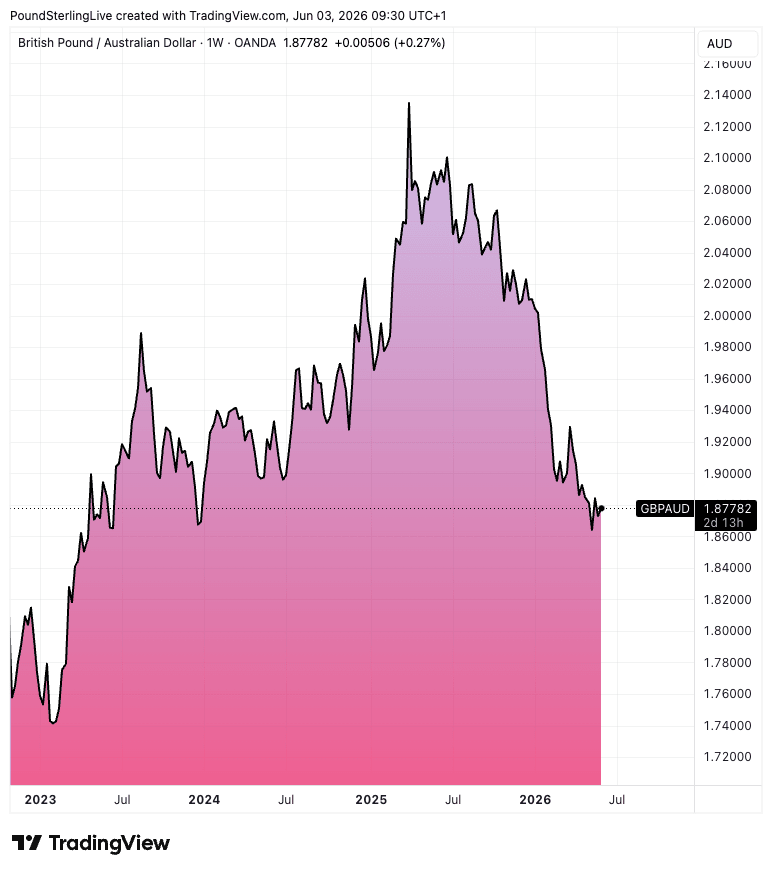
Above: GBP/AUD at weekly intervals.
The wage backdrop is adding weight to that calculation. Australia's Fair Wage Commission this week confirmed a 4.75% minimum wage increase to A$26.44 from 1 July, covering roughly 21% of the workforce.
TD Securities noted the decision "does little to help the RBA get on top of inflation," though it stopped short of putting a June hike on the table.
With three hikes in the bag and another being considered, Australia's G10-leading yield should underpin the Aussie.
"This still enhances the yield theme and with overall commodity prices supportive it is still a constructive backdrop for the FX rate. AUD/USD trend remains bullish too," says Lloyds.