
Image © Adobe Images
Australian dollar outperformance faces headwinds.
New survey data confirms that Australians are in the early stages of a cost-of-living crunch as rising interest rates and fuel prices make their presence felt.
Westpac's card tracker on Wednesday revealed a distinct decline in spending on discretionary items, which is exactly what would be expected when consumers start to feel the pinch.
"While there is considerable noise coming from both fuel and electricity related activity, discretionary categories, and especially discretionary services, are showing a more pronounced slowdown with data over the last six weeks suggesting this has tipped over into outright contraction," says Matthew Hassan, an economist at Westpac.
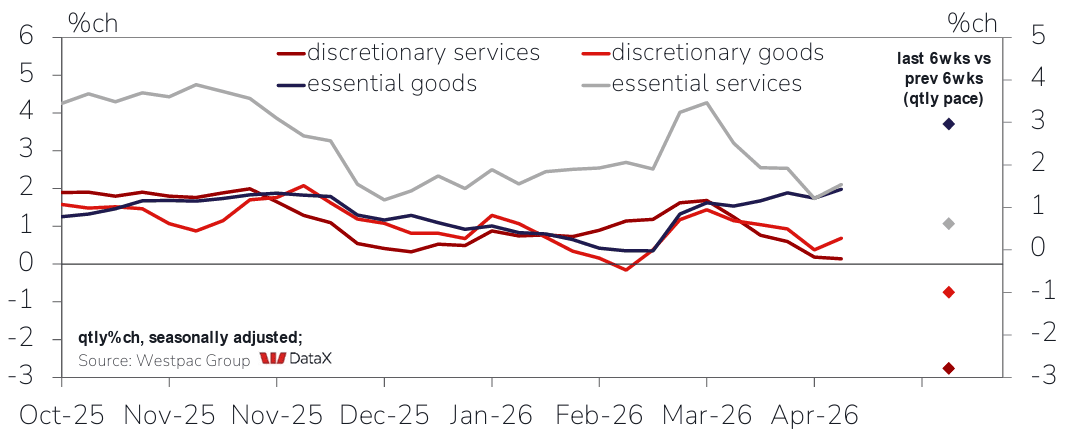
Westpac data shows card activity across discretionary goods segments contracted by around a 1% quarterly pace over the last six weeks. Spending on discretionary services saw a material contraction of 3%.
"A shift from softening growth to outright contraction in discretionary spend would be consistent with the signs of a deepening ‘cost of living’ shock to consumers evident in other measures such as consumer sentiment," says Hassan.
The Reserve Bank of Australia (RBA) on Tuesday raised interest rates for a third time this year, judging that inflationary pressures in the economy were meaningful, owing to strong consumer demand.
That demand was particularly evident ahead of the Iran war.
Rate hikes, elevated fuel prices and consumer caution will all help the central bank cool the economy and bring inflation under control.
The Australian dollar has risen over recent months as markets bet on RBA rate hikes, and further outperformance can be expected if the central bank raises rates again, which is what economists think will happen.
However, is that hike still a sure bet in the face of incoming survey data? It might not be.
If the market starts to cool on expectations for further hikes we would expect the Aussie's period of outperformance would be questioned. For sure, it would mean the big gains are now in the rear-view mirror.
Consensus projections for the next four quarters, compiled from leading investment banks.
Access the full forecast →