Image © Adobe Stock
The dollar strengthens as Japanese market intervention fades into memory and the Middle East conflict simmers.
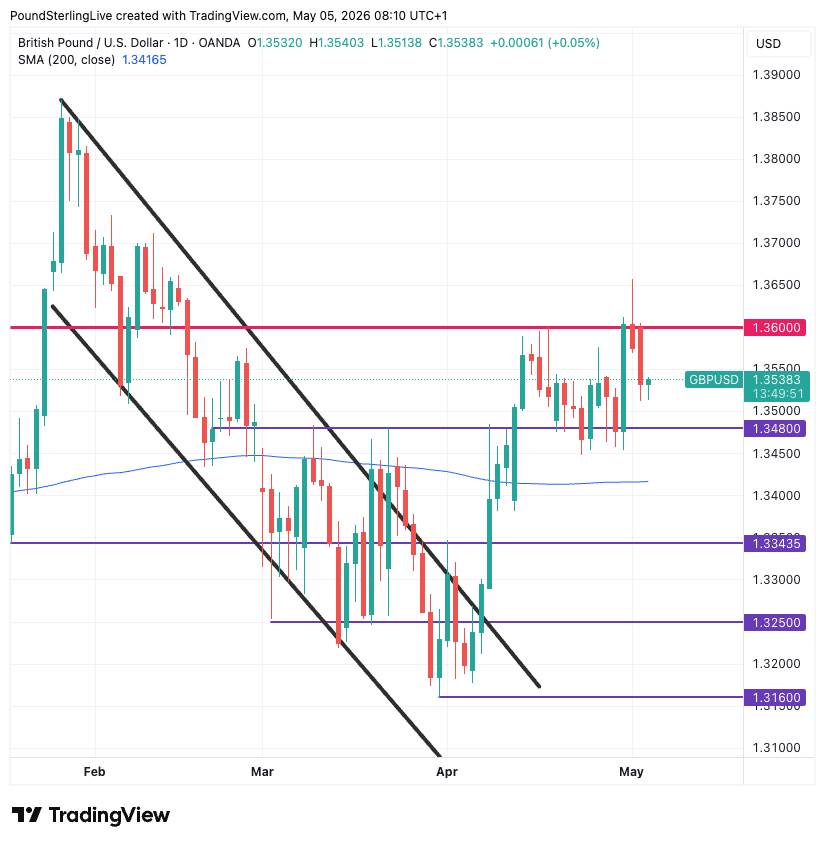
The pound-dollar exchange rate rose to as high as 1.3650 on Friday but soon fell back below 1.36, with losses extending to 1.3530 this Tuesday, confirming 1.36 as the near-term technical barrier that commands respect.
Last week's GBP/USD gains were artificially inflated by Japanese authorities dumping USDs to strengthen their JPY, but with intervention now likely complete, it's back to watching global and domestic fundamentals for guidance.
To be sure, we still view the recent trade between 1.3480 and 1.36 as a consolidation of the early April rebound. The pair trades above some key moving averages and the technical setup is broadly constructive.
It wouldn't surprise us to see a steady march higher in the coming days, particularly if there's no real escalation out of the Middle East.
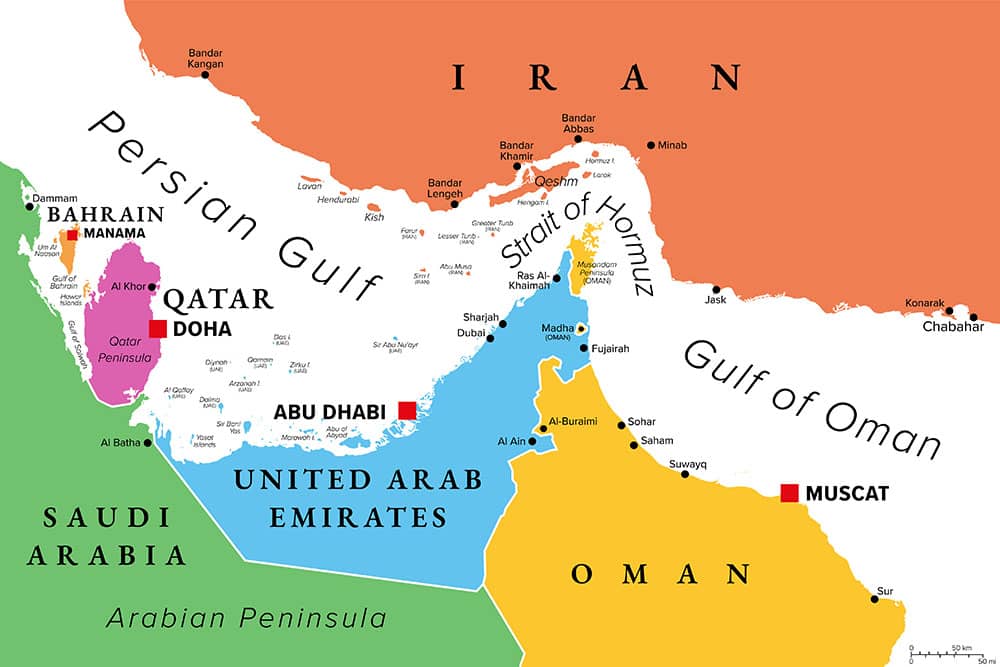
However, the Middle East is a source of renewed market anxiety at the start of the week as the U.S. and Iran fire at each other in the contested Strait of Hormuz. It's clear the U.S. is growing impatient with the standoff and is looking to escort shipping through the lane.
Iran, in desperation, has fired on shipping and on the UAE, signalling the ceasefire is crumbling. With oil rising in response, the dollar is better supported.
"Sky-high oil prices continue to be a drag on sentiment as exchanges of fire between the US and Iran cast doubt on the durability of the month-long ceasefire. Brent Crude oil is steady at around $114 per barrel, after a rise of around 6% on Monday took prices to within touching distance of a four-year high," says Derren Nathan, head of equity research, Hargreaves Lansdown.
"Unsurprisingly the fragility of the ceasefire between the US and Iran has buoyed the oil price but weighed on equities," says Sam Hill, Head of Market Insights at Lloyds Bank.
The pound-dollar pair is unlikely to breach 1.36 in the near-term if tensions are high, and we think risks favour a return to support at 1.3480 and then 1.3450 in the coming days. However, this area has provided solid support for pound sterling for much of April and May and should hold unless there is a material breakdown in sentiment.
For that to happen, the war would need to take a nasty turn, and/or some kind of market panic would need to ensue over fears that oil and gas prices aren't coming down anytime soon.
Highly accurate consensus projections for the next four quarters, compiled from leading investment banks.
Access the full forecast →
With that in mind, we will continue to watch global bond yields as it would be this area of the market where problems would arise.
Global bond yields have marched higher as investors anticipate higher inflation for longer. The result is the cost of borrowing in some longer-dated tenors are at multi-decade highs in many countries.
That's a potential problem down the line. For now, the situation is contained but we just want to ensure readers are aware of the risks.
Domestically, the pound could hit some turbulence in the coming days as UK political uncertainty arises.
This week's local and devolved government elections will see the ruling Labour Party suffer heavy losses and the sharks are circling Prime Minister Keir Starmer.
We think someone will make a move in the coming weeks and challenge the PM for the top job.
The risk is that Starmer will be replaced by a left-leaning candidate who will try and bin the fiscal rules in order to borrow more money to spend on socialist ambitions.
Equally as dangerous is Starmer tacking leftwards to placate his fellow party members, which would put UK bonds under pressure and risk another major GBP selloff.