Image © Adobe Stock
The Middle East conflict is said to be entering a 'cold war' phase, which raises market risks substantially.
Oil prices and the dollar are higher in Tuesday trade after U.S. President Donald Trump told his advisers he's not satisfied with Iran’s latest suggestions, according to a New York Times report that cites multiple unnamed people briefed on recent discussions.
Developments suggest the conflict is entering what the Axios news agency describes as a Cold War-like phase of financial sanctions, gunboat interdictions and talks about having talks.
"Why it matters: The conflict has settled into a grinding stalemate, all but assuring higher energy prices for months — and leaving President Trump with the costs of the war but little of the political upside of ending it," says Marc Caputo at Axios.
Several U.S. officials told Axios they're concerned about America getting drawn into a frozen conflict of no war and no deal.
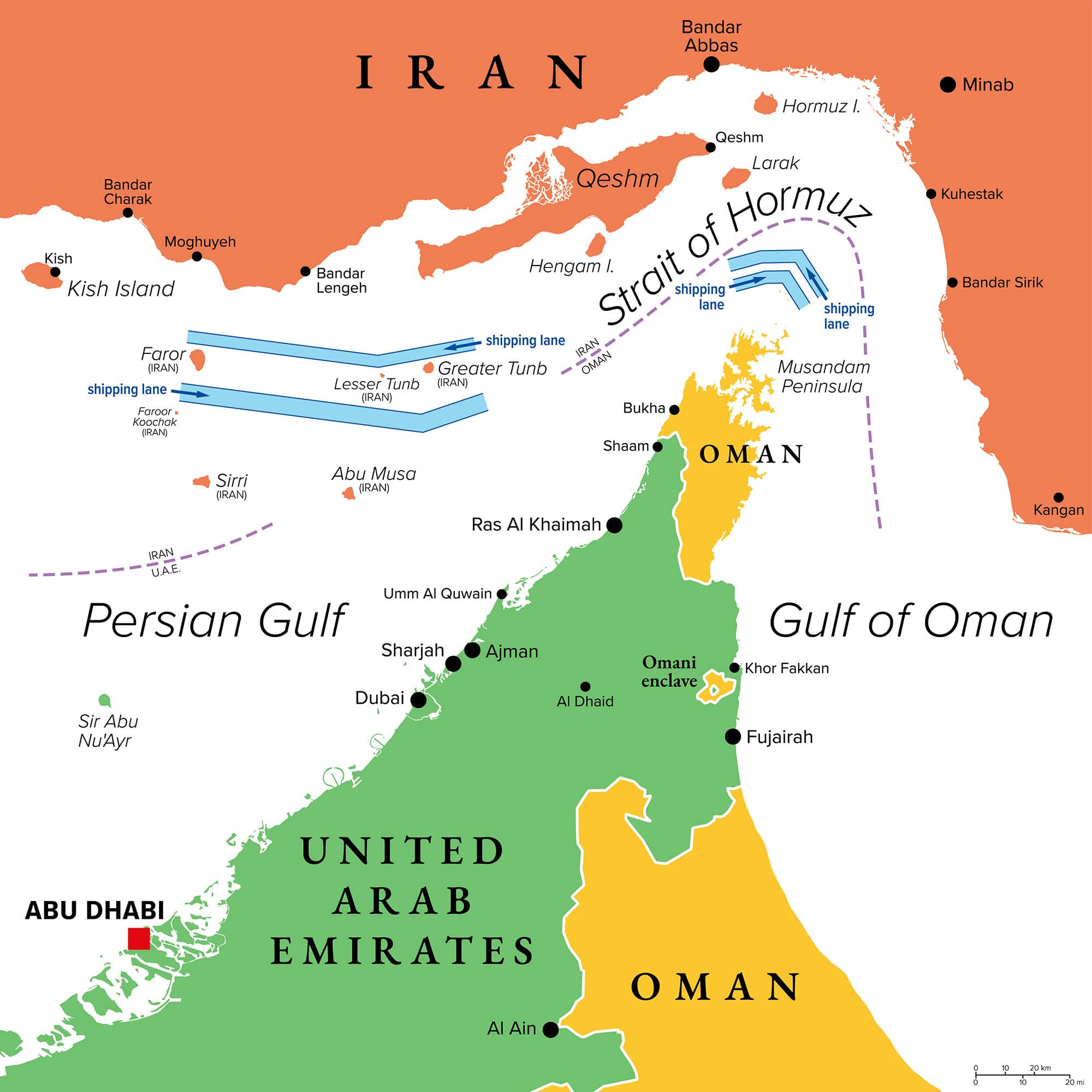
In this scenario, the U.S. would have to keep its forces in the region for many more months and the Strait of Hormuz remains closed, representing a worst-case outcome for the global economy and financial markets.
Brent crude oil prices rose to $104 / barrel on Tuesday, the highest since April 07, amidst rising fears the Strait of Hormuz will remain shut for an extended period.
"Oil prices extended their rebound on Tuesday as the lack of progress in negotiations between the United States and Iran continued to weigh on expectations of a reopening of the Strait of Hormuz. Ongoing disagreements have reduced the likelihood of a near-term breakthrough," says Maria Agustina Patti, Financial Markets Strategist Consultant to Exness.
Analysts at Citi now forecast Brent crude will average $130 per barrel in the second quarter if supply disruptions persist through the end of June.
"We are now in the ninth week of the US–Iran conflict, with diplomacy stalled," says Sim Moh Siong, Commodity Strategist at OCBC in Singapore. "Even if the Strait reopens, supply normalisation is likely to be slow, partial, and uneven. We maintain our USD100/bbl Brent forecast through mid‑year but now expect a gentler decline in 2H26."
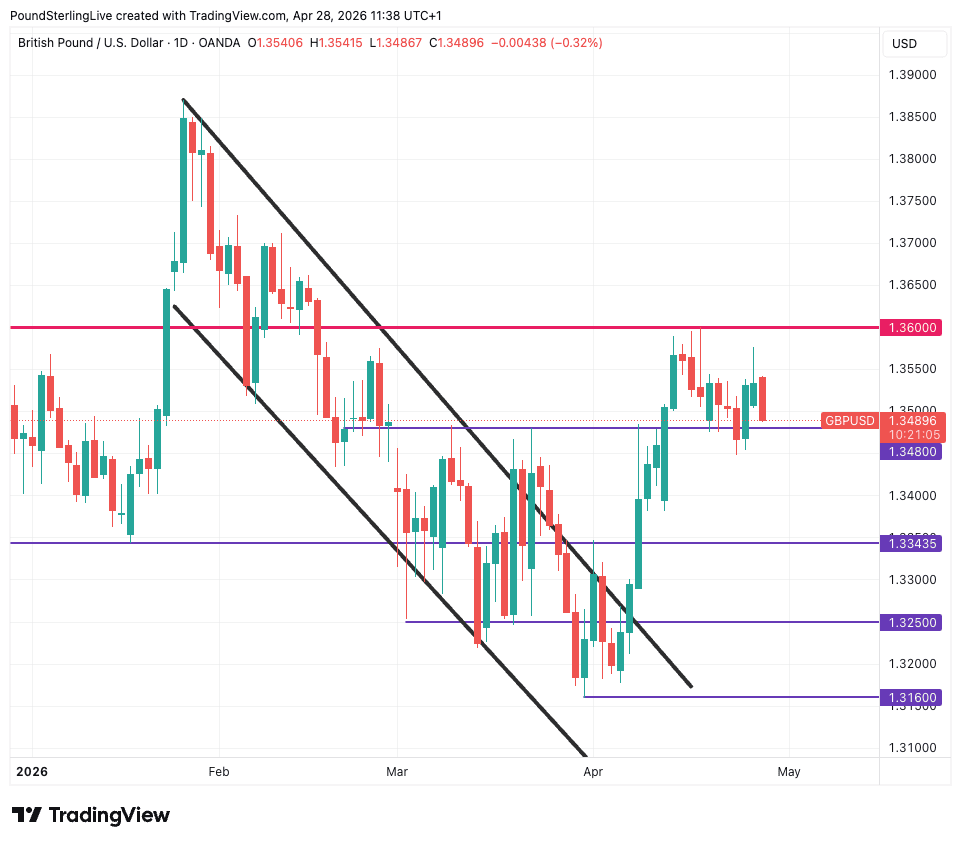
The dollar rose in response to the latest lift in oil prices, sending GBP/USD lower by a third of a per cent to 1.3488.
The dollar has steadily slipped as investors look forward to the war ending, but the realities of a cold-war-like, protracted stalemate could mean a rebound for the safe-haven asset.
For the pound-dollar exchange rate, that puts a return to 1.3160 on the table for May. We report today that May is traditionally a difficult month for pound sterling against the dollar, with the pair averaging a loss of 1.0% in May during the past 15 years.
Renewed concerns over a protracted closure of the Strait of Hormuz would drive the kind of market volatility that tends to deliver GBP/USD weakness.